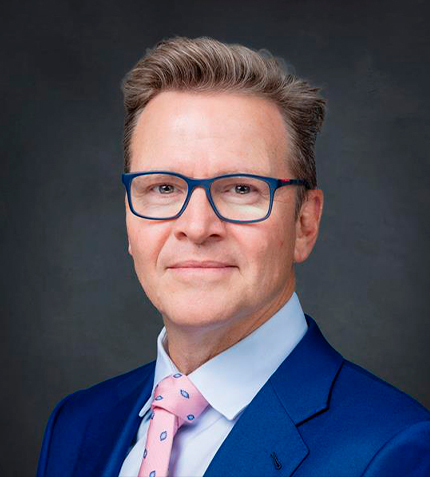
“We applaud the federal budget’s focus on critical minerals and the creation of the Major Projects Office to accelerate development. Ontario’s leading efforts to simplify permitting with a ‘One Project, One Process’ mindset are also very encouraging.”
Share
Can you give us an operational update on your first year in charge of Vale Base Metals?
The thesis when I took over was to take what had been an almost invisible part of Vale S.A.’s portfolio, highlight the value, and position the business for a potential future IPO.
In year one, we moved from a highly centralized model to a lean, decentralized organization. We focused operating teams on running great businesses guided by four simple imperatives: grow value per share, manage risk intelligently, sustain excellence in social license with host communities and governments, and build a performance culture that puts people first.
We have delivered three consecutive strong quarters, we are on track to meet the top end of production guidance for copper and nickel, and we have lowered all-in sustaining cost guidance for both business segments – a first in this business’s history.
We were also recognized recently as one of Canada’s Top 100 employers, a first for the business and important external validation of our efforts to build an ownership culture underpinned by integrity, collaboration, caring, and respect.
Where is the C$500,000 of funding from the CMIF being deployed, and what impact will it have?
Canada’s many strengths in mining and critical minerals processing include century-deep metallurgical know-how. Our Sheridan Park R&D center in Mississauga is a world-class facility that allows us to design, pilot, and scale the next generation of that technology – a unique and extremely valuable capability for our business.
The CMIF funding supports the design and piloting of next-generation carbonyl reactors. The goals are to expand processing capacity, improve efficiency, and increase our flexibility to process recycled battery materials and other alternative critical mineral feedstocks. It is also a cornerstone for circular mining, taking a proven technology and modernizing it to support North American supply chains for the energy transition.
How has Vale Base Metals’ polymetallic portfolio helped over the last 12 months?
Polymetallic structures are an advantage only if you can separate and monetize responsibly at scale, which is what we are successfully doing at our Ontario and Newfoundland & Labrador operations. At Voisey’s Bay, we completed a US$2.94 billion underground expansion last year, and the ramp-up has outperformed by roughly 20–30% versus internal plans. This has enabled our Long Harbour Processing Plant to achieve nameplate capacity in recent months for the first time in its 11-year history.
In Sudbury, we are investing more capital across three years than in any comparable three-year period in the last two decades to enhance the throughput and cost structure of our downstream facilities. This has enabled us to increase mill throughput by 40% this year from our own mine feed – the highest since 2016. Integration allows us to dilute fixed costs, monetize byproducts, and sustain the full value chain from mine to high-purity products.
The above investments and improvements are essential to make our Canadian nickel business globally competitive in the face of overwhelming Chinese and Indonesian oversupply that has caused large volumes of Western supply to close. We have to be more competitive to ensure these businesses prevail in a tough market, and we are making great progress to secure the future for our Canadian mines – but we still have more to do together to achieve that sustainable future.
Polymetallics offer us an opportunity in this regard.
Around 50% of our revenue from Sudbury and 75% from Voisey’s Bay is derived from nickel, with the rest coming from copper, cobalt, PGMs, gold, and silver, offering an underappreciated exposure to a diverse range of valuable commodities that have enjoyed both volume and price increases, offsetting the weaker nickel price.
How are federal and provincial critical minerals policies affecting Vale Base Metals, and what would you like to see next?
We applaud the federal budget’s focus on critical minerals and the creation of the Major Projects Office to accelerate development. Ontario’s leading efforts to simplify permitting with a ‘One Project, One Process’ mindset are also very encouraging. These and other government-led initiatives will create greater investor certainty and attract much-needed capital to the sector.
Although we understand the federal budget’s emphasis on investment in large greenfield projects like the Ring of Fire, we think more needs to be done to support the foundational role that mature mining operations like Sudbury play in Canadian mining and critical minerals supply. These operations employ thousands of Canadians, generating vast regional wealth and underappreciated growth potential with lower risk.
Integrated mining complexes like Sudbury are the original Canadian critical minerals story – reliably supplying high-purity nickel to our allies for more than a century, including more than 60% of high-purity nickel used today by the U.S. aerospace and defense sector.
We are working hard to ensure the global competitiveness of Canadian nickel for future generations in the face of Indonesian and Chinese oversupply. I believe that highly prospective, mature operations like these offer the best risk/reward investment outlook to supply Canada and allies with critical minerals today and for the near future, while allowing time to invest in rebuilding our mining ecosystem and unlock Canada’s vast longer-term greenfield potential.
Can you update us on your Brazilian assets?
These are truly outstanding assets that set VBM apart. Salobo, our flagship copper operation, is on track for a second straight year of record production with room to grow. At Sossego, the team delivered a nearly 40% improvement in unit costs in 2025. They unlocked marginal stockpiles and advanced underground options below the pit based on excellent exploration drilling results.
At Onça Puma, Furnace 2 was delivered on time, 13% under budget, with zero lost-time injuries. The operation is now set to sit in the lower half of the global nickel cost curve, which is essential in an oversupplied market.
We have made significant progress advancing our copper growth pipeline, with final approval to begin construction of the Bacaba Project expected imminently and the completion of a new technical study for the Alemão Project that nearly halves capital intensity and doubles projected returns. We target capital intensities near US$5,000 per tonne for added copper capacity, which is highly competitive.
Finally, we tripled exploration drilling in 2025 in Brazil from 20,000 m to 60,000 m to further expand our copper resource, with very encouraging results. Drilling will nearly double again in 2026 to more than 100,000 m.
What are your immediate priorities for the next year?
We will look to build on the momentum generated by our transformation, consolidating the improvements we made in 2025 while continuing to deliver safe, reliable production at the top end of our guidance range.
We will also continue to advance our copper growth pipeline in Brazil along lower capex, higher return pathways, while working diligently to increase the global competitiveness of our nickel business. In addition, following our agreement with Glencore announced in December, in 2026, we will explore the synergies of mining our adjacent underground copper deposits in Sudbury. A final investment decision is not expected until 2027, but we are excited about this opportunity.
Alongside this, we continue to empower our people – building a caring, results-focused culture that embraces creativity, teamwork, and innovation while prioritizing safety above all.
Finally, we will continue partnering with governments and communities to ensure that today’s decisions sustain operations, communities, and ecosystems for generations to come.
Vale Base Metals is building a truly world-class base metals business to provide a secure, responsible, competitive supply of the critical minerals that are at the nexus of the energy transition and the generational shift in technology reshaping our world.

Can you give us an operational update on your first year in charge of Vale Base Metals?
The thesis when I took over was to take what had been an almost invisible part of Vale S.A.’s portfolio, highlight the value, and position the business for a potential future IPO.
In year one, we moved from a highly centralized model to a lean, decentralized organization. We focused operating teams on running great businesses guided by four simple imperatives: grow value per share, manage risk intelligently, sustain excellence in social license with host communities and governments, and build a performance culture that puts people first.
We have delivered three consecutive strong quarters, we are on track to meet the top end of production guidance for copper and nickel, and we have lowered all-in sustaining cost guidance for both business segments – a first in this business’s history.
We were also recognized recently as one of Canada’s Top 100 employers, a first for the business and important external validation of our efforts to build an ownership culture underpinned by integrity, collaboration, caring, and respect.
Where is the C$500,000 of funding from the CMIF being deployed, and what impact will it have?
Canada’s many strengths in mining and critical minerals processing include century-deep metallurgical know-how. Our Sheridan Park R&D center in Mississauga is a world-class facility that allows us to design, pilot, and scale the next generation of that technology – a unique and extremely valuable capability for our business.
The CMIF funding supports the design and piloting of next-generation carbonyl reactors. The goals are to expand processing capacity, improve efficiency, and increase our flexibility to process recycled battery materials and other alternative critical mineral feedstocks. It is also a cornerstone for circular mining, taking a proven technology and modernizing it to support North American supply chains for the energy transition.
How has Vale Base Metals’ polymetallic portfolio helped over the last 12 months?
Polymetallic structures are an advantage only if you can separate and monetize responsibly at scale, which is what we are successfully doing at our Ontario and Newfoundland & Labrador operations. At Voisey’s Bay, we completed a US$2.94 billion underground expansion last year, and the ramp-up has outperformed by roughly 20–30% versus internal plans. This has enabled our Long Harbour Processing Plant to achieve nameplate capacity in recent months for the first time in its 11-year history.
In Sudbury, we are investing more capital across three years than in any comparable three-year period in the last two decades to enhance the throughput and cost structure of our downstream facilities. This has enabled us to increase mill throughput by 40% this year from our own mine feed – the highest since 2016. Integration allows us to dilute fixed costs, monetize byproducts, and sustain the full value chain from mine to high-purity products.
The above investments and improvements are essential to make our Canadian nickel business globally competitive in the face of overwhelming Chinese and Indonesian oversupply that has caused large volumes of Western supply to close. We have to be more competitive to ensure these businesses prevail in a tough market, and we are making great progress to secure the future for our Canadian mines – but we still have more to do together to achieve that sustainable future.
Polymetallics offer us an opportunity in this regard.
Around 50% of our revenue from Sudbury and 75% from Voisey’s Bay is derived from nickel, with the rest coming from copper, cobalt, PGMs, gold, and silver, offering an underappreciated exposure to a diverse range of valuable commodities that have enjoyed both volume and price increases, offsetting the weaker nickel price.
How are federal and provincial critical minerals policies affecting Vale Base Metals, and what would you like to see next?
We applaud the federal budget’s focus on critical minerals and the creation of the Major Projects Office to accelerate development. Ontario’s leading efforts to simplify permitting with a ‘One Project, One Process’ mindset are also very encouraging. These and other government-led initiatives will create greater investor certainty and attract much-needed capital to the sector.
Although we understand the federal budget’s emphasis on investment in large greenfield projects like the Ring of Fire, we think more needs to be done to support the foundational role that mature mining operations like Sudbury play in Canadian mining and critical minerals supply. These operations employ thousands of Canadians, generating vast regional wealth and underappreciated growth potential with lower risk.
Integrated mining complexes like Sudbury are the original Canadian critical minerals story – reliably supplying high-purity nickel to our allies for more than a century, including more than 60% of high-purity nickel used today by the U.S. aerospace and defense sector.
We are working hard to ensure the global competitiveness of Canadian nickel for future generations in the face of Indonesian and Chinese oversupply. I believe that highly prospective, mature operations like these offer the best risk/reward investment outlook to supply Canada and allies with critical minerals today and for the near future, while allowing time to invest in rebuilding our mining ecosystem and unlock Canada’s vast longer-term greenfield potential.
Can you update us on your Brazilian assets?
These are truly outstanding assets that set VBM apart. Salobo, our flagship copper operation, is on track for a second straight year of record production with room to grow. At Sossego, the team delivered a nearly 40% improvement in unit costs in 2025. They unlocked marginal stockpiles and advanced underground options below the pit based on excellent exploration drilling results.
At Onça Puma, Furnace 2 was delivered on time, 13% under budget, with zero lost-time injuries. The operation is now set to sit in the lower half of the global nickel cost curve, which is essential in an oversupplied market.
We have made significant progress advancing our copper growth pipeline, with final approval to begin construction of the Bacaba Project expected imminently and the completion of a new technical study for the Alemão Project that nearly halves capital intensity and doubles projected returns. We target capital intensities near US$5,000 per tonne for added copper capacity, which is highly competitive.
Finally, we tripled exploration drilling in 2025 in Brazil from 20,000 m to 60,000 m to further expand our copper resource, with very encouraging results. Drilling will nearly double again in 2026 to more than 100,000 m.
What are your immediate priorities for the next year?
We will look to build on the momentum generated by our transformation, consolidating the improvements we made in 2025 while continuing to deliver safe, reliable production at the top end of our guidance range.
We will also continue to advance our copper growth pipeline in Brazil along lower capex, higher return pathways, while working diligently to increase the global competitiveness of our nickel business. In addition, following our agreement with Glencore announced in December, in 2026, we will explore the synergies of mining our adjacent underground copper deposits in Sudbury. A final investment decision is not expected until 2027, but we are excited about this opportunity.
Alongside this, we continue to empower our people – building a caring, results-focused culture that embraces creativity, teamwork, and innovation while prioritizing safety above all.
Finally, we will continue partnering with governments and communities to ensure that today’s decisions sustain operations, communities, and ecosystems for generations to come.
Vale Base Metals is building a truly world-class base metals business to provide a secure, responsible, competitive supply of the critical minerals that are at the nexus of the energy transition and the generational shift in technology reshaping our world.