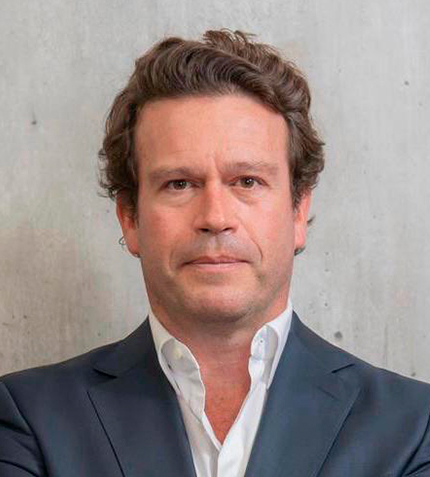
“Lithium’s rise and the Vicuña copper discovery have placed Argentina back on the global mining map.”
Share
Can you introduce Integra Capital?
Integra Capital is a family office for José Luis Manzano, a private equity business with activities in natural resources, media and power. On the power sector, we are invested in Edemsa, the Mendoza distribution utility, which also has a hydro plant and renewable projects; and Edenor, the largest electricity distributor in Argentina. There are also oil and gas companies in South America.
When the lithium opportunity in Argentina began to take shape, Integra contacted me in 2018. The market at that time had many juniors with single or shared salt flats, offering a one-project story. We decided to scale and diversify by province. The idea was to assemble a portfolio that could anchor a future consolidator providing a footprint large enough to build a first-tier operator, rather than debating a single asset. We prioritized Catamarca and Jujuy and focused on creating a balanced provincial portfolio.
We made five brine lithium discoveries. We also pursued hard-rock lithium, which, at that time, was uncommon in Argentina. That led us to Latin Resources and, ultimately, to Brazil. Argentina has hard-rock occurrences, but Brazil’s Minas Gerais has been very conducive to developing a lithium-in-rock project, with clear permitting and environmental processes. We are actively developing our Alta Jama project in Jujuy, and started exploration in new targets in Catamarca and La Rioja provinces.
What is your involvement with Minera Aguilar and the Potasio Río Colorado (PRC) project?
PRC is a landmark Argentine project with a rich history. It requires a massive scale because it is a massive project. The ore quality is excellent, and only a fraction of the property has been drilled, yet even that supports a century-scale resource life. The challenge lies in scale and logistics, including rail, roads, ports and multi-province alignment. PRC is completing pilots and final engineering. The next step is to set the project scale. Larger scales are possible, but logistics become the gating factor, including whether the export goes via Chilean or Argentine ports.
At Minera Aguilar, Glencore viewed zinc as non-strategic, and the operation had been scaled back, with the plant shut down and remediation outstanding. We saw an opportunity in 2021 to assume risk, invest, and restart. Today, Aguilar has approximately 15 years of mine life at a reasonable scale of around 50,000 t/y, with potential to extend to 20 years as we confirm more mineralization.
Can you discuss Integra Capital’s mining investments in Peru?
Peru has been an attractive destination for investment across various sectors for years. Our Volcan acquisition is in a fully mining-centric area on the central plateau that supports mining. Our initial step with Volcan was not purely strategic but rather asset-driven: we saw a path to operational improvement and a complex capital structure that needed restructuring. There were large covenants, significant guarantees, and a delicate balance among equity holders, creditors and bondholders. Operationally, Glencore had implemented improvements that were beginning to show. We took equity risk, worked to re-establish investor relations, addressed debt, and now a definitive restructuring is being advanced. Performance has improved, drawing the interest of investors.
On the port side, our participation is a minority. The Chancay port is a national-scale asset with extraordinary draft and infrastructure, and we also own adjacent properties that should be valuable for port-related operations.
What are your expectations for the sector in Argentina and the region over the next few years?
Lithium’s rise and the Vicuña copper discovery have placed Argentina back on the global mining map. Majors that were dormant or absent are now active. If lithium investment continues, Argentina will become a leading exporter of this commodity. A more active sector builds an ecosystem of capable suppliers and experienced authorities, which in turn accelerates approvals and execution. That benefits both small and huge projects, including PRC-scale builds. Our focus extends beyond lithium; we are also advancing copper, rare earths, and other opportunities that Argentina has not historically explored.
We aim to deliver our lithium projects and continue building the business, while enabling PRC to reach operational status and become a key potash supplier for the region. If the country maintains clear rules and continues to strengthen macro stability, the sector can mature quickly.
Can you introduce Integra Capital?
Integra Capital is a family office for José Luis Manzano, a private equity business with activities in natural resources, media and power. On the power sector, we are invested in Edemsa, the Mendoza distribution utility, which also has a hydro plant and renewable projects; and Edenor, the largest electricity distributor in Argentina. There are also oil and gas companies in South America.
When the lithium opportunity in Argentina began to take shape, Integra contacted me in 2018. The market at that time had many juniors with single or shared salt flats, offering a one-project story. We decided to scale and diversify by province. The idea was to assemble a portfolio that could anchor a future consolidator providing a footprint large enough to build a first-tier operator, rather than debating a single asset. We prioritized Catamarca and Jujuy and focused on creating a balanced provincial portfolio.
We made five brine lithium discoveries. We also pursued hard-rock lithium, which, at that time, was uncommon in Argentina. That led us to Latin Resources and, ultimately, to Brazil. Argentina has hard-rock occurrences, but Brazil’s Minas Gerais has been very conducive to developing a lithium-in-rock project, with clear permitting and environmental processes. We are actively developing our Alta Jama project in Jujuy, and started exploration in new targets in Catamarca and La Rioja provinces.
What is your involvement with Minera Aguilar and the Potasio Río Colorado (PRC) project?
PRC is a landmark Argentine project with a rich history. It requires a massive scale because it is a massive project. The ore quality is excellent, and only a fraction of the property has been drilled, yet even that supports a century-scale resource life. The challenge lies in scale and logistics, including rail, roads, ports and multi-province alignment. PRC is completing pilots and final engineering. The next step is to set the project scale. Larger scales are possible, but logistics become the gating factor, including whether the export goes via Chilean or Argentine ports.
At Minera Aguilar, Glencore viewed zinc as non-strategic, and the operation had been scaled back, with the plant shut down and remediation outstanding. We saw an opportunity in 2021 to assume risk, invest, and restart. Today, Aguilar has approximately 15 years of mine life at a reasonable scale of around 50,000 t/y, with potential to extend to 20 years as we confirm more mineralization.
Can you discuss Integra Capital’s mining investments in Peru?
Peru has been an attractive destination for investment across various sectors for years. Our Volcan acquisition is in a fully mining-centric area on the central plateau that supports mining. Our initial step with Volcan was not purely strategic but rather asset-driven: we saw a path to operational improvement and a complex capital structure that needed restructuring. There were large covenants, significant guarantees, and a delicate balance among equity holders, creditors and bondholders. Operationally, Glencore had implemented improvements that were beginning to show. We took equity risk, worked to re-establish investor relations, addressed debt, and now a definitive restructuring is being advanced. Performance has improved, drawing the interest of investors.
On the port side, our participation is a minority. The Chancay port is a national-scale asset with extraordinary draft and infrastructure, and we also own adjacent properties that should be valuable for port-related operations.
What are your expectations for the sector in Argentina and the region over the next few years?
Lithium’s rise and the Vicuña copper discovery have placed Argentina back on the global mining map. Majors that were dormant or absent are now active. If lithium investment continues, Argentina will become a leading exporter of this commodity. A more active sector builds an ecosystem of capable suppliers and experienced authorities, which in turn accelerates approvals and execution. That benefits both small and huge projects, including PRC-scale builds. Our focus extends beyond lithium; we are also advancing copper, rare earths, and other opportunities that Argentina has not historically explored.
We aim to deliver our lithium projects and continue building the business, while enabling PRC to reach operational status and become a key potash supplier for the region. If the country maintains clear rules and continues to strengthen macro stability, the sector can mature quickly.