Gold, REEs, Lithium and Uranium
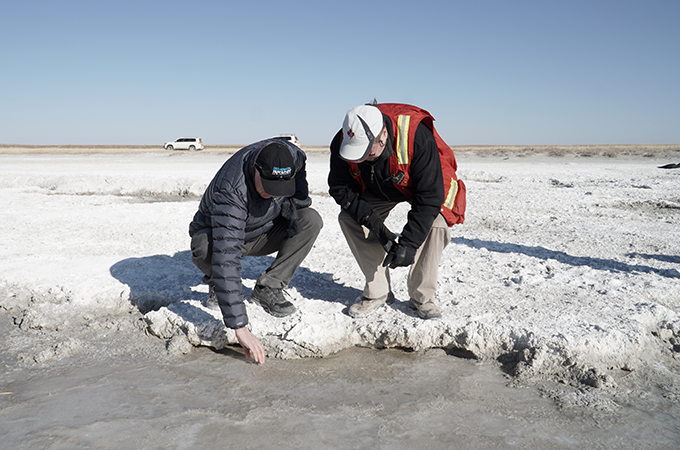
Image courtesy of ION Energy
Reliance on mining to prop up any nation’s economy is a risk, and reliance on only a couple of metals and resources compounds this. With the cyclical nature of commodity prices and fluctuating demand in Mongolia’s key markets, the Land of the Eternal Blue Sky is looking to diversify its portfolio of mining projects. No one doubts its rich geology, but the challenge lies in translating this potential into commercially viable projects. By attracting global investors, improving ESG standards and deploying new technologies, Mongolia is positioning itself as a competitive supplier of gold, rare earth elements, lithium and uranium to meet tomorrow’s industrial and energy needs.
Gold
To increase Mongolia’s foreign exchange reserves, ease pressure on the balance of payments and the tugrug exchange rate, and ensure macroeconomic stability, the Government of Mongolia has decided to launch the ‘Gold-3’ campaign nationwide.
The government expects that the campaign will increase the amount of gold sold to the Bank of Mongolia by 8 t/y. At current prices of around US$3,300/oz, the initiative could mean over US$900 million in extra cash flow for companies. CEO of Mongolian consultancy firm Glogex, Sambuudorj Erdenebat, explained: “The Gold-3 initiative offers financial support for gold projects and opens up licenses to make it easier for local companies to operate. While this is a positive step for the gold sector, it remains to be seen whether it will lead to increased foreign investment.”
The plan aims to activate 82 untapped hard rock deposits, initiating production in areas previously protected under the ‘Long Named Law’. “With the decline in coal prices, the government has started discussing programs like the Gold-3’- initiative, which needs a strong ESG focus. There is concern from the community about potential abuse in these programs, and we are helping companies navigate these challenges and communicate with the community,” outlined Dagva Myagmasuren, CEO of Qualified Management Consulting (QMC).
As these new projects get up and running over the next few years, there is one company with a head start. Erdene Resource Development discovered the Khundii Minerals District a decade ago, which hosts the Bayan Khundii, Altan Nar and Ulaan gold deposits, and the Zuun Mod molybdenum-copper porphyry complex. Construction of the Bayan Khundii gold project was completed in mid-2025, with production expected to begin in Q3.
“The mine will have an annualized production of approximately 85,000 oz/y AuEq once commercial production commences later in 2025. We will also seek to extend and expand Bayan Khundii by growing the project’s reserves. Higher gold prices will allow us to expand Bayan Khundii’s pits to capture material that was marginal in previous studies,” said Peter Akerley, president of Erdene Resource Development.
The rising gold price has buoyed the sector in Mongolia, with a new mine about to come online and potentially dozens of exploration projects activated in the near future. “From a gold perspective, given the decline in the US$ value and geopolitical uncertainty, the outlook is stronger than ever,” continued Akerley.
Lithium and REEs
Mongolia may not be known for its lithium reserves, but despite unfavorable market conditions, companies are advancing with their projects, anticipating a resurgence in demand due to AI and tech advancements.
Urgakh Naran is ION Energy’s flagship asset. Drilling is set to start there in September 2025, after the company signed a JV with SureFQ, an Asian company with proven direct lithium extraction technology (DLE). “Just five years ago, DLE was considered impractical, but today it is a proven method, particularly in countries like China. DLE is more environmentally friendly than traditional methods like evaporation ponds, and it has a lower capital expenditure. With Urgakh Naran, the chemistry is complex, but the modular DLE technology provided by our partner is perfectly suited for the site’s conditions,” said Ali Haji, CEO of ION Energy.
The benefits of DLE are yet to be fully explored on a truly global scale, but all indicators point to it being the future of lithium extraction. “DLE definitely has a place, and over time, DLE will likely play a bigger role in how lithium reaches the market,” predicted Alan Langridge, senior vice president, mining and minerals, Eastern Region (APAC and EMEA) for engineering consultants Wood.
Wood was engaged on the Mongolian National Rare Earth Corp’s (MNREC) Khalzan Buregtei (KB) project. The REE market is growing in Mongolia, particularly as certain countries move away from China as their chosen supplier. “The United States has shown interest in Mongolia’s critical minerals, especially in light of China’s dominance in the sector. Mongolia’s potential to supply REEs and other minerals could help diversify US supply chains,” observed Nyamtseren Bataa of Snow Hill Consultancy.
MNREC has completed pilot testing on the KB project, finalizing the processes and pathways using modern technology, including SGS’ Canadian laboratory. “The permanent magnet market has created quite a positive outlook for REEs. The NdPr market has been relatively stable, and dysprosium and terbium have been in demand for some time. On the other hand, REEs are a niche product with global competition; therefore, timing to enter the market is of the utmost importance,” attested Tsolmon Adiya, CEO of MNREC.
The company will look to complete its feasibility study over the next 12 months, drawing a clear picture towards development for KB.
Uranium
On the January 17th 2025, Orano Mining, Badrakh Energy’s major shareholder signed a historic investment agreement with the government Mongolia, allowing the company to being active development by the end of 2025.
As half of the 400 nuclear power plants expected to be produced in the next 25 years will be located in China, a development of this magnitude in Mongolia has not gone unnoticed on the global mining scene and is perfectly timed to meet increasing global demand. “Current uranium extraction rates will not cover the future demand for nuclear fuel. Starting from 2030 onward, existing mines will not be able to meet the full demand for the market. Therefore, the industrial mining development of Zuuvch Ovoo will start at the right time,” shared Coralie Prin, CEO of Badrakh Energy.
With gold projects gaining momentum, REE development advancing, uranium deals being signed and lithium exploration poised to benefit from new extraction technologies, the country is laying the groundwork for a more balanced mining sector. Mongolia is moving beyond its traditional dependence on coal and copper toward a broader resource base that can better withstand commodity cycles. Whether these opportunities translate into sustainable investment and long-term value will depend on regulatory clarity, community engagement, and consistent policy support. If these pieces fall into place, Mongolia could emerge as a strategic mining hub for both regional and global markets over the coming decade.

Image courtesy of ION Energy
Reliance on mining to prop up any nation’s economy is a risk, and reliance on only a couple of metals and resources compounds this. With the cyclical nature of commodity prices and fluctuating demand in Mongolia’s key markets, the Land of the Eternal Blue Sky is looking to diversify its portfolio of mining projects. No one doubts its rich geology, but the challenge lies in translating this potential into commercially viable projects. By attracting global investors, improving ESG standards and deploying new technologies, Mongolia is positioning itself as a competitive supplier of gold, rare earth elements, lithium and uranium to meet tomorrow’s industrial and energy needs.
Gold
To increase Mongolia’s foreign exchange reserves, ease pressure on the balance of payments and the tugrug exchange rate, and ensure macroeconomic stability, the Government of Mongolia has decided to launch the ‘Gold-3’ campaign nationwide.
The government expects that the campaign will increase the amount of gold sold to the Bank of Mongolia by 8 t/y. At current prices of around US$3,300/oz, the initiative could mean over US$900 million in extra cash flow for companies. CEO of Mongolian consultancy firm Glogex, Sambuudorj Erdenebat, explained: “The Gold-3 initiative offers financial support for gold projects and opens up licenses to make it easier for local companies to operate. While this is a positive step for the gold sector, it remains to be seen whether it will lead to increased foreign investment.”
The plan aims to activate 82 untapped hard rock deposits, initiating production in areas previously protected under the ‘Long Named Law’. “With the decline in coal prices, the government has started discussing programs like the Gold-3’- initiative, which needs a strong ESG focus. There is concern from the community about potential abuse in these programs, and we are helping companies navigate these challenges and communicate with the community,” outlined Dagva Myagmasuren, CEO of Qualified Management Consulting (QMC).
As these new projects get up and running over the next few years, there is one company with a head start. Erdene Resource Development discovered the Khundii Minerals District a decade ago, which hosts the Bayan Khundii, Altan Nar and Ulaan gold deposits, and the Zuun Mod molybdenum-copper porphyry complex. Construction of the Bayan Khundii gold project was completed in mid-2025, with production expected to begin in Q3.
“The mine will have an annualized production of approximately 85,000 oz/y AuEq once commercial production commences later in 2025. We will also seek to extend and expand Bayan Khundii by growing the project’s reserves. Higher gold prices will allow us to expand Bayan Khundii’s pits to capture material that was marginal in previous studies,” said Peter Akerley, president of Erdene Resource Development.
The rising gold price has buoyed the sector in Mongolia, with a new mine about to come online and potentially dozens of exploration projects activated in the near future. “From a gold perspective, given the decline in the US$ value and geopolitical uncertainty, the outlook is stronger than ever,” continued Akerley.
Lithium and REEs
Mongolia may not be known for its lithium reserves, but despite unfavorable market conditions, companies are advancing with their projects, anticipating a resurgence in demand due to AI and tech advancements.
Urgakh Naran is ION Energy’s flagship asset. Drilling is set to start there in September 2025, after the company signed a JV with SureFQ, an Asian company with proven direct lithium extraction technology (DLE). “Just five years ago, DLE was considered impractical, but today it is a proven method, particularly in countries like China. DLE is more environmentally friendly than traditional methods like evaporation ponds, and it has a lower capital expenditure. With Urgakh Naran, the chemistry is complex, but the modular DLE technology provided by our partner is perfectly suited for the site’s conditions,” said Ali Haji, CEO of ION Energy.
The benefits of DLE are yet to be fully explored on a truly global scale, but all indicators point to it being the future of lithium extraction. “DLE definitely has a place, and over time, DLE will likely play a bigger role in how lithium reaches the market,” predicted Alan Langridge, senior vice president, mining and minerals, Eastern Region (APAC and EMEA) for engineering consultants Wood.
Wood was engaged on the Mongolian National Rare Earth Corp’s (MNREC) Khalzan Buregtei (KB) project. The REE market is growing in Mongolia, particularly as certain countries move away from China as their chosen supplier. “The United States has shown interest in Mongolia’s critical minerals, especially in light of China’s dominance in the sector. Mongolia’s potential to supply REEs and other minerals could help diversify US supply chains,” observed Nyamtseren Bataa of Snow Hill Consultancy.
MNREC has completed pilot testing on the KB project, finalizing the processes and pathways using modern technology, including SGS’ Canadian laboratory. “The permanent magnet market has created quite a positive outlook for REEs. The NdPr market has been relatively stable, and dysprosium and terbium have been in demand for some time. On the other hand, REEs are a niche product with global competition; therefore, timing to enter the market is of the utmost importance,” attested Tsolmon Adiya, CEO of MNREC.
The company will look to complete its feasibility study over the next 12 months, drawing a clear picture towards development for KB.
Uranium
On the January 17th 2025, Orano Mining, Badrakh Energy’s major shareholder signed a historic investment agreement with the government Mongolia, allowing the company to being active development by the end of 2025.
As half of the 400 nuclear power plants expected to be produced in the next 25 years will be located in China, a development of this magnitude in Mongolia has not gone unnoticed on the global mining scene and is perfectly timed to meet increasing global demand. “Current uranium extraction rates will not cover the future demand for nuclear fuel. Starting from 2030 onward, existing mines will not be able to meet the full demand for the market. Therefore, the industrial mining development of Zuuvch Ovoo will start at the right time,” shared Coralie Prin, CEO of Badrakh Energy.
With gold projects gaining momentum, REE development advancing, uranium deals being signed and lithium exploration poised to benefit from new extraction technologies, the country is laying the groundwork for a more balanced mining sector. Mongolia is moving beyond its traditional dependence on coal and copper toward a broader resource base that can better withstand commodity cycles. Whether these opportunities translate into sustainable investment and long-term value will depend on regulatory clarity, community engagement, and consistent policy support. If these pieces fall into place, Mongolia could emerge as a strategic mining hub for both regional and global markets over the coming decade.