Who is financing African projects?
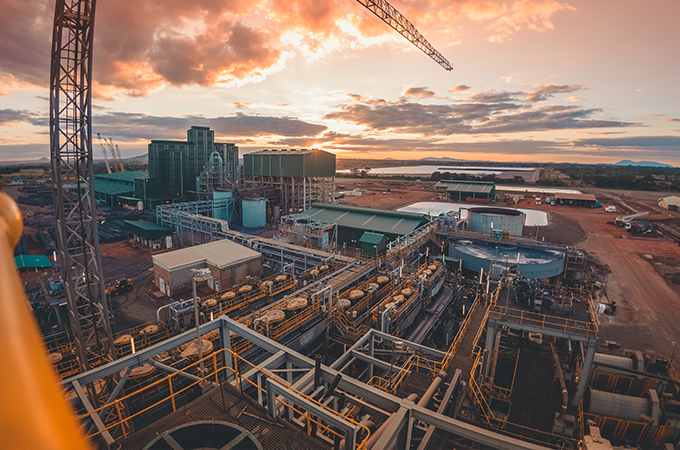
Image courtesy of Syrah Resources
With equities often on the bargain rack and loans carrying high risk premiums, hesitancy to invest in Africa is understandable. Yet a Moody’s Analytics study on the risk profile of Africa over the past 14 years found that the rate of loss (the proportion of loans that are uncollectible) on the continent is 1.7%, much lower than in South America (13%) or Eastern Europe (10%). Perhaps it is the increasing recognition that risks are often overstated when balanced against opportunities, or because Africa’s minerals are becoming indispensable, but the continent has been attracting more diverse and innovative capital flows over recent years. According to Khanyisile Tshabalala Moshoeshoe, who heads mining and metals financing at Standard Bank Group, commercial banks, development banks, government-backed agencies, specialist private equity, the large mining houses themselves, as well as large-ticket streaming companies are all coming to the table to a greater extent compared to pre-COVID days.
Moshoeshoe’s observations are accurate. At a government level, more foreign parties are taking interest in the continent. The US, Europe, the Middle East, Japan, and even India are all crowding in, while China maintains its already well-established presence. Institutions like the US Development Finance Corporation (DFC) have become leading actors in critical minerals financing, providing support to companies such as Syrah Resources (graphite), Lifezone Metals (nickel), Trinity Metals (tungsten), Pensana Rare Earths, and Millennial Potash. Freshly NASDAQ-listed NexMetals Mining has also announced a letter of interest from the Export-Import Bank of the United States (EXIM) for a potential loan of US$150 million to finance the redevelopment of Selebi and Selkirk, two past-producing polymetallic mines in Botswana. Syrah Resources was awarded a US$165 million IRA tax credit directly from the US Department of Defense.
UAE companies like International Holdings Resources (IHR) are also delving into Africa, through the recent acquisitions of the Alphamin mine in the DRC and the Mopani mine in Zambia. Maaden International Investment, owned by a consortium of Omani investors, has acquired a 41% stake in Catoca from sanctioned Russian company Alrosa. Catoca is the largest diamond producer in Angola.
On Japan’s behalf, the Japan Organization for Metals and Energy Security (JOGMEC) has now built a presence in over 10 African countries and signed several MoUs focused on metals in South Africa, Zambia, Namibia and Angola. Equity investments by JOGMEC include Platreef (developed by Ivanhoe Mines in South Africa) and the Waterberg project (developed by Platinum Group Metals). Through the Ministry of Foreign Affairs, Japan committed US$7 billion to develop the Nacala Logistics Corridor, which will support mining projects like Sovereign Metals’ rutile-graphite project in Malawi. This type of eye-watering investment used to be almost exclusively realised by China as part of its Belt and Road Initiative.
On the private equity side, interest in African projects shows just as much geographical diversity: Luxembourg-based La Mancha Resource Capital backs companies such as Falcon Energy, operating in Guinea and Morocco; Vancouver-based Fiore Group, led by Frank Giustra, supports firms like NexMetals, active in Botswana; Singapore-based A2MP has taken an equity stake in Mali-based gold developer Toubani Resources, helping it raise AUD29 million; and Australian-based Iluka Resources has signed a US$20 million funding term sheet and offtake agreement for the Kangankunde REE project in Malawi, developed by Lindian Resources.
At the same time, African-based investment funds and state-owned development institutions are also getting more involved in mining, mostly by taking leading equity positions in strategic projects. The most active in recent years is the Industrial Development Corporation of South Africa Ltd (IDC), which has positioned itself behind some of the most significant developments in the country, including the Prieska copper-zinc project by Orion Minerals; the Qala Shallows gold project by West Wits Mining; and the TGME gold project by Theta Gold Mines. A notable development in African mining is the involvement of Ethiopian Investment Holdings (EIH), Africa’s largest sovereign wealth fund, in Akobo Minerals, the company behind Ethiopia’s first mine in three decades. EIH took a 7.4% stake in Akobo, marking the state-owned investment fund’s first international investment (Akobo is listed in Frankfurt).
Meanwhile, notorious absentees from this group are African banks themselves. The US foreign aid cuts announced this year by Donald Trump’s administration have reinforced an enduring desire to reduce external dependencies and rely more on Africa-for-Africa capital. Leading African banks such as Standard Bank, United Bank for Africa (UBA), Absa, Ecobank, BCDC, and Nedbank (in no particular order) have been primarily involved in renewable energy projects, as well as mining and infrastructure, yet many locally operating branches are constrained by liquidity limitations, high levels of NPLs, and national policies that have led them to take a more cautious approach.
In Ghana, for instance, UBA is looking to grow its loan portfolio and “take more risk,” especially now that interest rates are finally coming down, according to Kweku Awotwi, board chairman at UBA Ghana. Ghana Commercial Bank (GCB), the largest bank by asset value in the country, has traditionally had limited involvement in mining, but this is now changing. That said, their approach is cautious: “We must strike a balance—on one hand, we want to support our clients’ survival and growth; on the other, we must consider the risk of non-repayment in a high-interest environment,” commented Farihan Alhassan, managing director at GCB.
Facilitating banks to join the party, especially when it comes to greenfield project financing, is the emergence of hybrid (quasi-equity, quasi-debt) financing packages, which can include a mix of royalty and streaming and allow entities to share the burden. Large royalty and streaming companies with predominantly Americas-focused portfolios are increasing their exposure to Africa. This year, First Quantum Minerals secured a US$1 billion gold streaming deal with Royal Gold, a large streaming and royalty company. This gives the Zambian miner the upfront cash to advance the Kansanshi expansion. Pure streaming company Wheaton Precious Metals has also signed a US$625 million gold streaming agreement with Montage Gold’s Koné gold project in Côte d’Ivoire, as well as a smaller US$175 million streaming agreement with Allied Gold for the Kurmuk gold project in Ethiopia.
According to Michael Seeger, director of MX Mining Capital Partners and author of Mining Capital: Methods, Best Practices, and Case Studies for Financing Mining Projects, streaming and royalty financing is gaining momentum in Africa, since it helps reduce equity dilution, improve project bankability, and unlock capital where traditional financing falls short. These models mean that investors either get a share of future revenue (royalty) or pay upfront for a portion of future production at a discounted price (stream).
Another financing mechanism supported by MX is vendor financing, where vendors, such as mining and civil contractors, take a stake in the project they help develop instead of charging a standard contract fee. This aligns with what Capt. Pappu Sastry, CEO of Adhira Shipping and Logistics (ASL), describes as moving CapEx to OpEx: “Mining projects, especially juniors, struggle because they need huge upfront investments for machines, roads, ports and logistics. So, what we do is take almost everything—trucking, roads, ports, machinery—and move it from CapEx to OpEx. That reduces the financial pressure on the mine and creates an ecosystem where contractors, investors and operators are all tied together. Everyone has a stake in making the project succeed, because if one link in the chain breaks, the whole system suffers.”

Image courtesy of Syrah Resources
With equities often on the bargain rack and loans carrying high risk premiums, hesitancy to invest in Africa is understandable. Yet a Moody’s Analytics study on the risk profile of Africa over the past 14 years found that the rate of loss (the proportion of loans that are uncollectible) on the continent is 1.7%, much lower than in South America (13%) or Eastern Europe (10%). Perhaps it is the increasing recognition that risks are often overstated when balanced against opportunities, or because Africa’s minerals are becoming indispensable, but the continent has been attracting more diverse and innovative capital flows over recent years. According to Khanyisile Tshabalala Moshoeshoe, who heads mining and metals financing at Standard Bank Group, commercial banks, development banks, government-backed agencies, specialist private equity, the large mining houses themselves, as well as large-ticket streaming companies are all coming to the table to a greater extent compared to pre-COVID days.
Moshoeshoe’s observations are accurate. At a government level, more foreign parties are taking interest in the continent. The US, Europe, the Middle East, Japan, and even India are all crowding in, while China maintains its already well-established presence. Institutions like the US Development Finance Corporation (DFC) have become leading actors in critical minerals financing, providing support to companies such as Syrah Resources (graphite), Lifezone Metals (nickel), Trinity Metals (tungsten), Pensana Rare Earths, and Millennial Potash. Freshly NASDAQ-listed NexMetals Mining has also announced a letter of interest from the Export-Import Bank of the United States (EXIM) for a potential loan of US$150 million to finance the redevelopment of Selebi and Selkirk, two past-producing polymetallic mines in Botswana. Syrah Resources was awarded a US$165 million IRA tax credit directly from the US Department of Defense.
UAE companies like International Holdings Resources (IHR) are also delving into Africa, through the recent acquisitions of the Alphamin mine in the DRC and the Mopani mine in Zambia. Maaden International Investment, owned by a consortium of Omani investors, has acquired a 41% stake in Catoca from sanctioned Russian company Alrosa. Catoca is the largest diamond producer in Angola.
On Japan’s behalf, the Japan Organization for Metals and Energy Security (JOGMEC) has now built a presence in over 10 African countries and signed several MoUs focused on metals in South Africa, Zambia, Namibia and Angola. Equity investments by JOGMEC include Platreef (developed by Ivanhoe Mines in South Africa) and the Waterberg project (developed by Platinum Group Metals). Through the Ministry of Foreign Affairs, Japan committed US$7 billion to develop the Nacala Logistics Corridor, which will support mining projects like Sovereign Metals’ rutile-graphite project in Malawi. This type of eye-watering investment used to be almost exclusively realised by China as part of its Belt and Road Initiative.
On the private equity side, interest in African projects shows just as much geographical diversity: Luxembourg-based La Mancha Resource Capital backs companies such as Falcon Energy, operating in Guinea and Morocco; Vancouver-based Fiore Group, led by Frank Giustra, supports firms like NexMetals, active in Botswana; Singapore-based A2MP has taken an equity stake in Mali-based gold developer Toubani Resources, helping it raise AUD29 million; and Australian-based Iluka Resources has signed a US$20 million funding term sheet and offtake agreement for the Kangankunde REE project in Malawi, developed by Lindian Resources.
At the same time, African-based investment funds and state-owned development institutions are also getting more involved in mining, mostly by taking leading equity positions in strategic projects. The most active in recent years is the Industrial Development Corporation of South Africa Ltd (IDC), which has positioned itself behind some of the most significant developments in the country, including the Prieska copper-zinc project by Orion Minerals; the Qala Shallows gold project by West Wits Mining; and the TGME gold project by Theta Gold Mines. A notable development in African mining is the involvement of Ethiopian Investment Holdings (EIH), Africa’s largest sovereign wealth fund, in Akobo Minerals, the company behind Ethiopia’s first mine in three decades. EIH took a 7.4% stake in Akobo, marking the state-owned investment fund’s first international investment (Akobo is listed in Frankfurt).
Meanwhile, notorious absentees from this group are African banks themselves. The US foreign aid cuts announced this year by Donald Trump’s administration have reinforced an enduring desire to reduce external dependencies and rely more on Africa-for-Africa capital. Leading African banks such as Standard Bank, United Bank for Africa (UBA), Absa, Ecobank, BCDC, and Nedbank (in no particular order) have been primarily involved in renewable energy projects, as well as mining and infrastructure, yet many locally operating branches are constrained by liquidity limitations, high levels of NPLs, and national policies that have led them to take a more cautious approach.
In Ghana, for instance, UBA is looking to grow its loan portfolio and “take more risk,” especially now that interest rates are finally coming down, according to Kweku Awotwi, board chairman at UBA Ghana. Ghana Commercial Bank (GCB), the largest bank by asset value in the country, has traditionally had limited involvement in mining, but this is now changing. That said, their approach is cautious: “We must strike a balance—on one hand, we want to support our clients’ survival and growth; on the other, we must consider the risk of non-repayment in a high-interest environment,” commented Farihan Alhassan, managing director at GCB.
Facilitating banks to join the party, especially when it comes to greenfield project financing, is the emergence of hybrid (quasi-equity, quasi-debt) financing packages, which can include a mix of royalty and streaming and allow entities to share the burden. Large royalty and streaming companies with predominantly Americas-focused portfolios are increasing their exposure to Africa. This year, First Quantum Minerals secured a US$1 billion gold streaming deal with Royal Gold, a large streaming and royalty company. This gives the Zambian miner the upfront cash to advance the Kansanshi expansion. Pure streaming company Wheaton Precious Metals has also signed a US$625 million gold streaming agreement with Montage Gold’s Koné gold project in Côte d’Ivoire, as well as a smaller US$175 million streaming agreement with Allied Gold for the Kurmuk gold project in Ethiopia.
According to Michael Seeger, director of MX Mining Capital Partners and author of Mining Capital: Methods, Best Practices, and Case Studies for Financing Mining Projects, streaming and royalty financing is gaining momentum in Africa, since it helps reduce equity dilution, improve project bankability, and unlock capital where traditional financing falls short. These models mean that investors either get a share of future revenue (royalty) or pay upfront for a portion of future production at a discounted price (stream).
Another financing mechanism supported by MX is vendor financing, where vendors, such as mining and civil contractors, take a stake in the project they help develop instead of charging a standard contract fee. This aligns with what Capt. Pappu Sastry, CEO of Adhira Shipping and Logistics (ASL), describes as moving CapEx to OpEx: “Mining projects, especially juniors, struggle because they need huge upfront investments for machines, roads, ports and logistics. So, what we do is take almost everything—trucking, roads, ports, machinery—and move it from CapEx to OpEx. That reduces the financial pressure on the mine and creates an ecosystem where contractors, investors and operators are all tied together. Everyone has a stake in making the project succeed, because if one link in the chain breaks, the whole system suffers.”