
Injection leaching: Turning challenges into opportunities

Turn your injection leaching project into an opportunity, not a risk

Article header image by Jorge at Adobe Stock

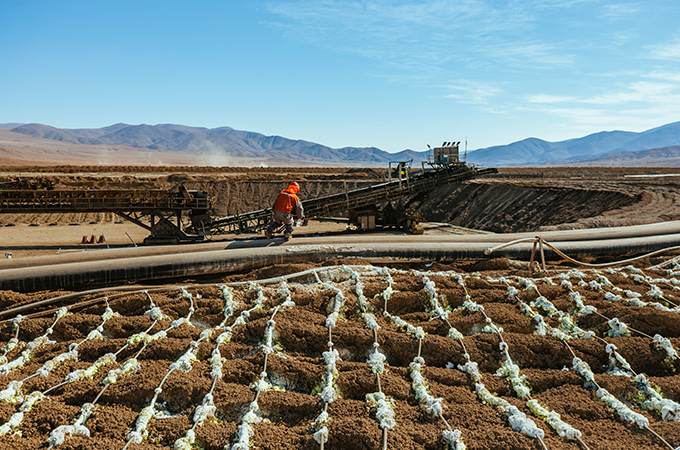
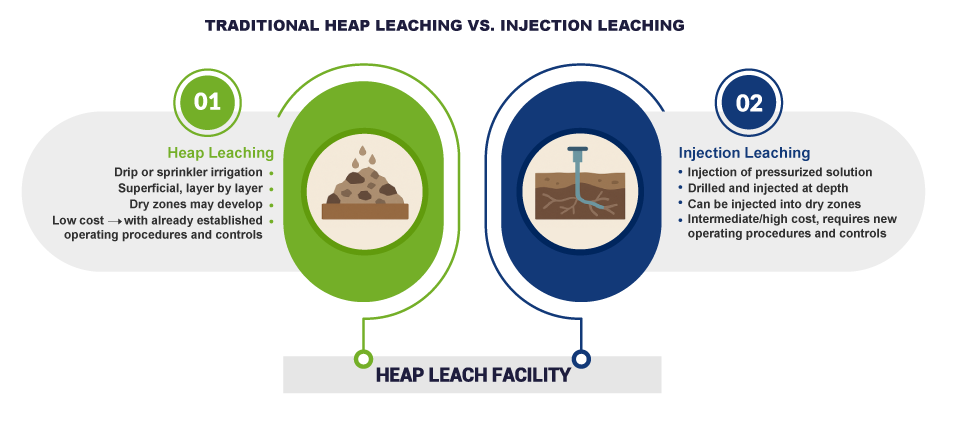
Peru is well known for hosting several major leaching projects, many of which are recognized as world-class operations. In simple terms, these projects consist of stacking extracted ore into large, tall pads that are irrigated with cyanide or acidic solutions to extract valuable minerals. Although effective, the process builds up an “inventory” of unprocessed ore because of the material’s heterogeneity and the limitations of conventional irrigation methods. To reduce that inventory, several techniques have emerged, including in-situ pressure leaching. The method uses injection wells drilled directly into the pad to apply pressurized solutions, mobilizing previously unrecovered ore.

The approach has gained particular interest in Peru, where many leach pads are nearing closure and operators want to recover additional value before shutting down. As with any technology, in-situ leaching presents challenges and risks, so a systematic and multidisciplinary approach is recommended to capture the upside while avoiding potential problems.

  1. Ore characterization. Before taking any action, it is essential to ask: Are there profitable inventories of unleached ore? Where are they located? It is also crucial to understand the ore’s geotechnical characteristics to assess its behavior under pressure.
  2. Baseline pad conditions. Before injection, assess whether the pad will remain operational during injection and which irrigation methods will be used. Determine the ore’s existing moisture content and the baseline stability conditions.
  3. Multidisciplinary risk analysis. Bring together a diverse team that includes technicians, operators, designers, and representatives from environmental, safety, and social areas. As a group, they should identify risks and develop mitigation measures for each stage of the injection cycle.
  4. Pilot testing. Before applying the technology at full scale, run pilot tests on a controlled portion of the heap. These tests will not only help estimate recovery potential and economic value, but also establish operating procedures—such as maximum injection pressures, limits for the horizontal spread of injected solution, and the dissipation time of any pore pressures generated.
  5. Stability analysis with injection. Evaluate heap stability throughout the entire injection process until all pressures have dissipated, including scenarios involving possible secondary irrigation in nearby areas and adverse weather conditions such as heavy rainfall.
  6. Zoning and control. Based on previous analyses, divide the heap into zones and prioritize injection targets. Implement specific controls and procedures for each zone to ensure a safe and efficient process.
  7. Execution and monitoring. Once everything is ready, execute the plan and monitor progress. Continuous tracking will allow you to adjust processes in real time and ensure the project’s stability and efficiency.


This systematic approach will not only improve mineral recovery but also help mitigate associated risks, turning a potential challenge into a tangible opportunity. When done correctly, in-situ injection leaching allows mining projects in Peru and around the world to achieve operational efficiency and sustained profitability without compromising safety or the environment.
Interesting facts:
Although leaching is considered a modern technique, the idea of using liquids to extract metals has ancient roots. Civilizations such as the Romans used early leaching methods to extract copper from oxidized ores using water and vinegar

 

Article header image by Jorge at Adobe Stock

Peru is well known for hosting several major leaching projects, many of which are recognized as world-class operations. In simple terms, these projects consist of stacking extracted ore into large, tall pads that are irrigated with cyanide or acidic solutions to extract valuable minerals. Although effective, the process builds up an “inventory” of unprocessed ore because of the material’s heterogeneity and the limitations of conventional irrigation methods. To reduce that inventory, several techniques have emerged, including in-situ pressure leaching. The method uses injection wells drilled directly into the pad to apply pressurized solutions, mobilizing previously unrecovered ore.

The approach has gained particular interest in Peru, where many leach pads are nearing closure and operators want to recover additional value before shutting down. As with any technology, in-situ leaching presents challenges and risks, so a systematic and multidisciplinary approach is recommended to capture the upside while avoiding potential problems.

  1. Ore characterization. Before taking any action, it is essential to ask: Are there profitable inventories of unleached ore? Where are they located? It is also crucial to understand the ore’s geotechnical characteristics to assess its behavior under pressure.
  2. Baseline pad conditions. Before injection, assess whether the pad will remain operational during injection and which irrigation methods will be used. Determine the ore’s existing moisture content and the baseline stability conditions.
  3. Multidisciplinary risk analysis. Bring together a diverse team that includes technicians, operators, designers, and representatives from environmental, safety, and social areas. As a group, they should identify risks and develop mitigation measures for each stage of the injection cycle.
  4. Pilot testing. Before applying the technology at full scale, run pilot tests on a controlled portion of the heap. These tests will not only help estimate recovery potential and economic value, but also establish operating procedures—such as maximum injection pressures, limits for the horizontal spread of injected solution, and the dissipation time of any pore pressures generated.
  5. Stability analysis with injection. Evaluate heap stability throughout the entire injection process until all pressures have dissipated, including scenarios involving possible secondary irrigation in nearby areas and adverse weather conditions such as heavy rainfall.
  6. Zoning and control. Based on previous analyses, divide the heap into zones and prioritize injection targets. Implement specific controls and procedures for each zone to ensure a safe and efficient process.
  7. Execution and monitoring. Once everything is ready, execute the plan and monitor progress. Continuous tracking will allow you to adjust processes in real time and ensure the project’s stability and efficiency.


This systematic approach will not only improve mineral recovery but also help mitigate associated risks, turning a potential challenge into a tangible opportunity. When done correctly, in-situ injection leaching allows mining projects in Peru and around the world to achieve operational efficiency and sustained profitability without compromising safety or the environment.

Interesting facts:
Although leaching is considered a modern technique, the idea of using liquids to extract metals has ancient roots. Civilizations such as the Romans used early leaching methods to extract copper from oxidized ores using water and vinegar

 

Related Report

Industry: Latest Interviews

Industry: Latest Reports