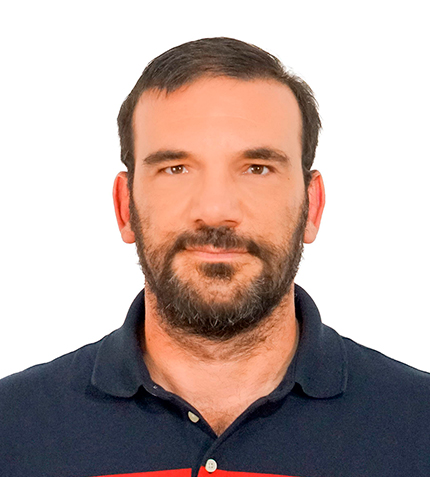
“Too often, I saw advisory work produced without sufficient operator experience, resulting in theoretical answers that failed to solve the client’s problem.”
Share
Why did you found Andes Exploration, and what gap are you addressing?
I founded Andes Exploration in 2022 to deliver consulting that is genuinely empathetic to operators. Too often, I saw advisory work produced without sufficient operator experience, resulting in theoretical answers that failed to solve the client’s problem. Our philosophy is pragmatic: understand the client’s goals, deliver efficiently, add measurable value, and avoid endless iterations that do not move the project forward.
We operate along two complementary tracks. First, we provide technical consulting services across the Americas, encompassing due diligence and targeting, resource models, and study support. Second, we act as a prospect generator on selected opportunities where we can apply our geological concepts, add value with early work, and then partner.
Everyone on our team has extensive experience on the operator side. We understand time pressure, budget limits, and what actually drives value. We keep solutions practical, avoid over-engineering, and focus on decisions that change outcomes. We also bring deep local knowledge of geology, permitting, communities, and logistics across Argentina and Chile.
Which external client projects are you working on now?
We are building a geological model for the large Donlin project in Alaska. We are supporting GoldQuest in the Romero district in the Dominican Republic, extending exploration beyond the known resources. In Argentina, we are updating resources at the La Providencia mine. We are advancing fluorite projects in Río Negro. In Jujuy, we are assisting Martín Bronce, currently the only copper producer in Argentina, with preliminary evaluations, exploration programs, and a drilling plan aimed at achieving a compliant resource under NI 43-101 standards.
What projects are you advancing in your own pipeline in Argentina?
We hold exploration ground with partners in Río Negro that has very high-grade gold in veins with visible gold and is now moving through environmental filings. In the NOA region, our copper strategy focuses on the under-explored sediment-hosted copper belt across Jujuy and Salta, including ground adjacent to Martín Bronce, where we are pursuing permits and baseline work. For lithium, we secured the Pastos Chicos area, located between Salinas Grandes and the Caucharo region, based on a basin-scale screening of evaporitic systems. Indicators such as nearby geothermal activity, structural controls, and basin evolution suggest a potential deep aquifer containing preserved lithium-bearing brines. We are advancing community engagement and environmental approvals, and plan to run geophysics before deciding on drilling and potential partnerships.
How do you approach partners and funding for project advancement?
We look first to add value ourselves through mapping, sampling, geophysics, and clear hypotheses, and only then bring in partners. We will consider local investors and strategic partners who can contribute capital or in-kind capabilities, including drilling contractors with idle rigs. We keep discussions open but prefer to secure permits and initial datasets before diluting.
How do you use technology and data systems to improve exploration outcomes?
We are advanced users of Leapfrog for 3D geological modeling and Leapfrog Edge for geostatistics and resource estimation. Depending on client requirements, we also work in industry-standard platforms such as Vulcan and Micromine. We build robust geological databases and dashboards in collaboration with Chilean engineering partners, as many operations still rely on fragmented spreadsheets with version control issues that waste expert time and degrade decision-making quality. Our approach centralizes validated data, preserves lineage, and gives geologists and engineers tools that accelerate interpretation rather than consume their day with copy-paste tasks.
We work to international reporting standards such as NI 43-101 and JORC, and I sign reports as a Qualified Person where applicable. We are based in Argentina but deliver work across Latin America and North America, from early stage targeting through resource estimation and study inputs.
What are your priorities for the next 12 months?
On the project-generation side, we aim to complete environmental approvals, run geophysics at Pastos Chicos, advance sampling and mapping on our gold and copper properties, and potentially test priority targets or formalize partnerships. On the consulting side, we will continue to deliver resource updates and models in accordance with international standards, expand our data management solutions for clients, and demonstrate that a pragmatic, operator-minded team can accelerate decisions and create tangible value.
Why did you found Andes Exploration, and what gap are you addressing?
I founded Andes Exploration in 2022 to deliver consulting that is genuinely empathetic to operators. Too often, I saw advisory work produced without sufficient operator experience, resulting in theoretical answers that failed to solve the client’s problem. Our philosophy is pragmatic: understand the client’s goals, deliver efficiently, add measurable value, and avoid endless iterations that do not move the project forward.
We operate along two complementary tracks. First, we provide technical consulting services across the Americas, encompassing due diligence and targeting, resource models, and study support. Second, we act as a prospect generator on selected opportunities where we can apply our geological concepts, add value with early work, and then partner.
Everyone on our team has extensive experience on the operator side. We understand time pressure, budget limits, and what actually drives value. We keep solutions practical, avoid over-engineering, and focus on decisions that change outcomes. We also bring deep local knowledge of geology, permitting, communities, and logistics across Argentina and Chile.
Which external client projects are you working on now?
We are building a geological model for the large Donlin project in Alaska. We are supporting GoldQuest in the Romero district in the Dominican Republic, extending exploration beyond the known resources. In Argentina, we are updating resources at the La Providencia mine. We are advancing fluorite projects in Río Negro. In Jujuy, we are assisting Martín Bronce, currently the only copper producer in Argentina, with preliminary evaluations, exploration programs, and a drilling plan aimed at achieving a compliant resource under NI 43-101 standards.
What projects are you advancing in your own pipeline in Argentina?
We hold exploration ground with partners in Río Negro that has very high-grade gold in veins with visible gold and is now moving through environmental filings. In the NOA region, our copper strategy focuses on the under-explored sediment-hosted copper belt across Jujuy and Salta, including ground adjacent to Martín Bronce, where we are pursuing permits and baseline work. For lithium, we secured the Pastos Chicos area, located between Salinas Grandes and the Caucharo region, based on a basin-scale screening of evaporitic systems. Indicators such as nearby geothermal activity, structural controls, and basin evolution suggest a potential deep aquifer containing preserved lithium-bearing brines. We are advancing community engagement and environmental approvals, and plan to run geophysics before deciding on drilling and potential partnerships.
How do you approach partners and funding for project advancement?
We look first to add value ourselves through mapping, sampling, geophysics, and clear hypotheses, and only then bring in partners. We will consider local investors and strategic partners who can contribute capital or in-kind capabilities, including drilling contractors with idle rigs. We keep discussions open but prefer to secure permits and initial datasets before diluting.
How do you use technology and data systems to improve exploration outcomes?
We are advanced users of Leapfrog for 3D geological modeling and Leapfrog Edge for geostatistics and resource estimation. Depending on client requirements, we also work in industry-standard platforms such as Vulcan and Micromine. We build robust geological databases and dashboards in collaboration with Chilean engineering partners, as many operations still rely on fragmented spreadsheets with version control issues that waste expert time and degrade decision-making quality. Our approach centralizes validated data, preserves lineage, and gives geologists and engineers tools that accelerate interpretation rather than consume their day with copy-paste tasks.
We work to international reporting standards such as NI 43-101 and JORC, and I sign reports as a Qualified Person where applicable. We are based in Argentina but deliver work across Latin America and North America, from early stage targeting through resource estimation and study inputs.
What are your priorities for the next 12 months?
On the project-generation side, we aim to complete environmental approvals, run geophysics at Pastos Chicos, advance sampling and mapping on our gold and copper properties, and potentially test priority targets or formalize partnerships. On the consulting side, we will continue to deliver resource updates and models in accordance with international standards, expand our data management solutions for clients, and demonstrate that a pragmatic, operator-minded team can accelerate decisions and create tangible value.