“We are the second mining company to obtain RIGI approval, after Rio Tinto. It is a significant endorsement of our work and a strong statement that we can have fiscal stability in Argentina for 30 years.”
Share
Can you introduce yourself and Galan Lithium?
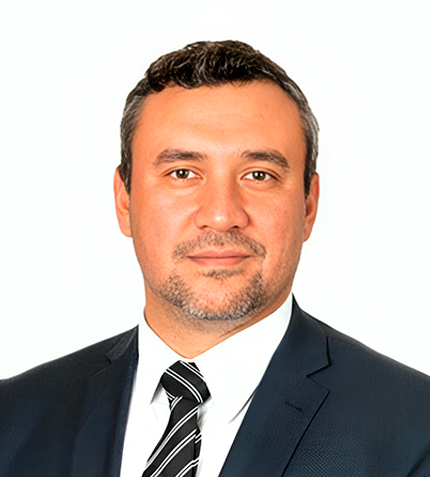
I founded the company in 2017 as a private entity to explore lithium opportunities. I am a mineral economist by background and have been a mining analyst. I identified ground on the edge of the Hombre Muerto salt flat in Argentina, next to the long-producing operation then owned by FMC. The geological thesis was compelling, so I set out to explore it, extracting enough information to build a project. In 2018 the private entity became public via a business combination with an ASX listed company, so establishing the ASX listed Galan Lithium Limited.
In 2025, we released our latest resource update, which includes 9.5 million t of lithium carbonate equivalent (LCE) across Hombre Muerto West, plus Candelas, which is the highest grade lithium brine resource in Argentina. Having succeeded in exploration, we moved into studies and then development, which is never easy as a public junior because funding must be continuous and well-timed. We managed to raise capital step by step and secured the last leg of the financing for our Phase 1 development, which targets 4,000 t/y LCE as a lithium chloride concentrate product.
We chose lithium chloride concentrate because it is the minimum common denominator to reach cash flow quickly, and as a junior, that matters.
What is the current status of construction and engineering?
Approximately 80% of Phase 1 is built. We have an offtake with a company which is also responsible for funding the nanofiltration plant. We are advanced the Phase 2 engineering study.
How are Phase 1 and Phase 2 structured, permitted, and funded?
Phase 1 targets 4,000 t/y of LCE as lithium chloride.. On-site, we have a power plant and camp in place, and our ponds are largely complete. One remaining pond requires its third liner; once lined, Phase 1 will be mechanically complete. For Phase 2, we hold permits granted by the Catamarca government in January 2025 to scale to 21,000 t/y. The expansion is modular and physically contiguous with Phase 1. We have approximately 9,000 t of LCE contained in our pond inventory, which is pre-concentrated brine, allowing us to enter production on a short timeline.
How has RIGI affected project viability and decisions?
We are the second mining company to obtain RIGI approval, after Rio Tinto. It is a significant endorsement of our work and a strong statement that we can have fiscal stability in Argentina for 30 years. Since its inception, we have invested approximately US$80 million directly in the project. RIGI addresses critical investor concerns that I have heard from day one, especially regarding how to repatriate funds for dividend payments and debt service. It normalizes the operating and financial framework and reinforces our commitment to development.
Can you discuss Galan Lithium’s community approach?
Our focus has been on schools and healthcare in the puna, where we have worked closely with the hospital and communities, providing job opportunities and training, and maintaining ongoing dialogue. Catamarca requires a 70% local workforce, with the highest share from local communities, and we have adhered to that while also favoring local contractors and suppliers.
How do lithium market fundamentals and pricing impact your outlook?
The news flow is volatile, but I take a broader perspective. From now until 2030, demand will outpace supply; whether the turn occurs in 12 months or a little more or less, the conclusion remains unchanged. Bringing new mining supply online is slow and tripling last year’s production in five years is a massive ask. Demand goes far beyond EVs. Stationary storage could rival EV demand. Maritime applications, larger home batteries, AI-driven data centers, and grid-stabilizing storage for solar all point to growing lithium use. You cannot cheat the periodic table: lithium is the lightest metal. Lithium batteries are becoming more efficient and affordable.
What is your project timeline over the next 12 months?
We will finalize construction of the nanofiltration plant in Sydney, commission it in Q1 2026, and reach production by mid 2026. Within those 12 months, we aim to become a producer and achieve positive cash flow, and then pivot to Phase 2 financing and execution.
Can you introduce yourself and Galan Lithium?
I founded the company in 2017 as a private entity to explore lithium opportunities. I am a mineral economist by background and have been a mining analyst. I identified ground on the edge of the Hombre Muerto salt flat in Argentina, next to the long-producing operation then owned by FMC. The geological thesis was compelling, so I set out to explore it, extracting enough information to build a project. In 2018 the private entity became public via a business combination with an ASX listed company, so establishing the ASX listed Galan Lithium Limited.
In 2025, we released our latest resource update, which includes 9.5 million t of lithium carbonate equivalent (LCE) across Hombre Muerto West, plus Candelas, which is the highest grade lithium brine resource in Argentina. Having succeeded in exploration, we moved into studies and then development, which is never easy as a public junior because funding must be continuous and well-timed. We managed to raise capital step by step and secured the last leg of the financing for our Phase 1 development, which targets 4,000 t/y LCE as a lithium chloride concentrate product.
We chose lithium chloride concentrate because it is the minimum common denominator to reach cash flow quickly, and as a junior, that matters.
What is the current status of construction and engineering?
Approximately 80% of Phase 1 is built. We have an offtake with a company which is also responsible for funding the nanofiltration plant. We are advanced the Phase 2 engineering study.
How are Phase 1 and Phase 2 structured, permitted, and funded?
Phase 1 targets 4,000 t/y of LCE as lithium chloride.. On-site, we have a power plant and camp in place, and our ponds are largely complete. One remaining pond requires its third liner; once lined, Phase 1 will be mechanically complete. For Phase 2, we hold permits granted by the Catamarca government in January 2025 to scale to 21,000 t/y. The expansion is modular and physically contiguous with Phase 1. We have approximately 9,000 t of LCE contained in our pond inventory, which is pre-concentrated brine, allowing us to enter production on a short timeline.
How has RIGI affected project viability and decisions?
We are the second mining company to obtain RIGI approval, after Rio Tinto. It is a significant endorsement of our work and a strong statement that we can have fiscal stability in Argentina for 30 years. Since its inception, we have invested approximately US$80 million directly in the project. RIGI addresses critical investor concerns that I have heard from day one, especially regarding how to repatriate funds for dividend payments and debt service. It normalizes the operating and financial framework and reinforces our commitment to development.
Can you discuss Galan Lithium’s community approach?
Our focus has been on schools and healthcare in the puna, where we have worked closely with the hospital and communities, providing job opportunities and training, and maintaining ongoing dialogue. Catamarca requires a 70% local workforce, with the highest share from local communities, and we have adhered to that while also favoring local contractors and suppliers.
How do lithium market fundamentals and pricing impact your outlook?
The news flow is volatile, but I take a broader perspective. From now until 2030, demand will outpace supply; whether the turn occurs in 12 months or a little more or less, the conclusion remains unchanged. Bringing new mining supply online is slow and tripling last year’s production in five years is a massive ask. Demand goes far beyond EVs. Stationary storage could rival EV demand. Maritime applications, larger home batteries, AI-driven data centers, and grid-stabilizing storage for solar all point to growing lithium use. You cannot cheat the periodic table: lithium is the lightest metal. Lithium batteries are becoming more efficient and affordable.
What is your project timeline over the next 12 months?
We will finalize construction of the nanofiltration plant in Sydney, commission it in Q1 2026, and reach production by mid 2026. Within those 12 months, we aim to become a producer and achieve positive cash flow, and then pivot to Phase 2 financing and execution.