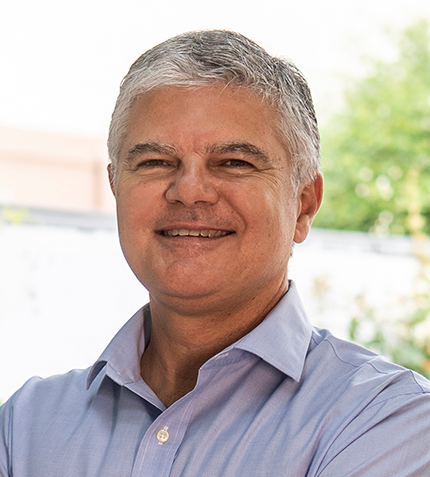

“It took us 20 years to go from a standing start to achieving 500,000 oz/y of gold produced, and now over the next five years we want to raise this up to 1 million oz.”
Share
How have your projects progressed through 2025?
Since acquiring the Magino mine in mid-2024, we have been focused on integrating this with our underground Island Gold mine, as well as working on the Phase 3 expansion plan. This consists of a shaft and a paste backfill plan that will allow us to mine at a higher rate and with lower costs, expected to be finished around Q3 2026. Additionally, the mill constructed by the previous owners of Magino only processes roughly 10,000 t/d, whilst the property can be mined at a rate of 17,000 t/d. We are going to upgrade this facility, with the aim of it being able to process this 17,000 t/d as well as a further 3,000 t/d of high-grade material from the Island Gold mine. Going forward, this will equate to roughly 500,000 oz of total production. We have been operating Young-Davidson at 8,000 t/d since 2020. Ore grades have been lower there throughout 2025, but the mine remains very profitable, generating about US$200 million in free cash flow, benefiting from the rising gold price. Progress at Lynn Lake was halted this year due to wildfires in Manitoba, but we are looking to pick the pace back up in 2026 to bring the operation into production in 2029.
Mulatos in Mexico is our founding asset. We have had success there this year with further exploration, creating discoveries, and opportunities for growth. Alamos Gold was one of the only companies to receive a permit in Mexico in 2025, and this will allow us to mine the high-grade underground portion of the resource and sustain Mulatos for another ten years.
Is the current gold bull market leading to a lack of discipline among mining companies, and how does it differ from past cycles?
There are always cases during a bull market where certain companies lack discipline, and these attract attention, even if the majority of companies remain sensible. Deals can often look overly ambitious after the fact, when at the time they seemed to many as correct decisions given the way the gold price was trending. This, to me, does not imply a lack of discipline, but rather an overly optimistic view of the gold market.
The market we are currently in feels very different from those that have come before it, mainly due to the large amount of central-bank buying. What we have not seen yet is a large amount of speculative investor participation that drove price hikes in previous markets. CEOs and investors alike are showing caution at this stage, wary of a sudden price correction in gold.
How has Alamos maintained a solid social license to operate in both Mexico and Ontario?
Social license comes from a broad set of constituents. Local communities are vital, and we have ensured that our operations have a direct and positive impact on the surrounding populations. We are trying to replicate the positive impact we have had on the communities around Mulatos in the rest of our operations.
You have to also be engaged with governments of all levels, as well as the people of a country themselves. If you are doing things right, it will resonate, but this takes time. An ongoing presence that consistently benefits communities goes a long way in gaining trust. Our shareholders appreciate that by investing in the community as we do, it benefits both parties.
What will 2026 look like for Alamos Gold?
It took us 20 years to go from a standing start to achieving 500,000 oz/y of gold produced, and now over the next five years we want to raise this up to 1 million oz. To do this, we will be expanding the Island Gold complex to deal with the increase in Mineral Reserves and Resources, including the transition from a ramp to a shaft. We have been replacing reserves and resources every year, and the orebody is now larger than when we started. At Young-Davidson, there is a similar situation. At Mulatos, we have made multiple discoveries over the years that now form five mines, proving Alamos Gold as a company that can keep mines in operation for years to come.

How have your projects progressed through 2025?
Since acquiring the Magino mine in mid-2024, we have been focused on integrating this with our underground Island Gold mine, as well as working on the Phase 3 expansion plan. This consists of a shaft and a paste backfill plan that will allow us to mine at a higher rate and with lower costs, expected to be finished around Q3 2026. Additionally, the mill constructed by the previous owners of Magino only processes roughly 10,000 t/d, whilst the property can be mined at a rate of 17,000 t/d. We are going to upgrade this facility, with the aim of it being able to process this 17,000 t/d as well as a further 3,000 t/d of high-grade material from the Island Gold mine. Going forward, this will equate to roughly 500,000 oz of total production. We have been operating Young-Davidson at 8,000 t/d since 2020. Ore grades have been lower there throughout 2025, but the mine remains very profitable, generating about US$200 million in free cash flow, benefiting from the rising gold price. Progress at Lynn Lake was halted this year due to wildfires in Manitoba, but we are looking to pick the pace back up in 2026 to bring the operation into production in 2029.
Mulatos in Mexico is our founding asset. We have had success there this year with further exploration, creating discoveries, and opportunities for growth. Alamos Gold was one of the only companies to receive a permit in Mexico in 2025, and this will allow us to mine the high-grade underground portion of the resource and sustain Mulatos for another ten years.
Is the current gold bull market leading to a lack of discipline among mining companies, and how does it differ from past cycles?
There are always cases during a bull market where certain companies lack discipline, and these attract attention, even if the majority of companies remain sensible. Deals can often look overly ambitious after the fact, when at the time they seemed to many as correct decisions given the way the gold price was trending. This, to me, does not imply a lack of discipline, but rather an overly optimistic view of the gold market.
The market we are currently in feels very different from those that have come before it, mainly due to the large amount of central-bank buying. What we have not seen yet is a large amount of speculative investor participation that drove price hikes in previous markets. CEOs and investors alike are showing caution at this stage, wary of a sudden price correction in gold.
How has Alamos maintained a solid social license to operate in both Mexico and Ontario?
Social license comes from a broad set of constituents. Local communities are vital, and we have ensured that our operations have a direct and positive impact on the surrounding populations. We are trying to replicate the positive impact we have had on the communities around Mulatos in the rest of our operations.
You have to also be engaged with governments of all levels, as well as the people of a country themselves. If you are doing things right, it will resonate, but this takes time. An ongoing presence that consistently benefits communities goes a long way in gaining trust. Our shareholders appreciate that by investing in the community as we do, it benefits both parties.
What will 2026 look like for Alamos Gold?
It took us 20 years to go from a standing start to achieving 500,000 oz/y of gold produced, and now over the next five years we want to raise this up to 1 million oz. To do this, we will be expanding the Island Gold complex to deal with the increase in Mineral Reserves and Resources, including the transition from a ramp to a shaft. We have been replacing reserves and resources every year, and the orebody is now larger than when we started. At Young-Davidson, there is a similar situation. At Mulatos, we have made multiple discoveries over the years that now form five mines, proving Alamos Gold as a company that can keep mines in operation for years to come.