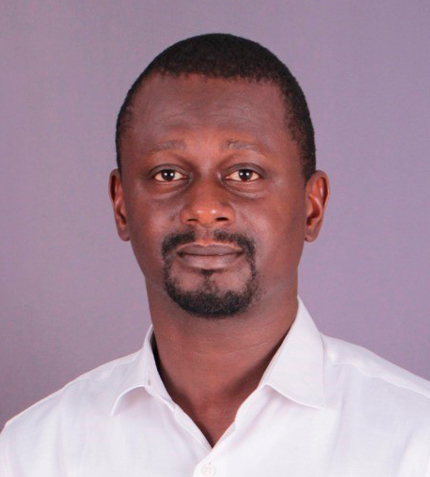
“AI is the direction the industry is moving toward, enabling geologists to work faster and more efficiently.”
Share
How have SEMS’ technical capabilities and services in West Africa evolved?
We initially focused heavily on geochemical work such as soil sampling and drilling supervision, and have gradually added topographic surveying, drone surveying, LiDAR surveying, UAV magnetic surveying, and XRF analysis using the Block 10 In-Field Geoanalysis Laboratory, which includes a portable crusher, pulverizing mill, hydraulic press, and the XRF unit itself. SEMS Exploration has also entered a partnership with a company called Portable PPB, which has developed a technology that integrates the pXRF with specialized software and sample preparation methods to provide rapid, on-site low level gold analysis.
In addition to providing downhole survey equipment, we execute hole orientation, core orientation, and structural logging to better understand subsurface geology.
How has the Abidjan office grown, and what role does it serve in the broader Francophone region that you lead?
We’ve built a robust presence in Abidjan, having been here since 2008. The market is booming, but this cycle is different from the last, with fewer big funds coming to the table yet still a lot of activity, especially in the mid-tier sector. SEMS has clients in Côte d’Ivoire, Ghana, Mali, and Burkina Faso, while Guinea is also seeing increased interest.
The political situation in Mali, Burkina Faso, and Niger has redirected companies to seek licenses in Côte d’Ivoire instead. However, the most prospective, best located, and largest licenses are already taken or in application status. The remaining ones are typically pure greenfield plays with no existing data and therefore fall into the highest-risk category.
Juniors with already defined resources are looking for JV partners and broader capital opportunities, whereas pre-drilling junior explorers struggle to capture the market’s attention.
How does SEMS use AI as part of its geological services?
Most of the land in Côte d’Ivoire is covered by a thick regolith layer, which makes exploration challenging. We have been developing a methodology to automatically map the regolith layers to better distinguish residual from transported units, particularly across very large land packages where manual interpretation is not feasible. Machine learning offers the objectivity and scalability to map regolith layers effectively.
We were recently approached by a company to map both an alluvial and a hard-rock site. The project spans about 118,000 km², something that would have taken years to digitize manually. Using AI, we can combine existing datasets such as satellite and multispectral imagery to complete the mapping efficiently.
The next phase will focus on data-driven target generation. SEMS has geophysical imagery, digital terrain models (DTMs), and geoscientific datasets covering about 70% of Ivorian territory, which we can leverage to generate exploration targets.
How are you observing the uptake of AI technologies in exploration?
We are also seeing a growing number of AI-driven exploration technologies entering the market, such as Datarock and Judica.AI, which use AI to accelerate exploration. Even in modeling and resource estimation software, AI algorithms are increasingly being trained to make accurate predictions. AI can also play a key role in QA/QC, helping to validate and verify geological datasets.
AI is the direction the industry is moving toward, enabling geologists to work faster and more efficiently. We should not be afraid of it. Today, algorithms such as Artificial Neural Networks (ANN), Support Vector Machines (SVM), and Random Forests can even be used to map drill core data, and these technologies are already widely available.
When dealing with large volumes of historical drill core (between 10,000 and 20,000 m) it’s extremely time-consuming for geologists to manually log everything. AI can help process this data, highlight patterns, and flag gaps or inconsistencies for geologists to review. These tools are very powerful, though they can be costly, and are therefore particularly useful for larger projects.
While most companies pulled out of Burkina Faso, SEMS maintains a presence. How does your current setup allow you to continue serving this market?
Burkina Faso currently produces around 94 t/y of gold. SEMS continues to work with some of the gold producers including OreZone at Bombore, where we provide geologists to support drilling and mapping operations. Our teams work cross-jurisdictionally—for example, our team in Burkina Faso, along with colleagues from Côte d’Ivoire, assisted Allied Gold’s Sadiola project in Mali. This cross-border collaboration helps us maintain a steady level of activity across the region.
When one team has a larger project, staff from another country can join to provide support. Likewise, if all teams are fully engaged, we can even bring in staff from Ghana. This mobility allows us to respond quickly to client needs. We also have several key experts who travel between sites depending on project requirements. For example, we recently hired a Congolese geochemist who provides technical support wherever his expertise is needed.
What are your priorities for 2026?
We plan to further expand our services in UAV magnetic surveying, LiDAR, and topographic surveying, as demand for these solutions continues to grow. We are also considering the acquisition of additional geophysical tools to strengthen our fleet. The use of seismic surveying could also be valuable for our operations in West Africa. In addition, demand for our IP surveying services is increasing. These are some of the areas we are actively developing as we continue to broaden our technical capabilities.

How have SEMS’ technical capabilities and services in West Africa evolved?
We initially focused heavily on geochemical work such as soil sampling and drilling supervision, and have gradually added topographic surveying, drone surveying, LiDAR surveying, UAV magnetic surveying, and XRF analysis using the Block 10 In-Field Geoanalysis Laboratory, which includes a portable crusher, pulverizing mill, hydraulic press, and the XRF unit itself. SEMS Exploration has also entered a partnership with a company called Portable PPB, which has developed a technology that integrates the pXRF with specialized software and sample preparation methods to provide rapid, on-site low level gold analysis.
In addition to providing downhole survey equipment, we execute hole orientation, core orientation, and structural logging to better understand subsurface geology.
How has the Abidjan office grown, and what role does it serve in the broader Francophone region that you lead?
We’ve built a robust presence in Abidjan, having been here since 2008. The market is booming, but this cycle is different from the last, with fewer big funds coming to the table yet still a lot of activity, especially in the mid-tier sector. SEMS has clients in Côte d’Ivoire, Ghana, Mali, and Burkina Faso, while Guinea is also seeing increased interest.
The political situation in Mali, Burkina Faso, and Niger has redirected companies to seek licenses in Côte d’Ivoire instead. However, the most prospective, best located, and largest licenses are already taken or in application status. The remaining ones are typically pure greenfield plays with no existing data and therefore fall into the highest-risk category.
Juniors with already defined resources are looking for JV partners and broader capital opportunities, whereas pre-drilling junior explorers struggle to capture the market’s attention.
How does SEMS use AI as part of its geological services?
Most of the land in Côte d’Ivoire is covered by a thick regolith layer, which makes exploration challenging. We have been developing a methodology to automatically map the regolith layers to better distinguish residual from transported units, particularly across very large land packages where manual interpretation is not feasible. Machine learning offers the objectivity and scalability to map regolith layers effectively.
We were recently approached by a company to map both an alluvial and a hard-rock site. The project spans about 118,000 km², something that would have taken years to digitize manually. Using AI, we can combine existing datasets such as satellite and multispectral imagery to complete the mapping efficiently.
The next phase will focus on data-driven target generation. SEMS has geophysical imagery, digital terrain models (DTMs), and geoscientific datasets covering about 70% of Ivorian territory, which we can leverage to generate exploration targets.
How are you observing the uptake of AI technologies in exploration?
We are also seeing a growing number of AI-driven exploration technologies entering the market, such as Datarock and Judica.AI, which use AI to accelerate exploration. Even in modeling and resource estimation software, AI algorithms are increasingly being trained to make accurate predictions. AI can also play a key role in QA/QC, helping to validate and verify geological datasets.
AI is the direction the industry is moving toward, enabling geologists to work faster and more efficiently. We should not be afraid of it. Today, algorithms such as Artificial Neural Networks (ANN), Support Vector Machines (SVM), and Random Forests can even be used to map drill core data, and these technologies are already widely available.
When dealing with large volumes of historical drill core (between 10,000 and 20,000 m) it’s extremely time-consuming for geologists to manually log everything. AI can help process this data, highlight patterns, and flag gaps or inconsistencies for geologists to review. These tools are very powerful, though they can be costly, and are therefore particularly useful for larger projects.
While most companies pulled out of Burkina Faso, SEMS maintains a presence. How does your current setup allow you to continue serving this market?
Burkina Faso currently produces around 94 t/y of gold. SEMS continues to work with some of the gold producers including OreZone at Bombore, where we provide geologists to support drilling and mapping operations. Our teams work cross-jurisdictionally—for example, our team in Burkina Faso, along with colleagues from Côte d’Ivoire, assisted Allied Gold’s Sadiola project in Mali. This cross-border collaboration helps us maintain a steady level of activity across the region.
When one team has a larger project, staff from another country can join to provide support. Likewise, if all teams are fully engaged, we can even bring in staff from Ghana. This mobility allows us to respond quickly to client needs. We also have several key experts who travel between sites depending on project requirements. For example, we recently hired a Congolese geochemist who provides technical support wherever his expertise is needed.
What are your priorities for 2026?
We plan to further expand our services in UAV magnetic surveying, LiDAR, and topographic surveying, as demand for these solutions continues to grow. We are also considering the acquisition of additional geophysical tools to strengthen our fleet. The use of seismic surveying could also be valuable for our operations in West Africa. In addition, demand for our IP surveying services is increasing. These are some of the areas we are actively developing as we continue to broaden our technical capabilities.