The social license is the ultimate permit in Latam North and the Caribbean
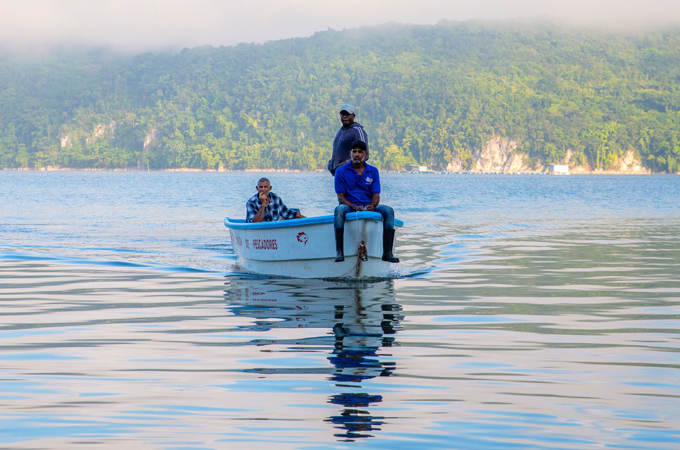
Image courtesy of Barrick Mining
It has been nine years since Canadian company GoldQuest Mining released a PFS on its 2.2 million oz AuEq Romero project in the Dominican Republic. Opposition from a community outside the immediate area of impact stalled the project in 2016. After years of re-engagement, 59% of the people in the province now support Romero’s development, allowing GoldQuest to move on to legal and technical matters, starting both the ESIA and BFS processes. “We have a highly prospective deposit in one of the poorest areas of the country where unemployment is rampant. We have the technical and financial resources to develop it, yet we would have nothing without the support of the local community,” reflected Luis Santana, who took over as CEO of GoldQuest Mining in 2022. “Romero is just one of many examples in Latin America of the consequences of incomplete community engagement,” Santana completed.
It is true that the case is far from unique. Local opposition can halt mining projects for a few days, months, years, or indefinitely, and at any stage during the project, including already operating mines. Latin America is notorious for the high level of opposition to mining, manifested in anything from locally driven campaigns, blockages and violence, to widespread protests and legal actions, sometimes against the state, other times against the mining company. 45% of reported conflicts related to environmental and human rights abuses at mine sites are in Latin America, according to the Global Atlas of Environmental Justice. A paper by Weiß, Giljum and Luckeneder published in 2020 in the FinePrint Journal (Brief No. 11) found that two people died on average every week in Latam due to conflicts in the context of mining, more than anywhere else in the world.
Anti-mining sentiment, whether from the local communities, broader population, organized associations and other groups, or all three, often takes a militant form through protests, violent opposition, and legal trials. Examples include the suspension of First Quantum Minerals’ flagship Cobre Panama mine in 2023 and the recent suspension of Equinox Gold’s operations at Los Filos Mine in Guerrero, Mexico, after one of the three communities did not sign the extension of the land access agreement this year. Ructions sometimes take the form of active violence, which Zijin Mining has been facing since acquiring the Buriticá gold mine in Colombia. In January this year, Zijin had to halt operations following a homemade bomb attack.
Operators in Ecuador have not been spared either. Ecuadorian state company Enami and Chile’s Codelco have been ordered by a local court to suspend operations at their Llurimagua copper project on the grounds that it did not comply with environmental parameters. Other assets, like Pan American Silver’s 264 million oz AgEq Escobal mine in Guatemala, have been in stalemate with the government since 2017, after a court determined that a consultation with an indigenous community had to take place before the mining license could be reinstated. Phase 2 of consultations with the Xinka Indigenous Peoples started in 2022.
The reasons behind the heightened risk of local resistance in the region are multifarious. An obvious one is mining’s gradual protrusion into biologically and socially sensitive areas in what author Michael Klare called “the race for what’s left,” as deposits in ideally scarcely populated and sparsely biodiverse areas have most likely been found and the industry has permeated into less tolerant landscapes. Latin America is a hotspot for biodiversity, hosting 34% of the planet’s primary forest, and 51% and 41% of amphibians and birds, according to “Natural Resources Outlook in Latin America and the Caribbean,” a UN publication. Colombia, Mexico and Ecuador are classified as three of the 17 “megadiverse” countries of the world. At the same time, a fifth of the surface area of Latam and the Caribbean is occupied by indigenous people, and their land is covered by forests in a proportion of 80%. This places indigenous people as indirect stewards of biodiversity.
Mining in such ecologically and culturally delicate places raises legal questions over what takes precedence, positing nature versus mining against one another. In 2016, the Atrato River in Colombia was assigned rights equivalent to those of a human, the first with such legal status in Latin America. The rights of nature have become recognized in various laws across the region. The Supreme Court of Panama found that the “right to life, health, and the environment” takes precedence over the “right to investment,” deeming the law granting the concession contract between Panama and Minera Panamá SA (subsidiary of FQM) as unconstitutional, a decision that led to the suspension of operations. Community members in Ecuador’s Intag Valley won the case to stop the Llurimagua copper mining project, the court ruling that the mining companies violated the communities’ right to consultation and the right of nature.
Social license is gaining more of a legal footing, with previously soft norms hardening into laws. In 2021, a ruling by the Inter-American Court of Human Rights established that every member state of the American Convention on Human Rights (ACHR), which 24 Latin American and Caribbean states ratified, must comply with the UN Guiding Principles, which until then were not legally binding, as explained in an article in the Latin Lawyer. Community consultation prior to a project’s development had been mandatory before through the legally-binding ILO 169 (Labour Organization’s Convention concerning Indigenous and Tribal Peoples in Independent Countries), but it was further fortified through landmark decisions such as the 2023 Maya Q’eqchi’ Agua Caliente vs Guatemala ruling in favor of the community and ordering Guatemala to pass legislation for consultation with indigenous people prior to approving projects impacting their lands and resources.
Even though the social license to operate is a vague concept speaking more to the informal acceptance of a company by local communities, its importance is starting to matter as much as a legal permit; in fact, that it is not a legal permit per se heightens the risks associated, since there are less clear-cut parameters and guarantees around it. The social license is evolving into a prerequisite to legal licenses, but it can also undo an already permitted project. Mining companies will need to do more than ascertain the political will. The community’s will is just as important, and the acceptance at the local level may not coincide with the government’s position.
According to Arsel et al (2016), left-leaning governments in Latam have been guided by a “resource imperative,” a drive to use proceeds from the extraction of resources to combat inequality and poverty. But this has sometimes been at odds with the priorities of local communities. In places with a long mining history like Mexico, communities are used to mining and mostly supportive, even when their government did not support mining development. Similarly, in Colombia, there is a gap between the support at the provincial and national level, with historic mining provinces like Antioquia being more pro-mining. In some regions, local communities may have never seen a mine, while their governments are pushing for mining investment. In many cases, the people’s will has toppled the political will. The largest copper operation in Central America and a US$10 billion project, Cobre Panama, was brought to a halt due to protests, which were originally born out of a dissatisfaction with the government’s handling of the pandemic. This soon escalated. “The mining issue became a rallying point for radical groups, unions, and environmental groups, while politicians used it seeking to attract young voters ahead of upcoming elections,” Roderick Gutiérrez Pérez, president of the Cámara Minera de Panamá (CAMIPA), explained.
In this case, the social has spilled into the political, influencing the project’s outcome. Even when the state itself is involved in the project, local opposition can still put a stop to it: In Bolivia, a high-profile, US$2 billion lithium project developed by the country’s state-owned company (backed by Russians and Chinese), has been pushed back. The Llurimagua copper project, developed by Ecuadorian state company Enami and Chile’s Codelco, was also revoked due to local opposition. At the same time, many other protests in Ecuador have not led to the closure of mines, but to heavy-handed crackdowns on protests. By comparison, in Peru, protests at the Tia Maria copper project have only delayed the megaproject. We can deduce that in countries with a shorter mining history (such as in Panama), the government may bend more easily in front of protests than in countries where mining is closely embedded in the economy (such as in Peru).
There are exceptions to that argument, however. In the Dominican Republic, mining is very old, with mining at Pueblo Viejo having started in the 1500s. In 2006, Barrick Miningacquired the asset (40% of shares belong to Newmont now), and in 2012, it agreed to the newly seated government’s request for more favorable terms. Barrick has since run a massive rehabilitation program to deal with legacy issues at the site left by previous operators. The nearby Margarita River had a dangerously low pH level of 2, making it uninhabitable for aquatic life. “12 years later, and through a state-of-the-art water treatment plant, the water quality has significantly improved, and aquatic life has returned. That, nevertheless, does not stop people from claiming that Barrick is contaminating the water bodies, claims that can create unnecessary concerns for politicians. It is up to us, as an industry, together with the government, to set the record straight,” commented Juana Barceló, president and country manager, at the Pueblo Viejo Dominicana Corporation, a Barrick-Newmont JV.
This brings us to the final issue, which is reputation. Mining has a bad image. Some of it stems from disasters, including the spill in the Sonora River of Mexico in 2014, one of the worst environmental disasters in the history of mining. The locals’ fight against mining becomes a fight against degradation, pollution, as well as the loss of biodiversity and traditional livelihoods. What the industry is yet to learn is communicating the good things that it is doing, said Alberto Vazquez, founder of Mexican law firm VHG Legal Services: “Investing in that messaging is a preventative measure that could avoid having to go through Amparos or defend yourself against NGOs who get their information from the 1970s – these NGOs are still better at propagating their message and even have their own books on how to stop a mining project.”
As such, the industry is paying for the bad deeds of other companies, while the positive impacts of mining get a lot less air time. Returning to the case of Panama, the Cobre Panama operation represented 4.8% of the country’s GDP, and the closure of the mine had devastating effects on the economy, including the loss of over 50,000 jobs. According to Roderick Gutiérrez Pérez, the president of the Cámara Minera de Panamá, these impacts have started to sink in: “2024 was a year of transition, economic strain, and education. Today, Panamanians know more about mining than they did two years ago, and they talk more openly about mining. Some are starting to demand the reopening of Cobre.”
Luis Santana, GoldQuest’s CEO, provided a cautionary conclusion: “The mining industry does not see the need to publicize itself because it counts on secure buyers for its products and the wider public is not part of its direct value chain. That is a great mistake. At the end of the day, politicians will bend to the will of the people, so it is down to the industry to come together as a sector and better communicate their values (…) What happened to one company will eventually happen to others.”
A guide to community engagement
Based on conversations with more than 60 mining companies, we extrapolated some common principles and practices that we hope will guide mining players in this region to better engage with the communities around them. There will be many guides out there written by ESG professionals, but this speaks primarily to the universe of mining companies operating in Latam North and Caribbean and is based purely on their experiences as case studies.
1) Know your stakeholders
How many communities are in your direct and indirect area of influence, are there artisanal miners in the region and what is their role, and, very importantly, are you competing with any other stakeholders, such as local “lords” or even the government?
Direct and indirect areas of influence: Some projects, like Prime Mining’s Los Reyes project in the Sierra Madre Occidental mountains in Mexico, are fully encapsulated within one Ejido (area of communal land), in this case the Ejido Tasajera. The company signed a 30-year community agreement with this Ejido. In other places, the area of impact is more complex and sometimes haphazard. In Ecuador, for instance, Solaris Resources has signed community impact and benefit agreements with the two ancentral indigenous communities that own the surface rights to their tenements, namely the Warintz and Yawi communities, but the company also went further out to sign multiple agreements with the Shaur indigenous populations residing in the broader Morona Santiago province. It is worth remembering that for GoldQuest’s Romero project in the Dominican Republic, it was a community further away from the project that posed opposition and ended up delaying the project by many years.
Artisanal mining: The presence of artisanal mining is a key factor. Small scale or illegal mining can be a serious challenge, but sometimes it can be used to the benefit of the project. Newly formed explorer Greenheart Gold uses artisanal workings as a vector towards hard rock sources of gold at its early-stage projects in Suriname and Guyana.
“In the Segovia province of Colombia, artisanal mining is a way of life,” according to Alexandre Boivin, the CEO of explorer Quimbaya Gold. Its neighbor in Segovia, leading gold producer Aris Mining, has indeed integrated artisanals as Contract Mining Partners, purchasing mill feed from the small scale miners to process at their facilities. An astonishing 50% of the gold at their Segovia mine comes out of this process. “We must recognize that we, as a foreign mining company, are the new kids on the block, whereas the locals and their forebears have been mining in the area for 450 years. My belief is that we can work together to create mutually beneficial and profitable partnerships. The partnership approach has had a huge impact on our reception at the community level, with the local miners becoming our greatest advocates,” commented Neil Woodyer, the CEO of Aris Mining.
Other stakeholders: In Guatemala, Volcanic Gold was met with opposition from a small but “aggressively anti-mining group,” in the words of CEO Simon Ridgway. This group agitated some members of the community to set fire to one of the company’s drill rigs. For the past two years, Ridgway and his team have been engaging the local communities who support the project to ensure the restart of exploration is safe and no further boycotts will take place. “Sometimes it is wealthy people within the community who are opposing mining because mining introduces higher wages, which can make it difficult for local employers to attract workers. You have to strike a delicate balance between paying a fair wage without disrupting the local economy,” Ridgway said.
2) Focus on employment
When done well, mining can have a transformative impact on communities. The provinces hosting large mining operations stand out massively. The Zamora Chinchipe province in Ecuador, which hosts both EcuaCorriente’s Mirador copper mine and Lundin Gold’s Fruta del Norte, used to be the 23rd poorest out of 24 in the country. It has since climbed up to the top 10 most well-off.
Though investments in infrastructure, health, education, and social developmet leave long-lasting benefits, the biggest impact tends to come through employment. For every person working at Pueblo Viejo, nine other employment opportunities are generated. The employment ratio is equally high at the Mirador mine in Ecuador, which generates a total of 16,000 jobs, of which 1,324 are direct, 1,905 contractors, and the rest are created through the reinvigoration of the local economy.
Smaller operations can also have considerable impact. In the historic Mexican mining town of Temascaltepec, Sierra Madre Gold and Silver has brought back into production the La Guitarra underground silver mine, which had previously been on care and maintenance under First Majestic. Since the reopening on January 1st of this year, the town has been going through what Alex Langer, Sierra Madre’s CEO calls “a honeymoon period.” Along with the mine, the entire town came back to life, with restaurants and hotels reopening and many former workers regaining their jobs: “The multiplying benefit is immense, with every 1 new direct job generating 11 other indirect or ancillary jobs. 20,000 people live within our project boundary.”
In Temascaltepec, La Guitarra is refilling a mining void, but mining activities can fill up other vacuums too. Ian Graham, the president of Oroco Resource, which is developing the Santo Tomas project in Sinaloa, Mexico, explained: “The legalization of cannabis in Canada/US has collapsed the illicit cartel businesses. As a result, the people who made a living out of cannabis cultivation have switched to farming tomatoes, sesame, corn and other legal crops, and cartel interest in the area withered. Small local mining companies, and principally Oroco, have since organically filled the social vacuum resulting from the changed economic landscape. Now we are the main agent for social support, whether by reopening a gummed-up water well, painting a school, bringing basic medications to the town clinic, or maintaining local access roads.”
Similar accounts have been expressed by companies across the region. In Jamaica, the main question asked by the community is around job creation, said Dan Symons, the CEO of explorer C3 Metals. For companies like Avino Gold and Silver with a 100% local workforce, employment has been the surest way to local assimilation and acceptance.
Simon Ridgway brings in another argument for employment in the region: “Countries in the region need employment above anything else. The typical narrative we hear is that people flee Central America due to violence, but for the most part, they are leaving because they want a better life. Before the Escobal mine was shut down, it was employing around 1,200 people, people who never regained their jobs. The economic argument for mining in the region has never been so strong.”
3) Livelihoods beyond mining
While the employment opportunity may be exciting, sometimes mining activities clash with the local ways of life, disrupting traditional livelihoods like agriculture. Resettlements represent the most extreme change. In the major resettlement carried out by Barrick Mining at Pueblo Viejo, 3,000 meetings with local communities have been held, ensuring the resettlement is not just a relocation of housing but also an improvement in livelihoods. “The locals involved got to choose the size and nature of their lot depending on their family size (…) Each family concerned will also have a livelihood project tailored to their needs,” said Juana Barceló, president and country manager at the Pueblo Viejo Dominicana Corporation, a Barrick-Newmont JV.
Though most projects do not entail such major changes as a resettlement, mining companies do need to map out the social, cultural and economic contexts to help preserve a continuity in traditional livelihoods while also introducing new alternatives. And the industry has not failed to come up with exciting projects: GoldQuest, for instance, has developed a roadmap to help the ecotourism sector in the region take off and created a local cooperative to launch a fish farming operation in the reservoir sitting downstream of its concessions, among other initiatives.
With the social license becoming a quasi-legal permit, mining is becoming a quasi-institution – a proxy for the government and a proxy for change.

Image courtesy of Barrick Mining
It has been nine years since Canadian company GoldQuest Mining released a PFS on its 2.2 million oz AuEq Romero project in the Dominican Republic. Opposition from a community outside the immediate area of impact stalled the project in 2016. After years of re-engagement, 59% of the people in the province now support Romero’s development, allowing GoldQuest to move on to legal and technical matters, starting both the ESIA and BFS processes. “We have a highly prospective deposit in one of the poorest areas of the country where unemployment is rampant. We have the technical and financial resources to develop it, yet we would have nothing without the support of the local community,” reflected Luis Santana, who took over as CEO of GoldQuest Mining in 2022. “Romero is just one of many examples in Latin America of the consequences of incomplete community engagement,” Santana completed.
It is true that the case is far from unique. Local opposition can halt mining projects for a few days, months, years, or indefinitely, and at any stage during the project, including already operating mines. Latin America is notorious for the high level of opposition to mining, manifested in anything from locally driven campaigns, blockages and violence, to widespread protests and legal actions, sometimes against the state, other times against the mining company. 45% of reported conflicts related to environmental and human rights abuses at mine sites are in Latin America, according to the Global Atlas of Environmental Justice. A paper by Weiß, Giljum and Luckeneder published in 2020 in the FinePrint Journal (Brief No. 11) found that two people died on average every week in Latam due to conflicts in the context of mining, more than anywhere else in the world.
Anti-mining sentiment, whether from the local communities, broader population, organized associations and other groups, or all three, often takes a militant form through protests, violent opposition, and legal trials. Examples include the suspension of First Quantum Minerals’ flagship Cobre Panama mine in 2023 and the recent suspension of Equinox Gold’s operations at Los Filos Mine in Guerrero, Mexico, after one of the three communities did not sign the extension of the land access agreement this year. Ructions sometimes take the form of active violence, which Zijin Mining has been facing since acquiring the Buriticá gold mine in Colombia. In January this year, Zijin had to halt operations following a homemade bomb attack.
Operators in Ecuador have not been spared either. Ecuadorian state company Enami and Chile’s Codelco have been ordered by a local court to suspend operations at their Llurimagua copper project on the grounds that it did not comply with environmental parameters. Other assets, like Pan American Silver’s 264 million oz AgEq Escobal mine in Guatemala, have been in stalemate with the government since 2017, after a court determined that a consultation with an indigenous community had to take place before the mining license could be reinstated. Phase 2 of consultations with the Xinka Indigenous Peoples started in 2022.
The reasons behind the heightened risk of local resistance in the region are multifarious. An obvious one is mining’s gradual protrusion into biologically and socially sensitive areas in what author Michael Klare called “the race for what’s left,” as deposits in ideally scarcely populated and sparsely biodiverse areas have most likely been found and the industry has permeated into less tolerant landscapes. Latin America is a hotspot for biodiversity, hosting 34% of the planet’s primary forest, and 51% and 41% of amphibians and birds, according to “Natural Resources Outlook in Latin America and the Caribbean,” a UN publication. Colombia, Mexico and Ecuador are classified as three of the 17 “megadiverse” countries of the world. At the same time, a fifth of the surface area of Latam and the Caribbean is occupied by indigenous people, and their land is covered by forests in a proportion of 80%. This places indigenous people as indirect stewards of biodiversity.
Mining in such ecologically and culturally delicate places raises legal questions over what takes precedence, positing nature versus mining against one another. In 2016, the Atrato River in Colombia was assigned rights equivalent to those of a human, the first with such legal status in Latin America. The rights of nature have become recognized in various laws across the region. The Supreme Court of Panama found that the “right to life, health, and the environment” takes precedence over the “right to investment,” deeming the law granting the concession contract between Panama and Minera Panamá SA (subsidiary of FQM) as unconstitutional, a decision that led to the suspension of operations. Community members in Ecuador’s Intag Valley won the case to stop the Llurimagua copper mining project, the court ruling that the mining companies violated the communities’ right to consultation and the right of nature.
Social license is gaining more of a legal footing, with previously soft norms hardening into laws. In 2021, a ruling by the Inter-American Court of Human Rights established that every member state of the American Convention on Human Rights (ACHR), which 24 Latin American and Caribbean states ratified, must comply with the UN Guiding Principles, which until then were not legally binding, as explained in an article in the Latin Lawyer. Community consultation prior to a project’s development had been mandatory before through the legally-binding ILO 169 (Labour Organization’s Convention concerning Indigenous and Tribal Peoples in Independent Countries), but it was further fortified through landmark decisions such as the 2023 Maya Q’eqchi’ Agua Caliente vs Guatemala ruling in favor of the community and ordering Guatemala to pass legislation for consultation with indigenous people prior to approving projects impacting their lands and resources.
Even though the social license to operate is a vague concept speaking more to the informal acceptance of a company by local communities, its importance is starting to matter as much as a legal permit; in fact, that it is not a legal permit per se heightens the risks associated, since there are less clear-cut parameters and guarantees around it. The social license is evolving into a prerequisite to legal licenses, but it can also undo an already permitted project. Mining companies will need to do more than ascertain the political will. The community’s will is just as important, and the acceptance at the local level may not coincide with the government’s position.
According to Arsel et al (2016), left-leaning governments in Latam have been guided by a “resource imperative,” a drive to use proceeds from the extraction of resources to combat inequality and poverty. But this has sometimes been at odds with the priorities of local communities. In places with a long mining history like Mexico, communities are used to mining and mostly supportive, even when their government did not support mining development. Similarly, in Colombia, there is a gap between the support at the provincial and national level, with historic mining provinces like Antioquia being more pro-mining. In some regions, local communities may have never seen a mine, while their governments are pushing for mining investment. In many cases, the people’s will has toppled the political will. The largest copper operation in Central America and a US$10 billion project, Cobre Panama, was brought to a halt due to protests, which were originally born out of a dissatisfaction with the government’s handling of the pandemic. This soon escalated. “The mining issue became a rallying point for radical groups, unions, and environmental groups, while politicians used it seeking to attract young voters ahead of upcoming elections,” Roderick Gutiérrez Pérez, president of the Cámara Minera de Panamá (CAMIPA), explained.
In this case, the social has spilled into the political, influencing the project’s outcome. Even when the state itself is involved in the project, local opposition can still put a stop to it: In Bolivia, a high-profile, US$2 billion lithium project developed by the country’s state-owned company (backed by Russians and Chinese), has been pushed back. The Llurimagua copper project, developed by Ecuadorian state company Enami and Chile’s Codelco, was also revoked due to local opposition. At the same time, many other protests in Ecuador have not led to the closure of mines, but to heavy-handed crackdowns on protests. By comparison, in Peru, protests at the Tia Maria copper project have only delayed the megaproject. We can deduce that in countries with a shorter mining history (such as in Panama), the government may bend more easily in front of protests than in countries where mining is closely embedded in the economy (such as in Peru).
There are exceptions to that argument, however. In the Dominican Republic, mining is very old, with mining at Pueblo Viejo having started in the 1500s. In 2006, Barrick Miningacquired the asset (40% of shares belong to Newmont now), and in 2012, it agreed to the newly seated government’s request for more favorable terms. Barrick has since run a massive rehabilitation program to deal with legacy issues at the site left by previous operators. The nearby Margarita River had a dangerously low pH level of 2, making it uninhabitable for aquatic life. “12 years later, and through a state-of-the-art water treatment plant, the water quality has significantly improved, and aquatic life has returned. That, nevertheless, does not stop people from claiming that Barrick is contaminating the water bodies, claims that can create unnecessary concerns for politicians. It is up to us, as an industry, together with the government, to set the record straight,” commented Juana Barceló, president and country manager, at the Pueblo Viejo Dominicana Corporation, a Barrick-Newmont JV.
This brings us to the final issue, which is reputation. Mining has a bad image. Some of it stems from disasters, including the spill in the Sonora River of Mexico in 2014, one of the worst environmental disasters in the history of mining. The locals’ fight against mining becomes a fight against degradation, pollution, as well as the loss of biodiversity and traditional livelihoods. What the industry is yet to learn is communicating the good things that it is doing, said Alberto Vazquez, founder of Mexican law firm VHG Legal Services: “Investing in that messaging is a preventative measure that could avoid having to go through Amparos or defend yourself against NGOs who get their information from the 1970s – these NGOs are still better at propagating their message and even have their own books on how to stop a mining project.”
As such, the industry is paying for the bad deeds of other companies, while the positive impacts of mining get a lot less air time. Returning to the case of Panama, the Cobre Panama operation represented 4.8% of the country’s GDP, and the closure of the mine had devastating effects on the economy, including the loss of over 50,000 jobs. According to Roderick Gutiérrez Pérez, the president of the Cámara Minera de Panamá, these impacts have started to sink in: “2024 was a year of transition, economic strain, and education. Today, Panamanians know more about mining than they did two years ago, and they talk more openly about mining. Some are starting to demand the reopening of Cobre.”
Luis Santana, GoldQuest’s CEO, provided a cautionary conclusion: “The mining industry does not see the need to publicize itself because it counts on secure buyers for its products and the wider public is not part of its direct value chain. That is a great mistake. At the end of the day, politicians will bend to the will of the people, so it is down to the industry to come together as a sector and better communicate their values (…) What happened to one company will eventually happen to others.”
A guide to community engagement
Based on conversations with more than 60 mining companies, we extrapolated some common principles and practices that we hope will guide mining players in this region to better engage with the communities around them. There will be many guides out there written by ESG professionals, but this speaks primarily to the universe of mining companies operating in Latam North and Caribbean and is based purely on their experiences as case studies.
1) Know your stakeholders
How many communities are in your direct and indirect area of influence, are there artisanal miners in the region and what is their role, and, very importantly, are you competing with any other stakeholders, such as local “lords” or even the government?
Direct and indirect areas of influence: Some projects, like Prime Mining’s Los Reyes project in the Sierra Madre Occidental mountains in Mexico, are fully encapsulated within one Ejido (area of communal land), in this case the Ejido Tasajera. The company signed a 30-year community agreement with this Ejido. In other places, the area of impact is more complex and sometimes haphazard. In Ecuador, for instance, Solaris Resources has signed community impact and benefit agreements with the two ancentral indigenous communities that own the surface rights to their tenements, namely the Warintz and Yawi communities, but the company also went further out to sign multiple agreements with the Shaur indigenous populations residing in the broader Morona Santiago province. It is worth remembering that for GoldQuest’s Romero project in the Dominican Republic, it was a community further away from the project that posed opposition and ended up delaying the project by many years.
Artisanal mining: The presence of artisanal mining is a key factor. Small scale or illegal mining can be a serious challenge, but sometimes it can be used to the benefit of the project. Newly formed explorer Greenheart Gold uses artisanal workings as a vector towards hard rock sources of gold at its early-stage projects in Suriname and Guyana.
“In the Segovia province of Colombia, artisanal mining is a way of life,” according to Alexandre Boivin, the CEO of explorer Quimbaya Gold. Its neighbor in Segovia, leading gold producer Aris Mining, has indeed integrated artisanals as Contract Mining Partners, purchasing mill feed from the small scale miners to process at their facilities. An astonishing 50% of the gold at their Segovia mine comes out of this process. “We must recognize that we, as a foreign mining company, are the new kids on the block, whereas the locals and their forebears have been mining in the area for 450 years. My belief is that we can work together to create mutually beneficial and profitable partnerships. The partnership approach has had a huge impact on our reception at the community level, with the local miners becoming our greatest advocates,” commented Neil Woodyer, the CEO of Aris Mining.
Other stakeholders: In Guatemala, Volcanic Gold was met with opposition from a small but “aggressively anti-mining group,” in the words of CEO Simon Ridgway. This group agitated some members of the community to set fire to one of the company’s drill rigs. For the past two years, Ridgway and his team have been engaging the local communities who support the project to ensure the restart of exploration is safe and no further boycotts will take place. “Sometimes it is wealthy people within the community who are opposing mining because mining introduces higher wages, which can make it difficult for local employers to attract workers. You have to strike a delicate balance between paying a fair wage without disrupting the local economy,” Ridgway said.
2) Focus on employment
When done well, mining can have a transformative impact on communities. The provinces hosting large mining operations stand out massively. The Zamora Chinchipe province in Ecuador, which hosts both EcuaCorriente’s Mirador copper mine and Lundin Gold’s Fruta del Norte, used to be the 23rd poorest out of 24 in the country. It has since climbed up to the top 10 most well-off.
Though investments in infrastructure, health, education, and social developmet leave long-lasting benefits, the biggest impact tends to come through employment. For every person working at Pueblo Viejo, nine other employment opportunities are generated. The employment ratio is equally high at the Mirador mine in Ecuador, which generates a total of 16,000 jobs, of which 1,324 are direct, 1,905 contractors, and the rest are created through the reinvigoration of the local economy.
Smaller operations can also have considerable impact. In the historic Mexican mining town of Temascaltepec, Sierra Madre Gold and Silver has brought back into production the La Guitarra underground silver mine, which had previously been on care and maintenance under First Majestic. Since the reopening on January 1st of this year, the town has been going through what Alex Langer, Sierra Madre’s CEO calls “a honeymoon period.” Along with the mine, the entire town came back to life, with restaurants and hotels reopening and many former workers regaining their jobs: “The multiplying benefit is immense, with every 1 new direct job generating 11 other indirect or ancillary jobs. 20,000 people live within our project boundary.”
In Temascaltepec, La Guitarra is refilling a mining void, but mining activities can fill up other vacuums too. Ian Graham, the president of Oroco Resource, which is developing the Santo Tomas project in Sinaloa, Mexico, explained: “The legalization of cannabis in Canada/US has collapsed the illicit cartel businesses. As a result, the people who made a living out of cannabis cultivation have switched to farming tomatoes, sesame, corn and other legal crops, and cartel interest in the area withered. Small local mining companies, and principally Oroco, have since organically filled the social vacuum resulting from the changed economic landscape. Now we are the main agent for social support, whether by reopening a gummed-up water well, painting a school, bringing basic medications to the town clinic, or maintaining local access roads.”
Similar accounts have been expressed by companies across the region. In Jamaica, the main question asked by the community is around job creation, said Dan Symons, the CEO of explorer C3 Metals. For companies like Avino Gold and Silver with a 100% local workforce, employment has been the surest way to local assimilation and acceptance.
Simon Ridgway brings in another argument for employment in the region: “Countries in the region need employment above anything else. The typical narrative we hear is that people flee Central America due to violence, but for the most part, they are leaving because they want a better life. Before the Escobal mine was shut down, it was employing around 1,200 people, people who never regained their jobs. The economic argument for mining in the region has never been so strong.”
3) Livelihoods beyond mining
While the employment opportunity may be exciting, sometimes mining activities clash with the local ways of life, disrupting traditional livelihoods like agriculture. Resettlements represent the most extreme change. In the major resettlement carried out by Barrick Mining at Pueblo Viejo, 3,000 meetings with local communities have been held, ensuring the resettlement is not just a relocation of housing but also an improvement in livelihoods. “The locals involved got to choose the size and nature of their lot depending on their family size (…) Each family concerned will also have a livelihood project tailored to their needs,” said Juana Barceló, president and country manager at the Pueblo Viejo Dominicana Corporation, a Barrick-Newmont JV.
Though most projects do not entail such major changes as a resettlement, mining companies do need to map out the social, cultural and economic contexts to help preserve a continuity in traditional livelihoods while also introducing new alternatives. And the industry has not failed to come up with exciting projects: GoldQuest, for instance, has developed a roadmap to help the ecotourism sector in the region take off and created a local cooperative to launch a fish farming operation in the reservoir sitting downstream of its concessions, among other initiatives.
With the social license becoming a quasi-legal permit, mining is becoming a quasi-institution – a proxy for the government and a proxy for change.