“The sustained, strong performance for a number of commodities has led to the re-evaluation of a number of legacy projects as well as expansions at some currently producing mines.”
Share
What is the 2025 update for SRK Canada, and where is growth coming from?
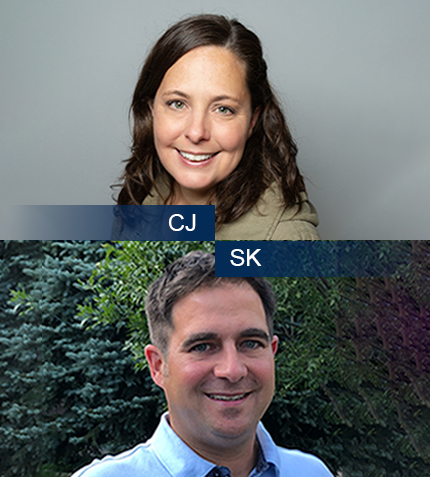
CJ: The biggest shift for SRK in Canada in 2025 is our expanded presence in Québec, with teams in Québec City and Montréal providing strong momentum. We are also building a presence in Calgary. Our structure blends a Canada-wide geoenvironmental group with geographically located mining business units and this year, we have grown slightly to roughly 270 people across Canada. Our workload has been diverse, with new projects largely driven by precious-metal prices, but the overall portfolio remains varied across commodities and services.
SK: We have seen high demand for due diligence and M&A mandates, mostly for precious metals, with some base metals assets as well. The sustained, strong performance for a number of commodities has led to the re-evaluation of a number of legacy projects as well as expansions at some currently producing mines.
Can you highlight an Ontario case study that shows SRK’s capabilities?
CJ: Rainy River is a flagship example. SRK is the Engineer of Record (EoR) for the tailings dam and water-retaining infrastructure. We field the EoR and Deputy EoR roles with integrated teams for both water and tailings functions. The work is technically rigorous and highly collaborative, with analysis that is being recognized as a gold standard for quality and innovation.
How is SRK engaging with tailings and waste-rock reprocessing opportunities?
SK: We have had success with applying pre-concentration techniques to waste. SRK has established advanced analytical and testing protocols to evaluate the suitability of mineral deposits and stockpiles for sorting waste by grade variability to separate mineralized material from waste. We have used a range of pre-concentration options and offer X-ray transmissive sensor-based testing in partnership with a commercial lab in Kamloops, BC. While SRK has strong partnerships with technology providers and commercial laboratories, we maintain complete independence, ensuring no affiliation or bias toward any specific technological solution.
What technologies are you using across your geology and engineering practices?
SK: SRK runs a global innovation initiative with regular forums and internal funding for projects with strong value propositions for clients, projects, or society. Our clients also engage us in project work that extends our current state of knowledge in the mining industry. For example, our structural geology group has seen fast adoption of machine learning applied to mineral exploration. We also have a Sudbury-based team that conducts dynamic simulation analyses on a number of mining processes. Specifically, SRK employs discrete event simulation models to assist mining clients in planning future expansions, analyzing and comparing design and process alternatives, evaluating trade-offs, identifying bottlenecks, forecasting performance metrics, and assessing the effects of integrating new equipment and technologies into existing systems.
CJ: When talking about technology, my mind immediately goes to AI, but I think that, as an industry, we are in the early stages of finding AI’s best application in our practice, which, at its core, relies on specialized expertise and an independent perspective on complex problems. Beyond AI, practical technology applications that we have used in our practice include telemetry and real-time data, drone-based surveying and sampling, and large-scale water solutions such as the Saturated Rock Fills advanced in the Elk Valley.
How do you manage large transactions across SRK’s global divisions?
SK: Large transactions typically include technical reviews comprising multiple disciplines, including geology, mining, processing, tailings, geochemistry, water, and ESG. As such, we leverage the expertise and experience that SRK has globally to provide the client with the best possible team. We apply this approach to all our projects – both large and small.
What are your priorities for SRK Canada over the next 12 months?
CJ: My challenge is to balance executive leadership with my technical consulting practice, while continuing to foster SRK’s discovery-driven culture across Canada. I am excited about the work our team is doing to advance the state of knowledge in our industry, and I would like to find opportunities to share it both inside and outside of SRK. A major emphasis for me will be elevating the next generation of experts through active involvement in external-facing initiatives like conference panels and technical papers.

What is the 2025 update for SRK Canada, and where is growth coming from?
CJ: The biggest shift for SRK in Canada in 2025 is our expanded presence in Québec, with teams in Québec City and Montréal providing strong momentum. We are also building a presence in Calgary. Our structure blends a Canada-wide geoenvironmental group with geographically located mining business units and this year, we have grown slightly to roughly 270 people across Canada. Our workload has been diverse, with new projects largely driven by precious-metal prices, but the overall portfolio remains varied across commodities and services.
SK: We have seen high demand for due diligence and M&A mandates, mostly for precious metals, with some base metals assets as well. The sustained, strong performance for a number of commodities has led to the re-evaluation of a number of legacy projects as well as expansions at some currently producing mines.
Can you highlight an Ontario case study that shows SRK’s capabilities?
CJ: Rainy River is a flagship example. SRK is the Engineer of Record (EoR) for the tailings dam and water-retaining infrastructure. We field the EoR and Deputy EoR roles with integrated teams for both water and tailings functions. The work is technically rigorous and highly collaborative, with analysis that is being recognized as a gold standard for quality and innovation.
How is SRK engaging with tailings and waste-rock reprocessing opportunities?
SK: We have had success with applying pre-concentration techniques to waste. SRK has established advanced analytical and testing protocols to evaluate the suitability of mineral deposits and stockpiles for sorting waste by grade variability to separate mineralized material from waste. We have used a range of pre-concentration options and offer X-ray transmissive sensor-based testing in partnership with a commercial lab in Kamloops, BC. While SRK has strong partnerships with technology providers and commercial laboratories, we maintain complete independence, ensuring no affiliation or bias toward any specific technological solution.
What technologies are you using across your geology and engineering practices?
SK: SRK runs a global innovation initiative with regular forums and internal funding for projects with strong value propositions for clients, projects, or society. Our clients also engage us in project work that extends our current state of knowledge in the mining industry. For example, our structural geology group has seen fast adoption of machine learning applied to mineral exploration. We also have a Sudbury-based team that conducts dynamic simulation analyses on a number of mining processes. Specifically, SRK employs discrete event simulation models to assist mining clients in planning future expansions, analyzing and comparing design and process alternatives, evaluating trade-offs, identifying bottlenecks, forecasting performance metrics, and assessing the effects of integrating new equipment and technologies into existing systems.
CJ: When talking about technology, my mind immediately goes to AI, but I think that, as an industry, we are in the early stages of finding AI’s best application in our practice, which, at its core, relies on specialized expertise and an independent perspective on complex problems. Beyond AI, practical technology applications that we have used in our practice include telemetry and real-time data, drone-based surveying and sampling, and large-scale water solutions such as the Saturated Rock Fills advanced in the Elk Valley.
How do you manage large transactions across SRK’s global divisions?
SK: Large transactions typically include technical reviews comprising multiple disciplines, including geology, mining, processing, tailings, geochemistry, water, and ESG. As such, we leverage the expertise and experience that SRK has globally to provide the client with the best possible team. We apply this approach to all our projects – both large and small.
What are your priorities for SRK Canada over the next 12 months?
CJ: My challenge is to balance executive leadership with my technical consulting practice, while continuing to foster SRK’s discovery-driven culture across Canada. I am excited about the work our team is doing to advance the state of knowledge in our industry, and I would like to find opportunities to share it both inside and outside of SRK. A major emphasis for me will be elevating the next generation of experts through active involvement in external-facing initiatives like conference panels and technical papers.