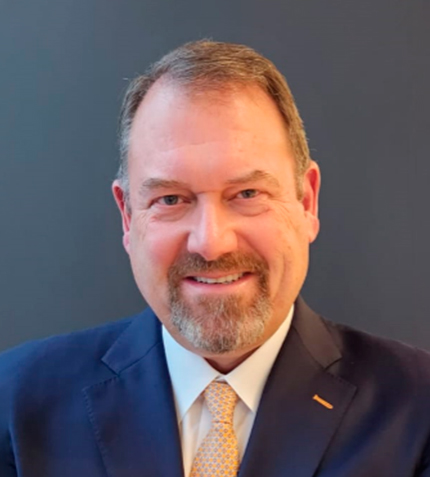
“I can honestly say that Liberia is probably one of the best jurisdictions, if not the best, that I’ve worked in across Africa.”
Share
Pasofino is conducting a gap analysis update on the 2022 DFS for its Dugbe gold project in Liberia. What drove this update and what do you expect will change?
In 2022, when the resource was constrained at US$1,600/oz gold and the mine plan at US$1,700/oz, Dugbe showed favorable economics, including a US$570 million post-tax NPV on a US$430-million CapEx. Three years later, it was important to bring the study up to date to support project financing. In August, we updated the markets on the completion of Phase 1 and the emerging workstreams.
The scope of the project remains unchanged: Dugbe will operate at 5 million t/y; but we aim to improve the resource model through 16,000 m of infill, grade control, and definition drilling over the next six months. CapEx is expected to remain close to US$430 million, while operating costs will likely rise from US$1,005/oz to around US$1,400/oz AISC. This reflects inflation, the cost of outsourced power, and resource development drilling to explore satellite deposits and extend the mine life.
On the processing side, we are collecting metallurgical data to confirm mill sizing, optimize recoveries, and explore ways to reduce construction costs. Infrastructure, geochemistry, and ESIA reviews are ongoing under our consultant, MineScope Services. The full process is expected to run through the end of Q1 2026.
And what is the current production plan?
From the current reserve of 2.7 million oz, we expect a production profile of around 200,000 oz/y, with a goal of maintaining this pace for at least the first five to six years. The plan is to stick to the gravity–crush–grind CIL plant as originally envisioned but leave space in the flowsheet for a future small flotation plant. This addition could potentially allow ramping up to 225,000 oz/y or more. Importantly, we have explored only about 10% of our property, meaning there is a tremendous number of targets to continue working on throughout this process.
When in production, Dugbe would be the second largest gold mine in Liberia. What can you tell us about Liberia?
I have lived and worked in South Africa, Zambia, Burkina Faso, Guinea, Mali, Sierra Leone, and the DRC, where I spent eight years building mines. I can honestly say that Liberia is probably one of the best jurisdictions, if not the best, that I’ve worked in across Africa. Liberia has had a stable democracy for 12 years, with none of the issues seen in other parts of West Africa. Geologically, Liberia is part of the Birimian greenstone belt, but relatively few companies operate there.
Once the gap analysis update is complete, what will be the next steps for Pasofino?
We will be keeping the market up to speed on the DFS work until the final results are presented by end of Q1 or early Q2 in 2026. We will then follow up with an updated 43-101 report. In the meantime, I will be spending the coming months on project financing, with a goal to reach a final investment decision as early as Q2 next year.
How do you read the current market response to the gold price?
The project financing landscape the project financing landscape is very different from five years ago. There are more royalty funds today targeting both gold and critical minerals, capital is flowing into the market on better terms, more funds are being raised, and projects are becoming increasingly robust.
How is Pasofino trading relative to peers and to the gold price itself?
Dugbe is a large project of tremendous economic value, but the real story here is the investment thesis of owning Pasofino. We are a US$75 million market cap company, whereas we have peers trading at US$2 billion. That illustrates the gap between being valued on your inventory in the ground versus being valued on multiples of free cash flow. This is the transition companies make from explorer to developer to producer in terms of valuation and we haven’t even started that transition yet.
What is your vision for Pasofino?
Our vision is not to build a large, multi-asset gold company, but to make money for our shareholders. My goal is for Pasofino to be the highest dividend-yielding gold stock in the world. I’ve built big mining companies before, and I know that what investors want is profitability and liquidity, more than growth. High dividend payouts on an annual basis could drive our company’s valuation 50 times higher than it is today.

Pasofino is conducting a gap analysis update on the 2022 DFS for its Dugbe gold project in Liberia. What drove this update and what do you expect will change?
In 2022, when the resource was constrained at US$1,600/oz gold and the mine plan at US$1,700/oz, Dugbe showed favorable economics, including a US$570 million post-tax NPV on a US$430-million CapEx. Three years later, it was important to bring the study up to date to support project financing. In August, we updated the markets on the completion of Phase 1 and the emerging workstreams.
The scope of the project remains unchanged: Dugbe will operate at 5 million t/y; but we aim to improve the resource model through 16,000 m of infill, grade control, and definition drilling over the next six months. CapEx is expected to remain close to US$430 million, while operating costs will likely rise from US$1,005/oz to around US$1,400/oz AISC. This reflects inflation, the cost of outsourced power, and resource development drilling to explore satellite deposits and extend the mine life.
On the processing side, we are collecting metallurgical data to confirm mill sizing, optimize recoveries, and explore ways to reduce construction costs. Infrastructure, geochemistry, and ESIA reviews are ongoing under our consultant, MineScope Services. The full process is expected to run through the end of Q1 2026.
And what is the current production plan?
From the current reserve of 2.7 million oz, we expect a production profile of around 200,000 oz/y, with a goal of maintaining this pace for at least the first five to six years. The plan is to stick to the gravity–crush–grind CIL plant as originally envisioned but leave space in the flowsheet for a future small flotation plant. This addition could potentially allow ramping up to 225,000 oz/y or more. Importantly, we have explored only about 10% of our property, meaning there is a tremendous number of targets to continue working on throughout this process.
When in production, Dugbe would be the second largest gold mine in Liberia. What can you tell us about Liberia?
I have lived and worked in South Africa, Zambia, Burkina Faso, Guinea, Mali, Sierra Leone, and the DRC, where I spent eight years building mines. I can honestly say that Liberia is probably one of the best jurisdictions, if not the best, that I’ve worked in across Africa. Liberia has had a stable democracy for 12 years, with none of the issues seen in other parts of West Africa. Geologically, Liberia is part of the Birimian greenstone belt, but relatively few companies operate there.
Once the gap analysis update is complete, what will be the next steps for Pasofino?
We will be keeping the market up to speed on the DFS work until the final results are presented by end of Q1 or early Q2 in 2026. We will then follow up with an updated 43-101 report. In the meantime, I will be spending the coming months on project financing, with a goal to reach a final investment decision as early as Q2 next year.
How do you read the current market response to the gold price?
The project financing landscape the project financing landscape is very different from five years ago. There are more royalty funds today targeting both gold and critical minerals, capital is flowing into the market on better terms, more funds are being raised, and projects are becoming increasingly robust.
How is Pasofino trading relative to peers and to the gold price itself?
Dugbe is a large project of tremendous economic value, but the real story here is the investment thesis of owning Pasofino. We are a US$75 million market cap company, whereas we have peers trading at US$2 billion. That illustrates the gap between being valued on your inventory in the ground versus being valued on multiples of free cash flow. This is the transition companies make from explorer to developer to producer in terms of valuation and we haven’t even started that transition yet.
What is your vision for Pasofino?
Our vision is not to build a large, multi-asset gold company, but to make money for our shareholders. My goal is for Pasofino to be the highest dividend-yielding gold stock in the world. I’ve built big mining companies before, and I know that what investors want is profitability and liquidity, more than growth. High dividend payouts on an annual basis could drive our company’s valuation 50 times higher than it is today.