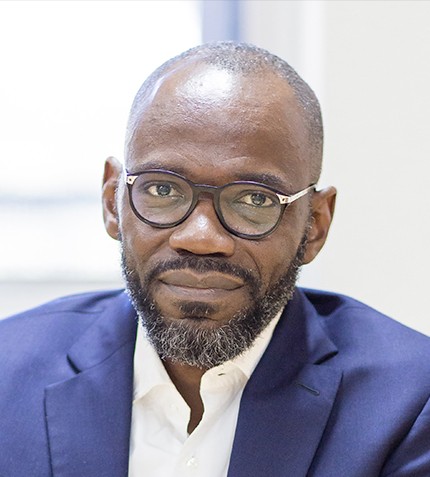
“Local presence means we can deliver services quickly and develop local talent through training, something we’re very passionate about.”
Share
Could you comment on FLS’s FY24 performance and key growth drivers across FLS’s portfolio for FY25?
In 2024, we focused on growth not only through mining technology but also through aftermarket services. Our customers increasingly want solutions that improve efficiency, reliability, and environmental performance—and we’ve put strong emphasis on that.
Looking ahead to FY25, Africa remains central to our growth strategy. We’re focusing on building deeper partnerships. That means localizing manufacturing and driving technology-led productivity improvements. Our aim is to deliver solutions that meet both operational needs and the ESG objectives of our partners.
Can you elaborate on how you achieve deeper customer partnerships?
One initiative we’re proud of is the Life of Mine Booster, a comprehensive, data-driven methodology designed to elevate a mine’s financial, operational, and sustainability performance over its entire lifecycle. Rather than focusing only on near-term gains, it aligns strategic planning and execution to deliver sustained value, with the objective of optimizing recoveries, cutting costs, boosting productivity, and ultimately increasing the NPV.
Advanced analytics give us insight into machine performance and real-time process control, which feeds into mine design, scheduling, and maintenance. We approach this on two fronts: First, we extend the life of our machines, which impacts CapEx. Second, we reduce OpEx by supporting partners with continuous performance monitoring.
How does the divestment of the FLS Cement business strengthen FLS’s position as a pure-play mining technology and services provider?
The divestment allows us to focus 100% on mining in terms of capital allocation, R&D resources, and commercial focus. We now have a very clear direction, with the ability to innovate and deliver across the full mining flowsheet. It strengthens our position as a trusted partner for mining companies seeking pit-to-plant performance-driven solutions without competing priorities. In short, more focus makes us better—and that is a general rule that applies in any business.
How has FLS’s local footprint evolved since the acquisition of Scott Specialized Rubber & Engineering (SSRE) and the upgrade of the PU manufacturing plant at the Delmas facility, both in South Africa?
The SSRE acquisition strengthens our consumables portfolio, particularly with mill liners, and expands our manufacturing footprint, allowing us to be closer to our customers in Southern Africa. This means we will have shorter lead times and heightened responsiveness.
The PU plant expansion in Delmas complements the SSRE acquisition, boosting our capacity to deliver high-quality trommels and screen media products, tailored to local mining conditions. This reduces import dependency, shortens delivery times, and enhances precision engineering for Africa. The facility will also serve as a global hub for NexGen polyurethane screen panels, supporting demand not only in Africa but also in the Middle East and Europe. Beyond capacity, it reinforces our broader modernization program: building local skills, strengthening supply chains, and driving sustainability across our footprint.
FLS also has a facility in Chloorkop, where we manufacture spares and assemble HPGRs, and we also run repair centers outside of South Africa.
In addition, we’ve also been expanding our service centers. This year, FLS announced the opening of seven new service centers globally, including one in Accra that will serve the entire West African region.
Local presence means we can deliver services quickly and develop local talent through training, something we’re very passionate about.
FLS is known as a full flowsheet provider. What technologies do you see gaining traction in 2025/26 and what are the main demand drivers?
The real benefits come from optimizing the flowsheet as a whole and not just one section. The Life of Mine Booster is central to this holistic approach. If you focus only on one element—say, a mill or crusher—you miss the bigger picture. The flowsheet is larger, and our strength is in optimizing the whole process.
Given the scarcity of new greenfield projects, much of our work today is helping customers extend the life of their existing assets through optimization. We’re also busy with asset replacements, upgrades, and rebuilds. The industry today is about sweating existing assets, and we’re well-positioned to support that.
Do you have a final message?
I want to add that I’m very passionate about developing local talent. It brings continuity and is critical for operations. We run targeted training programs for customers covering equipment, operations, maintenance and safety. We also partner with local technical colleges and universities to transfer skills in engineering and process optimization. Our facilities in Chloorkop and Delmas host hands-on training programs for both our teams and customers. Many participants later work for FLS, but some rejoin the wider market, which we see as a positive contribution to the community. Our Training Academy is something we’re proud of—it’s part of giving back.
FLS is committed to long-term partnerships. Our focus is sustainable mining first, followed by productivity and cost reduction, to make our partners more profitable.

Could you comment on FLS’s FY24 performance and key growth drivers across FLS’s portfolio for FY25?
In 2024, we focused on growth not only through mining technology but also through aftermarket services. Our customers increasingly want solutions that improve efficiency, reliability, and environmental performance—and we’ve put strong emphasis on that.
Looking ahead to FY25, Africa remains central to our growth strategy. We’re focusing on building deeper partnerships. That means localizing manufacturing and driving technology-led productivity improvements. Our aim is to deliver solutions that meet both operational needs and the ESG objectives of our partners.
Can you elaborate on how you achieve deeper customer partnerships?
One initiative we’re proud of is the Life of Mine Booster, a comprehensive, data-driven methodology designed to elevate a mine’s financial, operational, and sustainability performance over its entire lifecycle. Rather than focusing only on near-term gains, it aligns strategic planning and execution to deliver sustained value, with the objective of optimizing recoveries, cutting costs, boosting productivity, and ultimately increasing the NPV.
Advanced analytics give us insight into machine performance and real-time process control, which feeds into mine design, scheduling, and maintenance. We approach this on two fronts: First, we extend the life of our machines, which impacts CapEx. Second, we reduce OpEx by supporting partners with continuous performance monitoring.
How does the divestment of the FLS Cement business strengthen FLS’s position as a pure-play mining technology and services provider?
The divestment allows us to focus 100% on mining in terms of capital allocation, R&D resources, and commercial focus. We now have a very clear direction, with the ability to innovate and deliver across the full mining flowsheet. It strengthens our position as a trusted partner for mining companies seeking pit-to-plant performance-driven solutions without competing priorities. In short, more focus makes us better—and that is a general rule that applies in any business.
How has FLS’s local footprint evolved since the acquisition of Scott Specialized Rubber & Engineering (SSRE) and the upgrade of the PU manufacturing plant at the Delmas facility, both in South Africa?
The SSRE acquisition strengthens our consumables portfolio, particularly with mill liners, and expands our manufacturing footprint, allowing us to be closer to our customers in Southern Africa. This means we will have shorter lead times and heightened responsiveness.
The PU plant expansion in Delmas complements the SSRE acquisition, boosting our capacity to deliver high-quality trommels and screen media products, tailored to local mining conditions. This reduces import dependency, shortens delivery times, and enhances precision engineering for Africa. The facility will also serve as a global hub for NexGen polyurethane screen panels, supporting demand not only in Africa but also in the Middle East and Europe. Beyond capacity, it reinforces our broader modernization program: building local skills, strengthening supply chains, and driving sustainability across our footprint.
FLS also has a facility in Chloorkop, where we manufacture spares and assemble HPGRs, and we also run repair centers outside of South Africa.
In addition, we’ve also been expanding our service centers. This year, FLS announced the opening of seven new service centers globally, including one in Accra that will serve the entire West African region.
Local presence means we can deliver services quickly and develop local talent through training, something we’re very passionate about.
FLS is known as a full flowsheet provider. What technologies do you see gaining traction in 2025/26 and what are the main demand drivers?
The real benefits come from optimizing the flowsheet as a whole and not just one section. The Life of Mine Booster is central to this holistic approach. If you focus only on one element—say, a mill or crusher—you miss the bigger picture. The flowsheet is larger, and our strength is in optimizing the whole process.
Given the scarcity of new greenfield projects, much of our work today is helping customers extend the life of their existing assets through optimization. We’re also busy with asset replacements, upgrades, and rebuilds. The industry today is about sweating existing assets, and we’re well-positioned to support that.
Do you have a final message?
I want to add that I’m very passionate about developing local talent. It brings continuity and is critical for operations. We run targeted training programs for customers covering equipment, operations, maintenance and safety. We also partner with local technical colleges and universities to transfer skills in engineering and process optimization. Our facilities in Chloorkop and Delmas host hands-on training programs for both our teams and customers. Many participants later work for FLS, but some rejoin the wider market, which we see as a positive contribution to the community. Our Training Academy is something we’re proud of—it’s part of giving back.
FLS is committed to long-term partnerships. Our focus is sustainable mining first, followed by productivity and cost reduction, to make our partners more profitable.