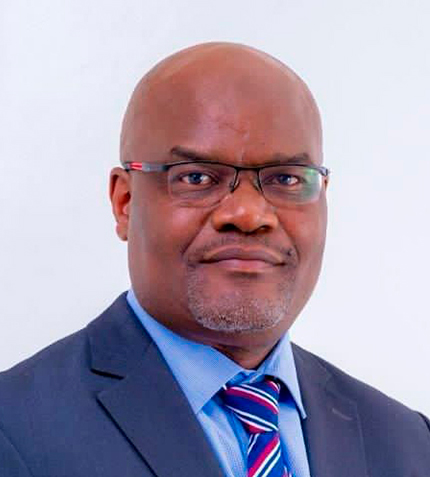
“If in other countries the main question is whether the population wants mining or not, in Zambia that question has evolved to ‘What is mining doing for the country?’ and a follow-up to that, ‘Is it enough?’”
Share
How is the ramp-up at Kansanshi S3 expansion progressing?
We completed the construction of the S3 Expansion during Q2 2025, and the official plant start-up followed on August 19th, marked by the visit of Zambia’s President, His Excellency Hakainde Hichilema. We expect a full ramp-up to about 25 million t/y of ore in throughput by the end of this year. This will add to our current 28-29 million t of operating capacity. Key to our on-schedule commissioning was the support from our teams from Cobre Panama and Trident. Ramp-up is being driven by the Kansanshi operational teams.
Could you comment on the structure and significance of the US$1 billion gold streaming deal with Royal Gold?
On August 5, 2025, the Company, through a wholly owned subsidiary incorporated in Canada, entered into a gold streaming agreement with Royal Gold. First Quantum Minerals received a US$1.0 billion upfront cash payment in exchange for gold credit deliveries referenced to copper production from the Kansanshi mine to Royal Gold. This is one of the world’s largest streaming transactions in recent years. Royal Gold is a large American company, and this marks its first major investment in Africa, which reflects Royal Gold’s confidence not only in First Quantum Minerals but also in Zambia more broadly.
Gold streaming financing has several advantages, the key one being that the transaction provides non-debt capital, which boosts liquidity. Another advantage of the streaming model is that the amount of gold credits we owe is tied to copper production, so we are paying back based on our ability to pay back. A streaming deal adjusts to operational realities, which makes it less financially burdensome during downturns.
The deal with Royal Gold has provided the liquidity to consolidate our balance sheet after the large capital investment in the Kansanshi S3 expansion (US$1.25 billion) and ongoing sustaining capital outlay on existing operations.
It is also important to clarify this deal does not impact our taxation and royalty commitments to Zambia whatsoever.
What drove First Quantum Minerals to take a 15% equity position in Prospect Resources?
First Quantum Minerals continues to look at opportunities for extending mine life of Sentinel beyond the current 12 years. Our exploration teams are undertaking various exploration work on the Trident mine lease, with positive results. A world-class asset such as Sentinel, particularly, warrants ongoing near-mine exploration to ensure the operation can be extended beyond identified reserves. Prospect Resources’ Mumbezhi copper project sits just 30 km away from Sentinel mine and presents yet another option that fits this intent.
Enterprise Nickel has summed up its first year of production. How is the mine performing?
It is operating extremely well. Despite a very low nickel price environment, Enterprise Nickel benefits from advantageous geology and unique infrastructure setup. Enterprise is a sulfide deposit treated using a flotation plant rather than a high-pressure leaching process. Second, Enterprise shares key infrastructure and services with Sentinel, which makes for a highly favorable cost structure. Nevertheless, we are careful to adjust the mine plan to ensure our costs remain competitive. Enterprise Nickel is one of only two nickel operations in Zambia.
First Quantum Minerals has been recognized as Zambia’s largest investor. How are communities responding to increased investment in line with the government’s vision, and what is First Quantum Minerals’s local engagement strategy as part of its social license?
Zambia is a mining country and has a deep mining culture with over 100 years of history. If in other countries the main question is whether the population wants mining or not, in Zambia that question has evolved to “What is mining doing for the country?” and a follow-up to that, “Is it enough?” This is the context in which mining operators in Zambia must obtain and maintain their social license and demonstrate their corporate citizenry.
Our approach has always been to be part and work together with our host communities to understand needs and gaps, and collaboratively work with stakeholders to address these. This is the approach we take in agriculture, education, health, business development and infrastructure, and the results are seen in improvements in lives and livelihoods over and above the impact of jobs and contributions to the treasury.
The other leg of our strategy is to work with the government and advocate for more repatriation of taxes and royalties back to the areas where the resources are extracted.
What are your thoughts regarding the new Minerals Regulation Commission Act of 2024?
Prior to implementation, the MRC Bill went through various stages on consultations between government and private sector stakeholders for over 12 months. The MRC Act of 2024 replaces the Mining and Minerals Act of 2015, including the body that regulates mining in Zambia. This is a major change, and implementation could be lengthy. The Act does provide a more robust regulatory framework for mineral and mineral rights holders. What we need to see is the Mineral Regulation Commission and the institutions and officers stipulated in the Act to be put in place and fully functional in a timely manner.

How is the ramp-up at Kansanshi S3 expansion progressing?
We completed the construction of the S3 Expansion during Q2 2025, and the official plant start-up followed on August 19th, marked by the visit of Zambia’s President, His Excellency Hakainde Hichilema. We expect a full ramp-up to about 25 million t/y of ore in throughput by the end of this year. This will add to our current 28-29 million t of operating capacity. Key to our on-schedule commissioning was the support from our teams from Cobre Panama and Trident. Ramp-up is being driven by the Kansanshi operational teams.
Could you comment on the structure and significance of the US$1 billion gold streaming deal with Royal Gold?
On August 5, 2025, the Company, through a wholly owned subsidiary incorporated in Canada, entered into a gold streaming agreement with Royal Gold. First Quantum Minerals received a US$1.0 billion upfront cash payment in exchange for gold credit deliveries referenced to copper production from the Kansanshi mine to Royal Gold. This is one of the world’s largest streaming transactions in recent years. Royal Gold is a large American company, and this marks its first major investment in Africa, which reflects Royal Gold’s confidence not only in First Quantum Minerals but also in Zambia more broadly.
Gold streaming financing has several advantages, the key one being that the transaction provides non-debt capital, which boosts liquidity. Another advantage of the streaming model is that the amount of gold credits we owe is tied to copper production, so we are paying back based on our ability to pay back. A streaming deal adjusts to operational realities, which makes it less financially burdensome during downturns.
The deal with Royal Gold has provided the liquidity to consolidate our balance sheet after the large capital investment in the Kansanshi S3 expansion (US$1.25 billion) and ongoing sustaining capital outlay on existing operations.
It is also important to clarify this deal does not impact our taxation and royalty commitments to Zambia whatsoever.
What drove First Quantum Minerals to take a 15% equity position in Prospect Resources?
First Quantum Minerals continues to look at opportunities for extending mine life of Sentinel beyond the current 12 years. Our exploration teams are undertaking various exploration work on the Trident mine lease, with positive results. A world-class asset such as Sentinel, particularly, warrants ongoing near-mine exploration to ensure the operation can be extended beyond identified reserves. Prospect Resources’ Mumbezhi copper project sits just 30 km away from Sentinel mine and presents yet another option that fits this intent.
Enterprise Nickel has summed up its first year of production. How is the mine performing?
It is operating extremely well. Despite a very low nickel price environment, Enterprise Nickel benefits from advantageous geology and unique infrastructure setup. Enterprise is a sulfide deposit treated using a flotation plant rather than a high-pressure leaching process. Second, Enterprise shares key infrastructure and services with Sentinel, which makes for a highly favorable cost structure. Nevertheless, we are careful to adjust the mine plan to ensure our costs remain competitive. Enterprise Nickel is one of only two nickel operations in Zambia.
First Quantum Minerals has been recognized as Zambia’s largest investor. How are communities responding to increased investment in line with the government’s vision, and what is First Quantum Minerals’s local engagement strategy as part of its social license?
Zambia is a mining country and has a deep mining culture with over 100 years of history. If in other countries the main question is whether the population wants mining or not, in Zambia that question has evolved to “What is mining doing for the country?” and a follow-up to that, “Is it enough?” This is the context in which mining operators in Zambia must obtain and maintain their social license and demonstrate their corporate citizenry.
Our approach has always been to be part and work together with our host communities to understand needs and gaps, and collaboratively work with stakeholders to address these. This is the approach we take in agriculture, education, health, business development and infrastructure, and the results are seen in improvements in lives and livelihoods over and above the impact of jobs and contributions to the treasury.
The other leg of our strategy is to work with the government and advocate for more repatriation of taxes and royalties back to the areas where the resources are extracted.
What are your thoughts regarding the new Minerals Regulation Commission Act of 2024?
Prior to implementation, the MRC Bill went through various stages on consultations between government and private sector stakeholders for over 12 months. The MRC Act of 2024 replaces the Mining and Minerals Act of 2015, including the body that regulates mining in Zambia. This is a major change, and implementation could be lengthy. The Act does provide a more robust regulatory framework for mineral and mineral rights holders. What we need to see is the Mineral Regulation Commission and the institutions and officers stipulated in the Act to be put in place and fully functional in a timely manner.