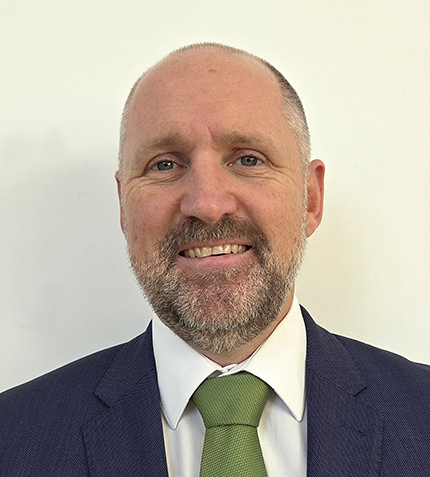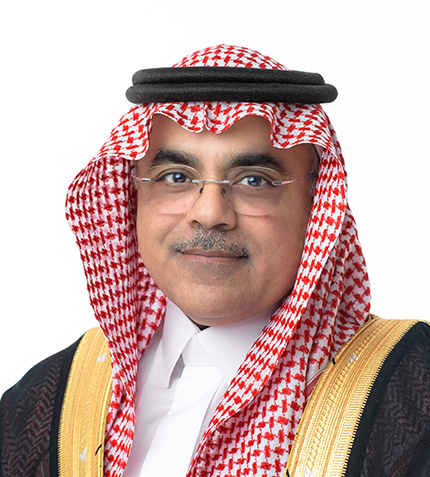

“At lower prices, projects require different levels of analysis, capabilities and backing, and there is less atomized investment. Fewer, larger companies are leading.”
Share
How did Taging begin?
AB: We began operations in 1994, providing services to the oil and gas, energy, chemical industry, and related industrial segments. Around 2006, we entered the mining industry, initially in conventional mining and subsequently in lithium mining. We identified numerous unmet needs in mining processes. Over the last few years, we have decisively shifted our core business toward mining. We were the first Argentine company to complete a full lithium feasibility study in the country in 2012. Since then, we have worked across various project phases, from scoping and pre-feasibility through to feasibility, pre-commissioning, and commissioning. Over the last two years, we have been involved in a challenging project; the first industrial DLE (Direct Lithium Extraction) project in the Puna, which has provided us with valuable knowledge.
Our headquarters are in Buenos Aires. Taging NOA is based in Salta and is dedicated exclusively to lithium mining. Last year, we inaugurated Taging Cuyo in San Juan, built on the same concept as NOA but with a focus on conventional mining, including gold, silver and copper. Recently, we also achieved tri-norm certification across our three sites and for all services we offer to the mining market: ISO 9001, ISO 14001, and ISO 45001.
How have lithium market dynamics affected demand for your services?
MC: In the past year, there was a slowdown and fewer visible opportunities. The market had a prior phase where high prices drove 20 to 30 simultaneous projects and a very high demand for engineering, construction and studies. Today, the lithium market is more mature, characterized by a stable and logical price environment. At lower prices, projects require different levels of analysis, capabilities and backing, and there is less atomized investment. Fewer, larger companies are leading. Even so, we still see projects and ongoing demand, now in a more stable and mature context.
What differentiates Taging as a local engineering and services provider?
AB: It is demanding to prove that a local company can match the standards required by global operators. Our advantage lies in a team with an average experience of over 20 years in mining operations, combined with extensive experience in project development. Local knowledge of operational needs and site conditions places us in a strong position relative to imported designs that do not account for those specifics.
We know local suppliers who deliver on time and to the required quality, aligning with provincial local-contracting policies as a true value proposition, not a mere imposition. Technically, plants at 4,000 meters do not behave like plants at sea level. Chemical reactions differ, electronic and electrical equipment behaves differently, and human performance is not the same. Understanding geography, process chemistry, and the human context at altitude is essential.
What is your view of RIGI and the broader policy environment?
MC: Tools that provide stable conditions regardless of who governs are key. Legal guarantees and tax benefits facilitate the materialization of investments. Beyond that, the country must address its infrastructure needs and clarify frameworks, such as laws governing wetlands and glaciers, so that projects have clear rules. Capital is cautious and moves quickly; explicit, stable, and durable norms are critical for provinces and the nation.
What are Taging’s technical priorities across process, simulation and digitalization?
MC: We continue to expand our high-focus process services, including process simulation and plant optimization for operating sites, and apply that expertise to new greenfield developments. We work in business units dedicated to processing and simulation, utilizing various simulation technologies and software. We are also co-developing a proprietary software with a technology partner and benchmarking it against other tools.
How are you digitalizing pre-commissioning, commissioning and start-up services?
AB: Our services integrate field technology with tablets for data capture and trailer-based uploads of KPIs agreed upon with clients, allowing reports to be available online in real-time. We are also making early moves in AI. We will launch a Taging chatbot so clients can interact and ask about our methodologies and procedures. In a second stage, we plan to deploy a project-specific chat for each engagement, allowing clients to consult 24/7 and receive near-immediate answers.
How did Taging begin?
AB: We began operations in 1994, providing services to the oil and gas, energy, chemical industry, and related industrial segments. Around 2006, we entered the mining industry, initially in conventional mining and subsequently in lithium mining. We identified numerous unmet needs in mining processes. Over the last few years, we have decisively shifted our core business toward mining. We were the first Argentine company to complete a full lithium feasibility study in the country in 2012. Since then, we have worked across various project phases, from scoping and pre-feasibility through to feasibility, pre-commissioning, and commissioning. Over the last two years, we have been involved in a challenging project; the first industrial DLE (Direct Lithium Extraction) project in the Puna, which has provided us with valuable knowledge.
Our headquarters are in Buenos Aires. Taging NOA is based in Salta and is dedicated exclusively to lithium mining. Last year, we inaugurated Taging Cuyo in San Juan, built on the same concept as NOA but with a focus on conventional mining, including gold, silver and copper. Recently, we also achieved tri-norm certification across our three sites and for all services we offer to the mining market: ISO 9001, ISO 14001, and ISO 45001.
How have lithium market dynamics affected demand for your services?
MC: In the past year, there was a slowdown and fewer visible opportunities. The market had a prior phase where high prices drove 20 to 30 simultaneous projects and a very high demand for engineering, construction and studies. Today, the lithium market is more mature, characterized by a stable and logical price environment. At lower prices, projects require different levels of analysis, capabilities and backing, and there is less atomized investment. Fewer, larger companies are leading. Even so, we still see projects and ongoing demand, now in a more stable and mature context.
What differentiates Taging as a local engineering and services provider?
AB: It is demanding to prove that a local company can match the standards required by global operators. Our advantage lies in a team with an average experience of over 20 years in mining operations, combined with extensive experience in project development. Local knowledge of operational needs and site conditions places us in a strong position relative to imported designs that do not account for those specifics.
We know local suppliers who deliver on time and to the required quality, aligning with provincial local-contracting policies as a true value proposition, not a mere imposition. Technically, plants at 4,000 meters do not behave like plants at sea level. Chemical reactions differ, electronic and electrical equipment behaves differently, and human performance is not the same. Understanding geography, process chemistry, and the human context at altitude is essential.
What is your view of RIGI and the broader policy environment?
MC: Tools that provide stable conditions regardless of who governs are key. Legal guarantees and tax benefits facilitate the materialization of investments. Beyond that, the country must address its infrastructure needs and clarify frameworks, such as laws governing wetlands and glaciers, so that projects have clear rules. Capital is cautious and moves quickly; explicit, stable, and durable norms are critical for provinces and the nation.
What are Taging’s technical priorities across process, simulation and digitalization?
MC: We continue to expand our high-focus process services, including process simulation and plant optimization for operating sites, and apply that expertise to new greenfield developments. We work in business units dedicated to processing and simulation, utilizing various simulation technologies and software. We are also co-developing a proprietary software with a technology partner and benchmarking it against other tools.
How are you digitalizing pre-commissioning, commissioning and start-up services?
AB: Our services integrate field technology with tablets for data capture and trailer-based uploads of KPIs agreed upon with clients, allowing reports to be available online in real-time. We are also making early moves in AI. We will launch a Taging chatbot so clients can interact and ask about our methodologies and procedures. In a second stage, we plan to deploy a project-specific chat for each engagement, allowing clients to consult 24/7 and receive near-immediate answers.