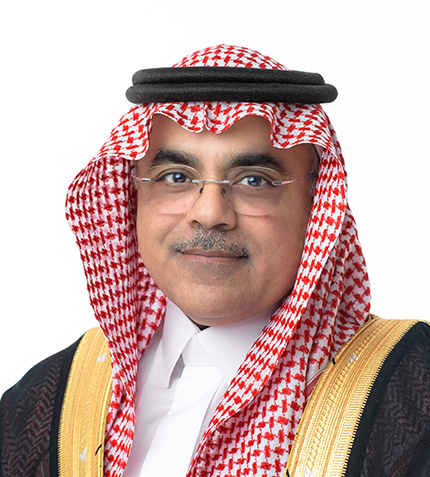
“Saudi Arabia’s fivefold increase in exploration spending reflects deliberate efforts to expand the sector.”
Share
How would you assess the current trajectory of Saudi Arabia’s mining industry development?
Saudi Arabia’s rise from 104th to 23rd in the Fraser Institute’s investment attractiveness ranking shows that the mining sector’s transformation under Vision 2030 is only beginning. I believe this progress reflects two core achievements. First, we have provided investors with clear, stable policies that explain how to apply, explore, extract, and monetise value, giving them confidence in the regulatory environment. Second, the government has advanced nationwide geological surveys and introduced transparent bidding systems that clarify what resources are available and how to access them.
I see continued momentum as we adopt new technologies, expand infrastructure, and develop downstream value chains in materials like aluminium, titanium, and their use in emerging industries like aerospace.
How has the Ministry supported mineral exploration in the Kingdom?
Saudi Arabia’s fivefold increase in exploration spending reflects deliberate efforts to expand the sector. I see the Ministry’s role as supporting both established and junior explorers through clear licensing, transparent bidding, and direct monetary incentives that encourage newcomers to enter the market. We have simplified the entire licensing process, from online applications to rapid approvals and clear guidance on obligations and monetisation pathways. We are also accelerating exploration through new technologies that can address the scale of the country. In parallel, we are strengthening the value chain and introducing new university curricula to build future talent. These combined measures will sustain and further increase exploration activity.
How is Saudi Arabia positioning itself as a metal refinery hub, alongside mining developments?
This is a long-term opportunity to align specific minerals with our industrial priorities, ensuring that processing capacity directly supports sectors such as turbine and engine manufacturing that depend on nickel alloys, titanium, and rare earths.
We are advancing mining and industrial investments simultaneously so that each strengthens the economics of the other. Alongside this, we are investing in technology, innovation, and workforce development, and collaborating with global companies to build a full ecosystem that can sustain long-term growth.
What efforts to promote the development of green industry would you highlight?
Saudi Arabia’s strategy for clean industry is centred on accelerating efficiency and lowering carbon intensity across metals and manufacturing. I see our role as pushing legacy industries toward higher efficiency through the industrial competitiveness programme, which supports companies in reducing energy use while maintaining output. For new investors, we set clear performance levels and provide support to meet them.
These efforts are reinforced by large-scale renewable energy projects, carbon capture initiatives, and programmes that measure carbon footprints at the city, factory, and product levels. By guiding technology choices and supplying clean energy, we can attract partners in high-impact, high-value industries, including steel and other critical metals.
What initiatives is the Ministry adopting to promote wider participation in industrial sectors?
The Women in Mining Association and Association for Development and Sustainability in the Industrial and Mining Sectors are key to converting Vision 2030 principles into practical, inclusive policies. These parallel efforts widen participation and create real pathways for women to enter and advance in these fields. We have identified 47 low-impact industrial sectors that can be located closer to residential areas, enabling women to work or invest without long commutes and ensuring these industries remain environmentally suitable for communities.
How is Vision 2030 enhancing Saudi Arabia’s role in global industry?
Vision 2030 targets are translating into practical enablers for growth. This is taking shape through major investments in industrial infrastructure, ensuring manufacturers have reliable electricity, water, logistics, and access to local and global markets.
Our local content programme strengthens domestic procurement, while global promotion supports export competitiveness. We are also shifting from labour-intensive models to advanced manufacturing built on automation, digitisation, and robotics, which is already making some products more competitive than those from China.
What is the significance of Riyadh hosting the 2025 UNIDO Global Industry Summit?
Saudi Arabia’s role as host of the UNIDO summit in November 2025 reflects the Kingdom’s growing leadership in global industrial development. The conference’s focus included innovation, women’s empowerment, youth participation, and the future of industrial policy. I see this as a continuation of what we demonstrated through the Multilateral Industrial Policy Forum in 2024: Saudi Arabia is not only receiving international expertise, but actively contributing to and shaping the global dialogue and private sector engagement.

How would you assess the current trajectory of Saudi Arabia’s mining industry development?
Saudi Arabia’s rise from 104th to 23rd in the Fraser Institute’s investment attractiveness ranking shows that the mining sector’s transformation under Vision 2030 is only beginning. I believe this progress reflects two core achievements. First, we have provided investors with clear, stable policies that explain how to apply, explore, extract, and monetise value, giving them confidence in the regulatory environment. Second, the government has advanced nationwide geological surveys and introduced transparent bidding systems that clarify what resources are available and how to access them.
I see continued momentum as we adopt new technologies, expand infrastructure, and develop downstream value chains in materials like aluminium, titanium, and their use in emerging industries like aerospace.
How has the Ministry supported mineral exploration in the Kingdom?
Saudi Arabia’s fivefold increase in exploration spending reflects deliberate efforts to expand the sector. I see the Ministry’s role as supporting both established and junior explorers through clear licensing, transparent bidding, and direct monetary incentives that encourage newcomers to enter the market. We have simplified the entire licensing process, from online applications to rapid approvals and clear guidance on obligations and monetisation pathways. We are also accelerating exploration through new technologies that can address the scale of the country. In parallel, we are strengthening the value chain and introducing new university curricula to build future talent. These combined measures will sustain and further increase exploration activity.
How is Saudi Arabia positioning itself as a metal refinery hub, alongside mining developments?
This is a long-term opportunity to align specific minerals with our industrial priorities, ensuring that processing capacity directly supports sectors such as turbine and engine manufacturing that depend on nickel alloys, titanium, and rare earths.
We are advancing mining and industrial investments simultaneously so that each strengthens the economics of the other. Alongside this, we are investing in technology, innovation, and workforce development, and collaborating with global companies to build a full ecosystem that can sustain long-term growth.
What efforts to promote the development of green industry would you highlight?
Saudi Arabia’s strategy for clean industry is centred on accelerating efficiency and lowering carbon intensity across metals and manufacturing. I see our role as pushing legacy industries toward higher efficiency through the industrial competitiveness programme, which supports companies in reducing energy use while maintaining output. For new investors, we set clear performance levels and provide support to meet them.
These efforts are reinforced by large-scale renewable energy projects, carbon capture initiatives, and programmes that measure carbon footprints at the city, factory, and product levels. By guiding technology choices and supplying clean energy, we can attract partners in high-impact, high-value industries, including steel and other critical metals.
What initiatives is the Ministry adopting to promote wider participation in industrial sectors?
The Women in Mining Association and Association for Development and Sustainability in the Industrial and Mining Sectors are key to converting Vision 2030 principles into practical, inclusive policies. These parallel efforts widen participation and create real pathways for women to enter and advance in these fields. We have identified 47 low-impact industrial sectors that can be located closer to residential areas, enabling women to work or invest without long commutes and ensuring these industries remain environmentally suitable for communities.
How is Vision 2030 enhancing Saudi Arabia’s role in global industry?
Vision 2030 targets are translating into practical enablers for growth. This is taking shape through major investments in industrial infrastructure, ensuring manufacturers have reliable electricity, water, logistics, and access to local and global markets.
Our local content programme strengthens domestic procurement, while global promotion supports export competitiveness. We are also shifting from labour-intensive models to advanced manufacturing built on automation, digitisation, and robotics, which is already making some products more competitive than those from China.
What is the significance of Riyadh hosting the 2025 UNIDO Global Industry Summit?
Saudi Arabia’s role as host of the UNIDO summit in November 2025 reflects the Kingdom’s growing leadership in global industrial development. The conference’s focus included innovation, women’s empowerment, youth participation, and the future of industrial policy. I see this as a continuation of what we demonstrated through the Multilateral Industrial Policy Forum in 2024: Saudi Arabia is not only receiving international expertise, but actively contributing to and shaping the global dialogue and private sector engagement.