Share
TRX started production at the Buckreef Gold Project in 2022 and has since completed several plant upgrades. Tell us about your growth over the last few years.
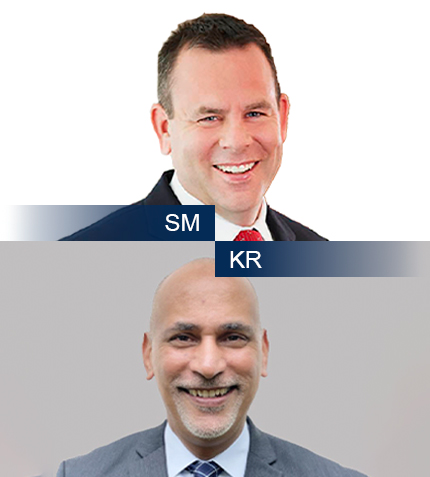
SM: The Buckreef Project is located in the highly prolific Geita region of Tanzania, about 45 km from Barrick’s Bulyanhulu mine and 35 km from AngloGold Ashanti’s Geita mine. We started with a modest 15-ton-per-hour (350 tpd) processing plant, which we ramped up to 45 tph (1,000 tpd) and then to 90 tph (2,000 tpd) over the past three years. Our growth model has been organic and non-dilutive, reinvesting our own revenue to expand, de-risking at every stage, and learning progressively. Based on detailed geological and metallurgical studies at Buckreef, we have concluded that the best course of action over the next two to three years is to begin underground mining. As we prepare for underground development, we continue to expand current production and pursue process improvements. At present, we utilize about 70% of our 90-tph plant, so our immediate focus for 2025–2026 is to maximize throughput.
Could you elaborate on the PEA filed in May this year and the ramp-up plans?
SM: Earlier this year, we filed a PEA outlining the plan to expand and upgrade our processing plant over the next two years, after which we can transition from open-pit to underground mining. While the PEA envisioned a 3,000-tpd plant, we are now executing a 3,000-tpd processing circuit for sulfide ore, together with a 1,000-tpd circuit for oxide, transition material, and tailings retreatment. The plant expansion will cost US$30 million and will be self-financed. This expansion will take us to between 65,000 and 80,000 ounces of annual gold production within the next two to three years. The expansion will take 18 to 24 months. Our goal is to demonstrate more than 100,000 ounces of gold production annually over a 10-year period.
We’re also excited to ramp up exploration once again. We have a nearby target next to the Buckreef Main Zone and we are very confident that we will find more resources on the property.
How is mining understood at the local community level?
KR: There is a lot of misrepresentation around mining, driven by the idea that it is exploitative and focused solely on corporate gains. In Tanzania, negativity toward mining can sometimes be historical, or stem from a simple lack of information, because mining and its immense potential benefits have never been sufficiently explained. For these reasons, we take our stakeholder engagement strategy very seriously. Buckreef is a relatively small operation, yet we work with 100 different service providers, all Tanzanian-registered companies ranging from catering to contracting. One contract creates ripple effects on employment, at a rate of roughly 1:5. We also engage with government stakeholders on policy advocacy to explain to decision-makers in Tanzania the different environments we operate in as a company, not just the operational environment, but also the stock markets.
How have local content regulations changed your operations?
KR: Let me start by saying we completely understand the need for local content policies. History shows there was a time when investors would come in and bring everything from the outside. Local content rules now require companies to procure more locally and work with existing providers rather than rely solely on large international firms. The effort to capture value in-country is entirely understandable, and no one would take issue with it—provided that the services and goods are available at reasonable cost and quality. However, that is not always the case. Some things simply cannot be done locally, and for those, the law requires foreign companies to establish joint ventures with local entities. This has a greater impact on the supplier sector. At our level, we can say that it is not always possible to work exclusively with local companies.
Local content regulation has swung like a pendulum over the last 15 years, from one extreme to the other. There was a time when people would import everything, even water supplies, and planes would land on-site to offload cargo as needed. The pendulum has since swung to the opposite end, perhaps too far the other way. We need to strive for a balance. A mine is the mother or nucleus of all supporting services and goods, which develop around it, so the ecosystem must work for the mine for everything else to thrive.
How have the protests post-election in Tanzania destabilized the country?
SM: What we are looking for, in any jurisdiction, is the ability to get things done. In Tanzania, we have been able to develop an asset in a country with the right rules and regulations in place, aligned with Western ESG standards, and open to investment. Tanzania has a strong nationalistic sentiment like any country. AngloGold Ashanti, Barrick, Perseus Mining, and Lifezone Metals are all active in Tanzania. We see the country balancing capital from Western, Eastern, and Middle Eastern firms. The government wants to see production, and there is a major emphasis on that.
What’s the valuation upside considering TRX’s exposure to gold prices and the self-funded and steady increase in your production?
SM: Stock prices reflect supply and demand, and as our results improve, demand increases and the share price rises. As a self-funded company, we are not diluting shareholders. Unless we have a compelling reason to raise equity—such as needing to accelerate development—we will continue to rely on internal cash flow and scale organically. The plan is simple: we use cash generated at Buckreef to expand plant capacity; higher production brings in more revenue, which then finances underground development and extends mine life. By the end of 2026, TRX Gold will be significantly more valuable than today.
What is your outlook on gold prices, especially from a geopolitical standpoint?
SM: Geopolitically, the world remains highly abrasive at the moment. The overarching dynamic is competition for power, and we are witnessing a reset in the international order. Different parties are seeking greater influence, which creates uncertainty. We do not know how these tensions will unfold (things could improve or deteriorate) but the uncertainty itself supports gold prices. Economic uncertainty also contributes to a lower-interest-rate environment, which is supportive for gold. Countries will also continue to print money and run deficits which will support gold price.

TRX started production at the Buckreef Gold Project in 2022 and has since completed several plant upgrades. Tell us about your growth over the last few years.
SM: The Buckreef Project is located in the highly prolific Geita region of Tanzania, about 45 km from Barrick’s Bulyanhulu mine and 35 km from AngloGold Ashanti’s Geita mine. We started with a modest 15-ton-per-hour (350 tpd) processing plant, which we ramped up to 45 tph (1,000 tpd) and then to 90 tph (2,000 tpd) over the past three years. Our growth model has been organic and non-dilutive, reinvesting our own revenue to expand, de-risking at every stage, and learning progressively. Based on detailed geological and metallurgical studies at Buckreef, we have concluded that the best course of action over the next two to three years is to begin underground mining. As we prepare for underground development, we continue to expand current production and pursue process improvements. At present, we utilize about 70% of our 90-tph plant, so our immediate focus for 2025–2026 is to maximize throughput.
Could you elaborate on the PEA filed in May this year and the ramp-up plans?
SM: Earlier this year, we filed a PEA outlining the plan to expand and upgrade our processing plant over the next two years, after which we can transition from open-pit to underground mining. While the PEA envisioned a 3,000-tpd plant, we are now executing a 3,000-tpd processing circuit for sulfide ore, together with a 1,000-tpd circuit for oxide, transition material, and tailings retreatment. The plant expansion will cost US$30 million and will be self-financed. This expansion will take us to between 65,000 and 80,000 ounces of annual gold production within the next two to three years. The expansion will take 18 to 24 months. Our goal is to demonstrate more than 100,000 ounces of gold production annually over a 10-year period.
We’re also excited to ramp up exploration once again. We have a nearby target next to the Buckreef Main Zone and we are very confident that we will find more resources on the property.
How is mining understood at the local community level?
KR: There is a lot of misrepresentation around mining, driven by the idea that it is exploitative and focused solely on corporate gains. In Tanzania, negativity toward mining can sometimes be historical, or stem from a simple lack of information, because mining and its immense potential benefits have never been sufficiently explained. For these reasons, we take our stakeholder engagement strategy very seriously. Buckreef is a relatively small operation, yet we work with 100 different service providers, all Tanzanian-registered companies ranging from catering to contracting. One contract creates ripple effects on employment, at a rate of roughly 1:5. We also engage with government stakeholders on policy advocacy to explain to decision-makers in Tanzania the different environments we operate in as a company, not just the operational environment, but also the stock markets.
How have local content regulations changed your operations?
KR: Let me start by saying we completely understand the need for local content policies. History shows there was a time when investors would come in and bring everything from the outside. Local content rules now require companies to procure more locally and work with existing providers rather than rely solely on large international firms. The effort to capture value in-country is entirely understandable, and no one would take issue with it—provided that the services and goods are available at reasonable cost and quality. However, that is not always the case. Some things simply cannot be done locally, and for those, the law requires foreign companies to establish joint ventures with local entities. This has a greater impact on the supplier sector. At our level, we can say that it is not always possible to work exclusively with local companies.
Local content regulation has swung like a pendulum over the last 15 years, from one extreme to the other. There was a time when people would import everything, even water supplies, and planes would land on-site to offload cargo as needed. The pendulum has since swung to the opposite end, perhaps too far the other way. We need to strive for a balance. A mine is the mother or nucleus of all supporting services and goods, which develop around it, so the ecosystem must work for the mine for everything else to thrive.
How have the protests post-election in Tanzania destabilized the country?
SM: What we are looking for, in any jurisdiction, is the ability to get things done. In Tanzania, we have been able to develop an asset in a country with the right rules and regulations in place, aligned with Western ESG standards, and open to investment. Tanzania has a strong nationalistic sentiment like any country. AngloGold Ashanti, Barrick, Perseus Mining, and Lifezone Metals are all active in Tanzania. We see the country balancing capital from Western, Eastern, and Middle Eastern firms. The government wants to see production, and there is a major emphasis on that.
What’s the valuation upside considering TRX’s exposure to gold prices and the self-funded and steady increase in your production?
SM: Stock prices reflect supply and demand, and as our results improve, demand increases and the share price rises. As a self-funded company, we are not diluting shareholders. Unless we have a compelling reason to raise equity—such as needing to accelerate development—we will continue to rely on internal cash flow and scale organically. The plan is simple: we use cash generated at Buckreef to expand plant capacity; higher production brings in more revenue, which then finances underground development and extends mine life. By the end of 2026, TRX Gold will be significantly more valuable than today.
What is your outlook on gold prices, especially from a geopolitical standpoint?
SM: Geopolitically, the world remains highly abrasive at the moment. The overarching dynamic is competition for power, and we are witnessing a reset in the international order. Different parties are seeking greater influence, which creates uncertainty. We do not know how these tensions will unfold (things could improve or deteriorate) but the uncertainty itself supports gold prices. Economic uncertainty also contributes to a lower-interest-rate environment, which is supportive for gold. Countries will also continue to print money and run deficits which will support gold price.