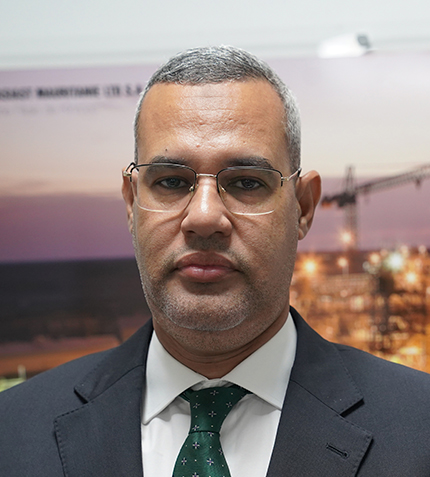
“Mauritania is a stable country that looks after its international investors, and we think it deserves the attention of investors.”
Share
Could you provide a brief overview of the Tasiast mine and its significance to both local and national economy?
Tasiast is an open-pit gold mine located 300 km northeast of Nouakchott, Mauritania. 100% Kinross-owned and operated since 2010, Tasiast is one of Africa’s largest gold mines with one of the biggest semi-autogenous mills in the world, at a capacity of 24,000 t/d. Since 2010, Kinross has paid over US$1.44 billion in royalties and taxes. Our tax payment to the government for 2024 was US$195.9 million, making Tasiast Mauritania’s largest taxpayer.
Locally, our contributions to in-country procurement between 2011 and 2024 amounted to US$3.1 billion, with US$226 million in 2024 alone. As part of our Local Business Integration program, we give preference to local services and suppliers. The operation generates over 4,000 direct and indirect jobs, with 97.8% of our direct employees and 72.4% of our senior leadership being Mauritanian nationals. Our strategy from day one was to empower our Mauritanian workforce, and we have been able to achieve this over the past 15 years of operations.
Tasiast produced a record 622,000 oz in 2024. What is the guidance for 2025 and 2026?
In 2024, Tasiast represented around 29% of Kinross’ global output. For 2025, we are looking at production of about 500,000 oz, in line with our guidance. This is due to natural mine sequencing, where we are depleting some of the ore to extend the mine and access higher-grade material down the road. Tasiast has estimated gold reserves of 4.7 million oz, and we are actively exploring for more deposits.
Could you elaborate on your exploration strategy in Mauritania?
Based on current resource estimates, Tasiast has an expected Life of Mine up to 2033, with multiple additional opportunities to add ounces within the existing permit. Last year, we added 110,000 oz to reserves for the 2025–2027 mine window, primarily from the Fennec satellite deposit. Several other satellite deposits show equally promising potential.
What would you tell investors about Mauritania’s attractiveness as a mining destination?
Kinross put its trust in Mauritania in 2010 when we signed a partnership agreement with the government, and we are pleased to say the government has generally respected the convention. Every year, we share a stand with the government at Mining Indaba. The “Mauritanian Pavilion” is sponsored by Kinross and brings together not just the government but other operators from Mauritania, together raising awareness of the opportunities this country has to offer. We make these efforts because we believe that Mauritania is a stable country that looks after its international investors, and we think it deserves the attention of investors.
The mining sector represents about 25% of the country’s GDP and Mauritanian people themselves see the value of responsible, sustainable and equitable mining.
Could you elaborate on the solar plant at Tasiast and how it fits into the mine’s broader sustainability objectives?
In 2024, we commissioned a 34 MW clean energy plant combined with an 18 MW battery system, which will reduce our reliance on diesel consumption by 17 million litres per year. This was a US$55 million investment and will represent about 17% of our total power needs at the site.
Can you tell us more about Kinross’ capacity-building initiatives?
One of our main priorities is gender diversity. In 2020 we had 71 women working on site, and we have since recruited an additional 133 women.
We have extensive programs with our host community, with more than US$22 million spent on social community development from 2011 to 2024. Additionally, we have recently launched a program to train about 30 people in different specialties, upon which they can be recruited by Kinross or other employers, expanding Mauritania’s skilled workforce and improving employability of Mauritanians . We also have an apprenticeship program, where we bring in young Mauritanians to prepare them for different professions over a two-year program. All graduates of the first two cohorts have been directly employed by Tasiast.

Could you provide a brief overview of the Tasiast mine and its significance to both local and national economy?
Tasiast is an open-pit gold mine located 300 km northeast of Nouakchott, Mauritania. 100% Kinross-owned and operated since 2010, Tasiast is one of Africa’s largest gold mines with one of the biggest semi-autogenous mills in the world, at a capacity of 24,000 t/d. Since 2010, Kinross has paid over US$1.44 billion in royalties and taxes. Our tax payment to the government for 2024 was US$195.9 million, making Tasiast Mauritania’s largest taxpayer.
Locally, our contributions to in-country procurement between 2011 and 2024 amounted to US$3.1 billion, with US$226 million in 2024 alone. As part of our Local Business Integration program, we give preference to local services and suppliers. The operation generates over 4,000 direct and indirect jobs, with 97.8% of our direct employees and 72.4% of our senior leadership being Mauritanian nationals. Our strategy from day one was to empower our Mauritanian workforce, and we have been able to achieve this over the past 15 years of operations.
Tasiast produced a record 622,000 oz in 2024. What is the guidance for 2025 and 2026?
In 2024, Tasiast represented around 29% of Kinross’ global output. For 2025, we are looking at production of about 500,000 oz, in line with our guidance. This is due to natural mine sequencing, where we are depleting some of the ore to extend the mine and access higher-grade material down the road. Tasiast has estimated gold reserves of 4.7 million oz, and we are actively exploring for more deposits.
Could you elaborate on your exploration strategy in Mauritania?
Based on current resource estimates, Tasiast has an expected Life of Mine up to 2033, with multiple additional opportunities to add ounces within the existing permit. Last year, we added 110,000 oz to reserves for the 2025–2027 mine window, primarily from the Fennec satellite deposit. Several other satellite deposits show equally promising potential.
What would you tell investors about Mauritania’s attractiveness as a mining destination?
Kinross put its trust in Mauritania in 2010 when we signed a partnership agreement with the government, and we are pleased to say the government has generally respected the convention. Every year, we share a stand with the government at Mining Indaba. The “Mauritanian Pavilion” is sponsored by Kinross and brings together not just the government but other operators from Mauritania, together raising awareness of the opportunities this country has to offer. We make these efforts because we believe that Mauritania is a stable country that looks after its international investors, and we think it deserves the attention of investors.
The mining sector represents about 25% of the country’s GDP and Mauritanian people themselves see the value of responsible, sustainable and equitable mining.
Could you elaborate on the solar plant at Tasiast and how it fits into the mine’s broader sustainability objectives?
In 2024, we commissioned a 34 MW clean energy plant combined with an 18 MW battery system, which will reduce our reliance on diesel consumption by 17 million litres per year. This was a US$55 million investment and will represent about 17% of our total power needs at the site.
Can you tell us more about Kinross’ capacity-building initiatives?
One of our main priorities is gender diversity. In 2020 we had 71 women working on site, and we have since recruited an additional 133 women.
We have extensive programs with our host community, with more than US$22 million spent on social community development from 2011 to 2024. Additionally, we have recently launched a program to train about 30 people in different specialties, upon which they can be recruited by Kinross or other employers, expanding Mauritania’s skilled workforce and improving employability of Mauritanians . We also have an apprenticeship program, where we bring in young Mauritanians to prepare them for different professions over a two-year program. All graduates of the first two cohorts have been directly employed by Tasiast.