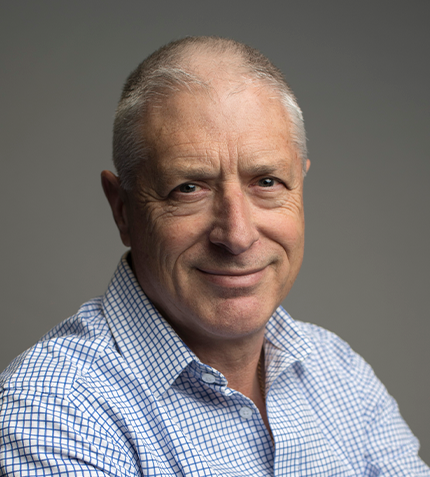
“We have picked up the CMA underground project at the Yaouré mine for Perseus Mining in Côte d’Ivoire, which will be the first underground operation in the country.”
Share
Can you provide our readers with an overview of your current footprint in Africa?
Byrnecut is an Australian-based mining contractor specialized in underground mining, raise drilling, and shaft sinking. Our first international assignment was in Africa in 2000, when we worked at the Bulyanhulu gold mine in Tanzania, currently owned by Barrick Mining. That started our journey, which over the years took us to Zambia, Ghana, Burkina Faso, Mali, Côte d’Ivoire, and many other African countries. Today, we are present throughout West Africa as well as in Namibia, and a key driver for our work has been the transition of mines from open pit to underground.
Can you tell us more about your current projects in Africa and the pipeline ahead?
2025 has been an exciting year for us. We have picked up the CMA underground project at the Yaouré mine for Perseus Mining in Côte d’Ivoire, which will be the first underground operation in the country. We take the responsibility very seriously, knowing this mine will be a reference for both the government and our client. We were then awarded a second contract with B2Gold in Namibia, as well as two more clients, jobs we are currently mobilizing for. The Southern African market is quite exciting. Zambia, Uganda, Rwanda, Zimbabwe, and South Africa are seeing increased activity, and we see an opportunity to return as projects take off.
How have local content laws impacted international mining contractors like Byrnecut?
Over the past 10 years, and especially in the last five, localization laws across most African nations have made it more difficult to operate as an international contractor. African countries tend to go through a cycle in which they move from a high degree of openness to international investment to raising barriers to entry. When FDI drops and investors pull out, the laws tend to change again.
Can you tell us more about Byrnecut’s approach to training?
Training has been our biggest strength at Byrnecut. In Australia, we are a Registered Training Organization (RTO), which gives us the authority to accredit people under our training system with certain certifications. We apply that same rigorous process in Africa. Typically, we begin a new operation with a larger expat percentage, but we start looking for local employees almost immediately so we can begin transferring those jobs. This model makes sense not only for creating local jobs but also for reducing costs. Out of the 1,000 people in Byrnecut International, 400 are expatriates, yet half of those expatriates are Africans working in other African countries. This shows that we are not only building local capacity but also enabling employees to take on international roles.
What positions Byrnecut as a contractor of choice for African projects?
We have never been the cheapest contractor and never intend to be. Byrnecut provides a package of safety, on-budget delivery, and meeting schedules, and we do not compromise on any aspect. The reason we have built such extensive relationships with our clients is because we bring more than numbers, we bring true partnership. In Australia, we have been contractors for the same mine sites for more than 20 years. In Africa, we have long-term relationships with West African Resources in Burkina Faso and B2Gold in Namibia and Mali, while in Saudi Arabia we have been working with the Maaden Barrick Copper Company for 13 years.
How do you balance African risks with opportunities?
About seven years ago, we were seeing disruptive changes in Africa and began expanding to the Americas and Europe to diversify our risk and reduce our dependence on Africa. However, most of our work has continued to pull us back into Africa, and this market remains the most dynamic for us. Africa is a complex place, but after 25 years of experience, we are comfortable navigating the challenges while remaining a reliable partner for our clients. In countries with higher security risks, we take extensive precautions, especially regarding the movement of our people, reducing transfers to site to a minimum and tracking locations at all times.
What I would say about Africa is that investors should focus less on the politics and more on the people. Beyond what happens in the capital cities, the people you encounter, whether employees or communities, are incredibly supportive.

Can you provide our readers with an overview of your current footprint in Africa?
Byrnecut is an Australian-based mining contractor specialized in underground mining, raise drilling, and shaft sinking. Our first international assignment was in Africa in 2000, when we worked at the Bulyanhulu gold mine in Tanzania, currently owned by Barrick Mining. That started our journey, which over the years took us to Zambia, Ghana, Burkina Faso, Mali, Côte d’Ivoire, and many other African countries. Today, we are present throughout West Africa as well as in Namibia, and a key driver for our work has been the transition of mines from open pit to underground.
Can you tell us more about your current projects in Africa and the pipeline ahead?
2025 has been an exciting year for us. We have picked up the CMA underground project at the Yaouré mine for Perseus Mining in Côte d’Ivoire, which will be the first underground operation in the country. We take the responsibility very seriously, knowing this mine will be a reference for both the government and our client. We were then awarded a second contract with B2Gold in Namibia, as well as two more clients, jobs we are currently mobilizing for. The Southern African market is quite exciting. Zambia, Uganda, Rwanda, Zimbabwe, and South Africa are seeing increased activity, and we see an opportunity to return as projects take off.
How have local content laws impacted international mining contractors like Byrnecut?
Over the past 10 years, and especially in the last five, localization laws across most African nations have made it more difficult to operate as an international contractor. African countries tend to go through a cycle in which they move from a high degree of openness to international investment to raising barriers to entry. When FDI drops and investors pull out, the laws tend to change again.
Can you tell us more about Byrnecut’s approach to training?
Training has been our biggest strength at Byrnecut. In Australia, we are a Registered Training Organization (RTO), which gives us the authority to accredit people under our training system with certain certifications. We apply that same rigorous process in Africa. Typically, we begin a new operation with a larger expat percentage, but we start looking for local employees almost immediately so we can begin transferring those jobs. This model makes sense not only for creating local jobs but also for reducing costs. Out of the 1,000 people in Byrnecut International, 400 are expatriates, yet half of those expatriates are Africans working in other African countries. This shows that we are not only building local capacity but also enabling employees to take on international roles.
What positions Byrnecut as a contractor of choice for African projects?
We have never been the cheapest contractor and never intend to be. Byrnecut provides a package of safety, on-budget delivery, and meeting schedules, and we do not compromise on any aspect. The reason we have built such extensive relationships with our clients is because we bring more than numbers, we bring true partnership. In Australia, we have been contractors for the same mine sites for more than 20 years. In Africa, we have long-term relationships with West African Resources in Burkina Faso and B2Gold in Namibia and Mali, while in Saudi Arabia we have been working with the Maaden Barrick Copper Company for 13 years.
How do you balance African risks with opportunities?
About seven years ago, we were seeing disruptive changes in Africa and began expanding to the Americas and Europe to diversify our risk and reduce our dependence on Africa. However, most of our work has continued to pull us back into Africa, and this market remains the most dynamic for us. Africa is a complex place, but after 25 years of experience, we are comfortable navigating the challenges while remaining a reliable partner for our clients. In countries with higher security risks, we take extensive precautions, especially regarding the movement of our people, reducing transfers to site to a minimum and tracking locations at all times.
What I would say about Africa is that investors should focus less on the politics and more on the people. Beyond what happens in the capital cities, the people you encounter, whether employees or communities, are incredibly supportive.