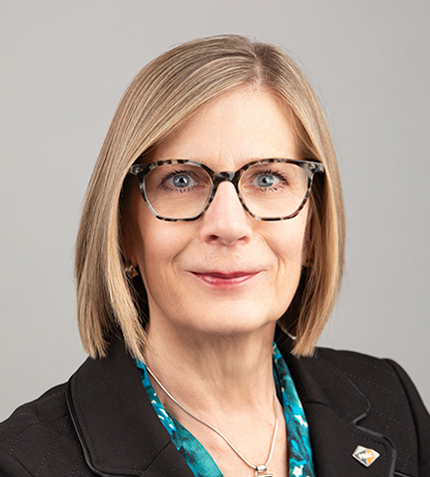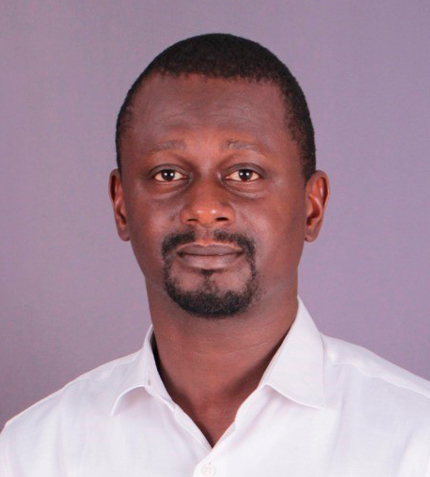
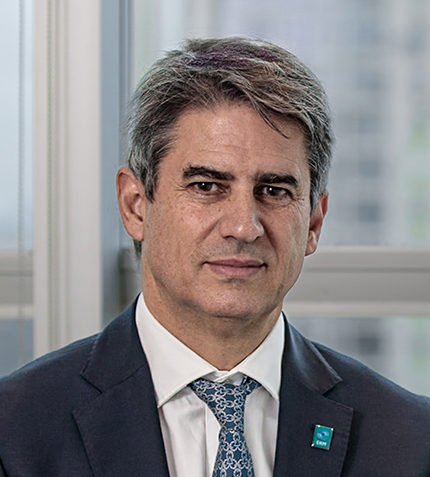
“Every mining project carries risks: in Argentina, the federal legal framework complicates matters further; provinces, rather than the federal government, own natural resources and issue permits.”
Share
Can you introduce ERM and explain its role in Argentina and the Andean region?
ERM started operations in Argentina more than 25 years ago to provide environmental services to clients across a range of industries. Today, we service the Andean Region from office centers in locations across Argentina, Chile, and Peru. Our Andean team today consists of over 200 consultants including geologists, engineers, and environmental and social scientists who are part of a broader network of over 7000 ERM professionals across the world.
ERM has a 50-year history and is the largest pure play environmental consultancy in the world. We offer a comprehensive and strategic approach dedicated to addressing social, environmental, and governance issues. While our origins are in contaminated land remediation or liabilities portfolio management and remediation, our services and capabilities evolved and now include sustainable finance, marine services, capital project support, for different industrial sectors, like diversified energy, and mining.
How does the Argentinian mining market differ from mining in Chile or Peru?
Argentina is an emerging market fueled by favorable geography and evolving government policy. Many of the world’s largest mining companies are actively advancing new greenfield lithium and copper mines to service the world’s demands for critical minerals. In comparison, Chile and Peru are more mature markets for mining. ERM is leveraging its global experience working with our client organizations to generate value through effective environmental and social performance.
From our offices in Buenos Aires, Salta, Lima, Santiago and Mendoza, we support projects throughout Argentina’s mining provinces, including Jujuy, Catamarca, San Juan, Mendoza, Salta, Santa Cruz, and Río Negro. We work in all mining segments, from lithium in the north to copper in the Cuyo region and gold and silver in Patagonia.
What are the main services you provide to mining clients, and why are they important?
ERM works across the entire mining lifecycle. For new developments our services are built on three pillars. First, we assist clients in understanding the environmental, social, and political context and undertake the work needed to plan their projects and navigate regulatory frameworks to secure licenses and permits. Second, we focus on corporate governance and stakeholder engagement to build trust with communities and authorities. Third, we support project finance to ensure projects are “bankable” and attractive to investors.
Project finance is especially important in Argentina, where many projects rely on external funding. Of the approximately US$12 billion in recently approved mining and energy projects approved through RIGI (Regimen de Incentivo para Grandes Inversiones), ERM Argentina has supported over 60% of that figure to be invested. Banks and multilateral institutions now require projects to be robust not only technically, but also socially and environmentally. We help ensure this robustness from the outset, during the design phase, also supporting them during the construction, allowing them to receive the funding tranches agreed before, also enabling projects to advance without costly delays.
What are the main risks and challenges for mining projects in Argentina?
Every mining project carries risks: in Argentina, the federal legal framework complicates matters further; provinces, rather than the federal government, own natural resources and issue permits. Each province has its own identity, legal framework, geography, and social context. A lithium project in Jujuy, for example, faces different challenges than a copper project in San Juan or Mendoza in terms of potential impacts on biodiversity and local communities. Nationwide, however, water use is a common challenge. Competition for limited resources requires mining projects to demonstrate compatibility with other needs.
Our role as a sustainability consultancy is to identify and address project risks early, turning them into opportunities. Projects that proactively consider water, biodiversity, and community concerns are more likely to succeed, while those that do not may face difficulties securing social acceptance for permitting and financing. The cost of ignoring ESG factors is too high for companies.
What is your perspective on the regulatory environment for mining in Argentina?
Ten years ago, more than 70 percent of the public opposed mining, which led to measures such as the passage of the glacier protection law. But things have changed today. Authorities, communities, and companies are now much more aware of the potential contributions possible from the mining industry. When five provincial governors presented Argentina’s mining potential at the London Metal Exchange Week in 2024, their unified message was clear: “Yes to mining, but sustainable mining.”
Argentina is an emerging mining market that is maturing. Governance processes are evolving, the public is more engaged, and practices are aligning with the principles of sustainable development. Even in sensitive areas such as glaciers, we can see the Chilean approach where every project is analyzed from interdisciplinary committees with technical support before viability for permitting. Argentina now has the awareness and capability to follow this model.
What is your outlook for the future of mining in Argentina?
We are optimistic about Argentina’s future. The geology is attractive, the country is supportive of responsible development, and many of the world’s largest mining companies are present and active. Argentina has the potential to diversify its economy and position itself as a global supplier of critical minerals.
ERM is excited to be supporting Argentina with this opportunity.
Can you introduce ERM and explain its role in Argentina and the Andean region?
ERM started operations in Argentina more than 25 years ago to provide environmental services to clients across a range of industries. Today, we service the Andean Region from office centers in locations across Argentina, Chile, and Peru. Our Andean team today consists of over 200 consultants including geologists, engineers, and environmental and social scientists who are part of a broader network of over 7000 ERM professionals across the world.
ERM has a 50-year history and is the largest pure play environmental consultancy in the world. We offer a comprehensive and strategic approach dedicated to addressing social, environmental, and governance issues. While our origins are in contaminated land remediation or liabilities portfolio management and remediation, our services and capabilities evolved and now include sustainable finance, marine services, capital project support, for different industrial sectors, like diversified energy, and mining.
How does the Argentinian mining market differ from mining in Chile or Peru?
Argentina is an emerging market fueled by favorable geography and evolving government policy. Many of the world’s largest mining companies are actively advancing new greenfield lithium and copper mines to service the world’s demands for critical minerals. In comparison, Chile and Peru are more mature markets for mining. ERM is leveraging its global experience working with our client organizations to generate value through effective environmental and social performance.
From our offices in Buenos Aires, Salta, Lima, Santiago and Mendoza, we support projects throughout Argentina’s mining provinces, including Jujuy, Catamarca, San Juan, Mendoza, Salta, Santa Cruz, and Río Negro. We work in all mining segments, from lithium in the north to copper in the Cuyo region and gold and silver in Patagonia.
What are the main services you provide to mining clients, and why are they important?
ERM works across the entire mining lifecycle. For new developments our services are built on three pillars. First, we assist clients in understanding the environmental, social, and political context and undertake the work needed to plan their projects and navigate regulatory frameworks to secure licenses and permits. Second, we focus on corporate governance and stakeholder engagement to build trust with communities and authorities. Third, we support project finance to ensure projects are “bankable” and attractive to investors.
Project finance is especially important in Argentina, where many projects rely on external funding. Of the approximately US$12 billion in recently approved mining and energy projects approved through RIGI (Regimen de Incentivo para Grandes Inversiones), ERM Argentina has supported over 60% of that figure to be invested. Banks and multilateral institutions now require projects to be robust not only technically, but also socially and environmentally. We help ensure this robustness from the outset, during the design phase, also supporting them during the construction, allowing them to receive the funding tranches agreed before, also enabling projects to advance without costly delays.
What are the main risks and challenges for mining projects in Argentina?
Every mining project carries risks: in Argentina, the federal legal framework complicates matters further; provinces, rather than the federal government, own natural resources and issue permits. Each province has its own identity, legal framework, geography, and social context. A lithium project in Jujuy, for example, faces different challenges than a copper project in San Juan or Mendoza in terms of potential impacts on biodiversity and local communities. Nationwide, however, water use is a common challenge. Competition for limited resources requires mining projects to demonstrate compatibility with other needs.
Our role as a sustainability consultancy is to identify and address project risks early, turning them into opportunities. Projects that proactively consider water, biodiversity, and community concerns are more likely to succeed, while those that do not may face difficulties securing social acceptance for permitting and financing. The cost of ignoring ESG factors is too high for companies.
What is your perspective on the regulatory environment for mining in Argentina?
Ten years ago, more than 70 percent of the public opposed mining, which led to measures such as the passage of the glacier protection law. But things have changed today. Authorities, communities, and companies are now much more aware of the potential contributions possible from the mining industry. When five provincial governors presented Argentina’s mining potential at the London Metal Exchange Week in 2024, their unified message was clear: “Yes to mining, but sustainable mining.”
Argentina is an emerging mining market that is maturing. Governance processes are evolving, the public is more engaged, and practices are aligning with the principles of sustainable development. Even in sensitive areas such as glaciers, we can see the Chilean approach where every project is analyzed from interdisciplinary committees with technical support before viability for permitting. Argentina now has the awareness and capability to follow this model.
What is your outlook for the future of mining in Argentina?
We are optimistic about Argentina’s future. The geology is attractive, the country is supportive of responsible development, and many of the world’s largest mining companies are present and active. Argentina has the potential to diversify its economy and position itself as a global supplier of critical minerals.
ERM is excited to be supporting Argentina with this opportunity.