
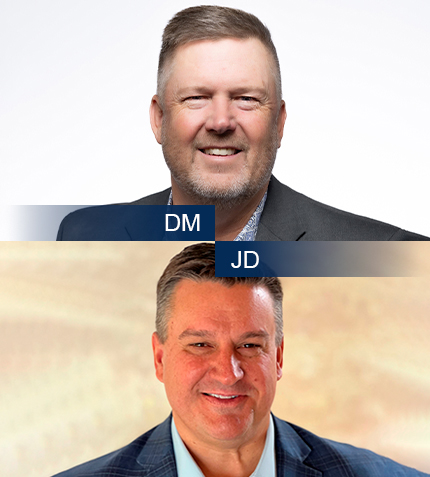
“Mining companies are moving to electric or alternative fuel source fleets, as well as production processes, and they will need more robust, resilient electrical infrastructure to achieve their goals.”
Share
How important is the mining industry to Black & Veatch?
JD: With the reshoring of mining and the growing emphasis on producing critical minerals within the US, we’ve seen increased demand for integrated infrastructure that helps mining companies meet both economic and sustainability goals. Water scarcity in many regions has pushed mining companies to seek alternative infrastructure solutions for water supply. Many of our earliest projects focused on water production and delivery, and we’ve since expanded into water effluent treatment, energy and process solutions.
With new projects coming online and infrastructure becoming more complex, what will the future needs of the mining industry be?
DM: As mining companies implement technologies to extend mine life and production capacity, it often requires additional energy. However, power demands are increasing significantly, and there is great competition amongst industries for the electrons that are available. Black & Veatch works with clients to install alternative power generation and distribution infrastructure to ensure power stability and reliability for their operations.
JD: Many mines have been operating for extended periods, with aging infrastructure that must be prepared not only for today but also for the next 20 years—so they are focusing on how they can get the best out of their current assets. Increased power demands are putting pressure on the grid as coal-fired power plants and coal mines close in the western US, while competition from data centers and new industries further limits access. In addition, we are working with mining companies to implement innovative technologies, such as new leaching methods, which increase energy loads and make improvements in power distribution to capture even more critical minerals.
Can you highlight a mining project in the US that Black & Veatch has been involved in?
JD: American Battery Technology Company (ABTC) engaged Black & Veatch to design and construct its first commercial-scale sedimentary-based lithium hydroxide refining facility near Tonopah, Nevada. Their decision to build a multi-ton-per-day demonstration facility—rather than relying solely on lab-scale trials—has been a game-changer in validating and refining their proprietary claystone lithium processing technology.
What are the major challenges Black & Veatch’s mining clients face?
JD: Currently, there is significant market volatility and tariff uncertainty. Fluctuating commodity prices, permitting difficulties, and unpredictable tariff environments are creating crosswinds, not just for our clients, but for our own planning and delivery cycles.
These factors can shift procurement strategies, delay critical equipment, and introduce cost variability that impacts schedules and project budgets. We mitigate these risks through early engagement with suppliers, flexible sourcing strategies, and scenario-based planning that helps clients navigate uncertainty with confidence.
DM: Another challenge in the industry is resource availability, and the fight for talent has caused an issue for the execution of work. What Black & Veatch has done well over the last several years is to move with the market in that regard, and find different commercial execution strategies, keeping both the needs of the company and the client in mind, while also meeting the goals of what lenders and financiers require.
We have demonstrated flexibility through working with various commercial models, and we try to engage early on projects to help guide and direct the things that we will need to meet our objectives, but also to work with the client to solve the construction and labor risks, as well as the procurement and delivery timelines.
What are Black & Veatch’s priorities and goals moving forward?
DM: Given the national focus on reshoring metal and mineral production in the US, along with the aging infrastructure of existing mines, Black & Veatch is well-positioned for significant growth in the domestic mining industry.
JD: There is a demand for greater efficiency and reliability in infrastructure, but there is also the continued trend towards sustainability and lower carbon sources of energy. Mining companies are moving to electric or alternative fuel source fleets, as well as production processes, and they will need more robust, resilient electrical infrastructure to achieve their goals. Automation and remote operations are increasing the demand for connectivity and cybersecurity, and Black & Veatch also offers solutions for those types of projects.
How important is the mining industry to Black & Veatch?
JD: With the reshoring of mining and the growing emphasis on producing critical minerals within the US, we’ve seen increased demand for integrated infrastructure that helps mining companies meet both economic and sustainability goals. Water scarcity in many regions has pushed mining companies to seek alternative infrastructure solutions for water supply. Many of our earliest projects focused on water production and delivery, and we’ve since expanded into water effluent treatment, energy and process solutions.
With new projects coming online and infrastructure becoming more complex, what will the future needs of the mining industry be?
DM: As mining companies implement technologies to extend mine life and production capacity, it often requires additional energy. However, power demands are increasing significantly, and there is great competition amongst industries for the electrons that are available. Black & Veatch works with clients to install alternative power generation and distribution infrastructure to ensure power stability and reliability for their operations.
JD: Many mines have been operating for extended periods, with aging infrastructure that must be prepared not only for today but also for the next 20 years—so they are focusing on how they can get the best out of their current assets. Increased power demands are putting pressure on the grid as coal-fired power plants and coal mines close in the western US, while competition from data centers and new industries further limits access. In addition, we are working with mining companies to implement innovative technologies, such as new leaching methods, which increase energy loads and make improvements in power distribution to capture even more critical minerals.
Can you highlight a mining project in the US that Black & Veatch has been involved in?
JD: American Battery Technology Company (ABTC) engaged Black & Veatch to design and construct its first commercial-scale sedimentary-based lithium hydroxide refining facility near Tonopah, Nevada. Their decision to build a multi-ton-per-day demonstration facility—rather than relying solely on lab-scale trials—has been a game-changer in validating and refining their proprietary claystone lithium processing technology.
What are the major challenges Black & Veatch’s mining clients face?
JD: Currently, there is significant market volatility and tariff uncertainty. Fluctuating commodity prices, permitting difficulties, and unpredictable tariff environments are creating crosswinds, not just for our clients, but for our own planning and delivery cycles.
These factors can shift procurement strategies, delay critical equipment, and introduce cost variability that impacts schedules and project budgets. We mitigate these risks through early engagement with suppliers, flexible sourcing strategies, and scenario-based planning that helps clients navigate uncertainty with confidence.
DM: Another challenge in the industry is resource availability, and the fight for talent has caused an issue for the execution of work. What Black & Veatch has done well over the last several years is to move with the market in that regard, and find different commercial execution strategies, keeping both the needs of the company and the client in mind, while also meeting the goals of what lenders and financiers require.
We have demonstrated flexibility through working with various commercial models, and we try to engage early on projects to help guide and direct the things that we will need to meet our objectives, but also to work with the client to solve the construction and labor risks, as well as the procurement and delivery timelines.
What are Black & Veatch’s priorities and goals moving forward?
DM: Given the national focus on reshoring metal and mineral production in the US, along with the aging infrastructure of existing mines, Black & Veatch is well-positioned for significant growth in the domestic mining industry.
JD: There is a demand for greater efficiency and reliability in infrastructure, but there is also the continued trend towards sustainability and lower carbon sources of energy. Mining companies are moving to electric or alternative fuel source fleets, as well as production processes, and they will need more robust, resilient electrical infrastructure to achieve their goals. Automation and remote operations are increasing the demand for connectivity and cybersecurity, and Black & Veatch also offers solutions for those types of projects.