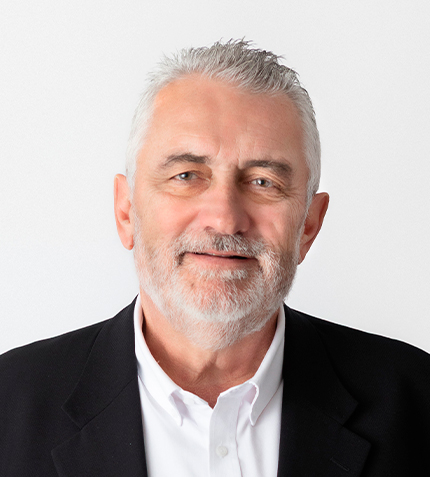
“There is very little that we have not done or are not prepared to do. Whether in Ontario or globally, we are positioned to execute complex projects and drive value for clients.”
Share
Can you give us an update on what has been happening at Redpath?
The company has grown significantly, and our workload has expanded with it. In Ontario, we have continued to work with Vale for more than a decade, and they remain a valued partner for us. We also continue our work with Agnico Eagle at the Macassa site, where we have crews doing development work. With Newmont divesting certain assets in Ontario, we now have two new clients. We are working with Discovery at Borden, where we carry out development, maintenance, production and construction. We also have a very successful partnership at Orla Mining’s Musselwhite mine, where we have been involved long-term. In terms of new business in Ontario, we started a significant project with Glencore at Onaping Depth.
Looking beyond Ontario and Canada, we continue to see strong growth in the US. With Rio Tinto, we are executing underground development at Kennecott Utah Copper. We remain active at the South32 Hermosa Project close to Tucson, Arizona. We are sinking two shafts, with the ventilation shaft approaching the 1,380-foot level and the production shaft around 600 feet, with sinking well underway. Globally, the Oyu Tolgoi project in Mongolia continues to be a major undertaking for us. We have close to 1,400 employees on site with Rio Tinto. At Freeport-McMoRan in Indonesia, where Redpath has been working for more than 40 years, we now have nearly 3,000 workers on site following the acquisition of RUC.
As mining goes deeper, how are you adapting to the challenges and incorporating innovation?
Safety is our highest priority, and shaft sinking presents high-risk environments due to enclosed spaces and concurrent activities. Our goal is to get people off the bench wherever possible, and we are investing in remote-controlled equipment. One example is the innovative bench-cleaning excavator system.
How do you manage workforce allocation for international projects while ensuring strong local hiring?
Our philosophy is to maintain consistent standards across all projects. This applies to operations, safety programs, and equipment. Standardization enables personnel to transfer easily between projects. Our strategy always prioritizes hiring and training local workforces. It increases project stability, strengthens communities, and reduces turnover.
How are you navigating political and supply challenges?
This environment is dynamic. Political developments in the US, tariffs, and border complexities have created challenges around consumables and equipment movement. Strategically, we are building global partnerships with equipment OEMs to help mitigate volatility, stabilize supply, and support long-term planning.
What markets and trends are driving Redpath’s future growth?
The transition to green energy is a major driver. Copper demand is driving large-scale base-metal development in the US and other regions. High prices are making projects feasible that were not viable previously. Gold prices are an important factor as well. At around US$4,000/oz today, new opportunities are emerging, especially in Ontario, where historic gold properties may once again be attractive. Critical minerals and geopolitical concerns are also shaping strategy. Western nations are prioritizing domestic supply for strategic materials, creating opportunities across friendly jurisdictions where Redpath works.
How is technology transforming underground mining for Redpath?
A key focus is digital communication and real-time data systems underground. When mines have infrastructure for real-time data transfer, we can provide operators and maintenance teams with instant information, improving decision-making, reducing downtime, and increasing productivity. Alerts for overheating, plugged filters, or other issues are flagged immediately, enabling fast maintenance response.
What are Redpath’s plans for Ontario in the next 12 months, and what final message would you share?
We are seeking new opportunities and evaluating projects case by case to ensure strategic alignment. Equally, we are committed to supporting long-term partners, many of whom we have worked with for years or decades. We must continually improve how we execute, incorporating modern technologies and pursuing operational excellence. Safety remains paramount. Zero harm is our objective, and we want to be known as an employer that cares deeply about its people and ensures they return home safe every day.
Redpath has a strong balance sheet and deep expertise. There is very little that we have not done or are not prepared to do. Whether in Ontario or globally, we are positioned to execute complex projects and drive value for clients.

Can you give us an update on what has been happening at Redpath?
The company has grown significantly, and our workload has expanded with it. In Ontario, we have continued to work with Vale for more than a decade, and they remain a valued partner for us. We also continue our work with Agnico Eagle at the Macassa site, where we have crews doing development work. With Newmont divesting certain assets in Ontario, we now have two new clients. We are working with Discovery at Borden, where we carry out development, maintenance, production and construction. We also have a very successful partnership at Orla Mining’s Musselwhite mine, where we have been involved long-term. In terms of new business in Ontario, we started a significant project with Glencore at Onaping Depth.
Looking beyond Ontario and Canada, we continue to see strong growth in the US. With Rio Tinto, we are executing underground development at Kennecott Utah Copper. We remain active at the South32 Hermosa Project close to Tucson, Arizona. We are sinking two shafts, with the ventilation shaft approaching the 1,380-foot level and the production shaft around 600 feet, with sinking well underway. Globally, the Oyu Tolgoi project in Mongolia continues to be a major undertaking for us. We have close to 1,400 employees on site with Rio Tinto. At Freeport-McMoRan in Indonesia, where Redpath has been working for more than 40 years, we now have nearly 3,000 workers on site following the acquisition of RUC.
As mining goes deeper, how are you adapting to the challenges and incorporating innovation?
Safety is our highest priority, and shaft sinking presents high-risk environments due to enclosed spaces and concurrent activities. Our goal is to get people off the bench wherever possible, and we are investing in remote-controlled equipment. One example is the innovative bench-cleaning excavator system.
How do you manage workforce allocation for international projects while ensuring strong local hiring?
Our philosophy is to maintain consistent standards across all projects. This applies to operations, safety programs, and equipment. Standardization enables personnel to transfer easily between projects. Our strategy always prioritizes hiring and training local workforces. It increases project stability, strengthens communities, and reduces turnover.
How are you navigating political and supply challenges?
This environment is dynamic. Political developments in the US, tariffs, and border complexities have created challenges around consumables and equipment movement. Strategically, we are building global partnerships with equipment OEMs to help mitigate volatility, stabilize supply, and support long-term planning.
What markets and trends are driving Redpath’s future growth?
The transition to green energy is a major driver. Copper demand is driving large-scale base-metal development in the US and other regions. High prices are making projects feasible that were not viable previously. Gold prices are an important factor as well. At around US$4,000/oz today, new opportunities are emerging, especially in Ontario, where historic gold properties may once again be attractive. Critical minerals and geopolitical concerns are also shaping strategy. Western nations are prioritizing domestic supply for strategic materials, creating opportunities across friendly jurisdictions where Redpath works.
How is technology transforming underground mining for Redpath?
A key focus is digital communication and real-time data systems underground. When mines have infrastructure for real-time data transfer, we can provide operators and maintenance teams with instant information, improving decision-making, reducing downtime, and increasing productivity. Alerts for overheating, plugged filters, or other issues are flagged immediately, enabling fast maintenance response.
What are Redpath’s plans for Ontario in the next 12 months, and what final message would you share?
We are seeking new opportunities and evaluating projects case by case to ensure strategic alignment. Equally, we are committed to supporting long-term partners, many of whom we have worked with for years or decades. We must continually improve how we execute, incorporating modern technologies and pursuing operational excellence. Safety remains paramount. Zero harm is our objective, and we want to be known as an employer that cares deeply about its people and ensures they return home safe every day.
Redpath has a strong balance sheet and deep expertise. There is very little that we have not done or are not prepared to do. Whether in Ontario or globally, we are positioned to execute complex projects and drive value for clients.