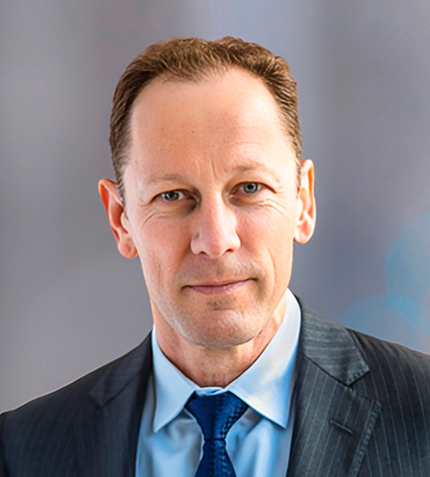

“Exploration is a key indicator for staffing companies like Workforce. When our exploration clients are active and expanding, it tells us that the industry is healthy and moving in the right direction.”
Share
What has the business climate for Workforce been like in 2025?
The business climate in mining in 2025 shares many similarities with the 2019 spike in exploration activity, caused by the then-record US$1,000 gold price and interest in nickel. As a result, Workforce’s operations have reached a level of stability and rhythm that we last saw during that time period. Sustainable growth with structure and purpose is now our main focus, as the mining sector strengthens in northern Ontario.
Exploration is a key indicator for staffing companies like Workforce. When our exploration clients are active and expanding, it tells us that the industry is healthy and moving in the right direction. Notably, there is particular momentum in exploration around Thunder Bay, in a way that resembles the boom around Timmins in 2015. Additionally, we see the potential to grow our business into Newfoundland and Labrador. The province is an emerging mining jurisdiction, with growing activity in iron ore, gold, and other metals.
How is Workforce adapting its services for clients in response to the labor shortage?
Since our inception in 2010, Workforce has become more strategic in how we staff our projects. Today, we collaborate with clients from project inception to maximize efficiency. For example, if a project requires 24 workers but we only have 20 qualified resources available, we collaborate to adjust the project’s scope and approach to achieve similar outcomes with the available manpower. In our permanent placement business, we have become embedded team members of corporations responsible for building internal staff to reach their industry goals..
What trends have you noticed in how clients staff mining projects?
Clients have had to adjust alongside us. Five to seven years ago, companies could easily find and deploy skilled labor across Ontario and Canada. That is no longer the case. The biggest change has been the widespread adoption of fly-in, fly-out work models, once rare but now routine across all our Canadian offices. Every project we execute now factors in mobility as a core element of workforce planning. Remote work has become an increasingly important part of the equation. Technology is also a key part of our strategy to mitigate the labor shortage. Robotics, drones, and digital inspection systems can streamline work that previously required more labor.
Finally, another key focus for us is integrating Canada’s immigrant population into the workforce. While we are not an immigration recruitment company, we invest heavily in identifying skilled newcomers already in Canada. We assess their backgrounds, upskill them, and help them transition into the mining sector. Many new Canadians have the skills to move up quickly into supervisory and technical roles as they gain experience. This approach has been instrumental in addressing labor shortages and building long-term capacity.
How do you engage and prepare the next generation of workers?
Young people today graduate from university as better communicators and more responsible professionals compared to graduates from a decade ago. Perhaps surprisingly, they are less dependent on technology for interaction and more willing to learn from the ground up. The mining industry needs to attract young talent, as many workers are nearing retirement. On an ongoing basis, we need structured programs to engage newly retired professionals and keep them active in the industry. This is essential to preserve knowledge of their skills as they exit the workforce.
What is northern Ontario like as a place to live and work?
Northern Ontario has changed dramatically. Sudbury is no longer an isolated mining town of the past; it is a thriving mining municipality. The region offers an incredible quality of life, strong communities, and amenities one can expect in big cities across Canada. As a result, professionals with and without ties to northern Ontario are moving here. We are seeing real population growth.
What are Workforce’s plans for 2026?
Workforce is in growth mode heading into 2026. Internally, we are increasing our staffing capacity in high-demand areas, investing in the right talent, and continuing to strengthen our foundation. We are also actively seeking mergers and acquisitions to enhance our position. It’s an exciting time for us as we grow and evolve into the next chapter of lasting success.

What has the business climate for Workforce been like in 2025?
The business climate in mining in 2025 shares many similarities with the 2019 spike in exploration activity, caused by the then-record US$1,000 gold price and interest in nickel. As a result, Workforce’s operations have reached a level of stability and rhythm that we last saw during that time period. Sustainable growth with structure and purpose is now our main focus, as the mining sector strengthens in northern Ontario.
Exploration is a key indicator for staffing companies like Workforce. When our exploration clients are active and expanding, it tells us that the industry is healthy and moving in the right direction. Notably, there is particular momentum in exploration around Thunder Bay, in a way that resembles the boom around Timmins in 2015. Additionally, we see the potential to grow our business into Newfoundland and Labrador. The province is an emerging mining jurisdiction, with growing activity in iron ore, gold, and other metals.
How is Workforce adapting its services for clients in response to the labor shortage?
Since our inception in 2010, Workforce has become more strategic in how we staff our projects. Today, we collaborate with clients from project inception to maximize efficiency. For example, if a project requires 24 workers but we only have 20 qualified resources available, we collaborate to adjust the project’s scope and approach to achieve similar outcomes with the available manpower. In our permanent placement business, we have become embedded team members of corporations responsible for building internal staff to reach their industry goals..
What trends have you noticed in how clients staff mining projects?
Clients have had to adjust alongside us. Five to seven years ago, companies could easily find and deploy skilled labor across Ontario and Canada. That is no longer the case. The biggest change has been the widespread adoption of fly-in, fly-out work models, once rare but now routine across all our Canadian offices. Every project we execute now factors in mobility as a core element of workforce planning. Remote work has become an increasingly important part of the equation. Technology is also a key part of our strategy to mitigate the labor shortage. Robotics, drones, and digital inspection systems can streamline work that previously required more labor.
Finally, another key focus for us is integrating Canada’s immigrant population into the workforce. While we are not an immigration recruitment company, we invest heavily in identifying skilled newcomers already in Canada. We assess their backgrounds, upskill them, and help them transition into the mining sector. Many new Canadians have the skills to move up quickly into supervisory and technical roles as they gain experience. This approach has been instrumental in addressing labor shortages and building long-term capacity.
How do you engage and prepare the next generation of workers?
Young people today graduate from university as better communicators and more responsible professionals compared to graduates from a decade ago. Perhaps surprisingly, they are less dependent on technology for interaction and more willing to learn from the ground up. The mining industry needs to attract young talent, as many workers are nearing retirement. On an ongoing basis, we need structured programs to engage newly retired professionals and keep them active in the industry. This is essential to preserve knowledge of their skills as they exit the workforce.
What is northern Ontario like as a place to live and work?
Northern Ontario has changed dramatically. Sudbury is no longer an isolated mining town of the past; it is a thriving mining municipality. The region offers an incredible quality of life, strong communities, and amenities one can expect in big cities across Canada. As a result, professionals with and without ties to northern Ontario are moving here. We are seeing real population growth.
What are Workforce’s plans for 2026?
Workforce is in growth mode heading into 2026. Internally, we are increasing our staffing capacity in high-demand areas, investing in the right talent, and continuing to strengthen our foundation. We are also actively seeking mergers and acquisitions to enhance our position. It’s an exciting time for us as we grow and evolve into the next chapter of lasting success.