The art of counter-cyclicity
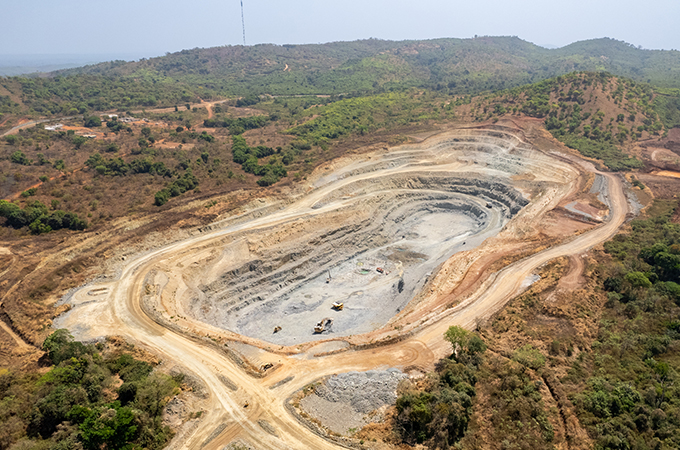
Image courtesy of Fortuna Mining
The ‘contrarian investor’ is one who moves against the grain, buying when assets are priced low and selling during market upswings — a defensive play. The same countercyclical game can be played by gold mining companies that invest in growth projects against the prevailing market trend. With gold investment in itself a defensive act, this article will look at how African gold companies can play on the offensive now that gold has breached the US$3,900/oz mark in order to benefit more from this expansionary phase of the cycle. To do so, we will first look at why some companies benefit more than others and the different growth strategies currently adopted by the industry.
About the same time last year, we were writing about gold equities lagging behind the gold price. This is no longer the case. On average, both Australian and Canadian mining stocks, which account for the majority of listings in Africa, are outperforming the gold price. The S&P/ASX All Ordinaries Gold Index, which tracks the performance of Australian-listed gold mining companies, rose 65% in the last year, while gold rose 42% over that same period. In Canada, the S&P/TSX Capped Gold is 79% higher, and the S&P/TSXV is 109% higher over the past year. These indices show that stock performance amplified the gold movement, with a high leverage factor — the sign of a healthy gold-stock market relationship during a bull market.
Nevertheless, the field is uneven, and some companies are left behind. Jurisdictional considerations aside, there are several company-specific factors that make the difference, and that Africa is very well-positioned to accommodate. All-in sustaining costs (AISC), determined by labor costs, project location and logistics, consumables, energy price, mining method, plant capacity, grade, and others factors, determine the level of operational leverage in a high-price environment. Some African companies, like Thor Explorations in Nigeria, are producing at under US$1,000/oz AISC. West African gold miners are notoriously operating at lower-than-average AISC, thanks to a combination of lower labor costs, closer-to-surface deposits, and higher grades. An SRK study found that a 1 g/t increase in grade reduces the AISC by AUD120/oz, as reported by Discovery Alert.
For producers pouring gold at under US$2,000/oz AISC, which is the case for most African players, the returns during bull periods are outsized, especially if production is not hedged.
Producers: When boring is good
Gold is more precious than it has ever been: if US$2,000/oz was the breakthrough point in 2020, now the price is close to US$4,000. Over this time, mining companies have had the chance to repair and consolidate their balance sheets. According to a report by RBC, every 1% rise in gold prices boosts miner EBITDA by 2-3%. But returning value in line with shareholder expectations involves an artful balance between consolidating financial strength and launching into more aggressive growth strategies — and these decisions can impact share performance as much as fixed items like operational leverage.
Gold miners in Africa have been prioritizing sustainable growth over speculative growth. Thor Explorations, the operator of the only commercial-scale gold mine in Nigeria and with several development and exploration assets in Senegal and Côte d’Ivoire, reported record revenues in recent quarters: “Like most gold producers today, we’re exposed to record-high prices, but it takes more than that. Thor has practiced continuous cost discipline, maintaining AISC under US$1,000/oz, which allows us to fully reap the benefits of the bull market,” said CEO Segun Lawson.
Thor has fully repaid its loan to the Africa Finance Corporation (AFC) as of December 2024, and declared its first dividend. Similar strong performances are provided by the mid-tiers. Perseus Mining has been paying dividends for several years now, and it has also launched its first share buyback program this year. Higher shareholder returns, including dividend policies, have become strong valuation catalysts. According to JP Morgan, miners with >2x net debt/EBITDA underperform peers by 25% YTD (June 2025), showing investors’ preference for financial stability.
On the other hand, cash build-ups and fortified balance sheets do create room for more capital deployment. The priority for gold producers is accruing larger reserves. Long-life and quality assets are commanding higher premiums, according to Canaccord’s analysis (March 2025): miners that show a 15-year reserve base and over trade at a 0.9x P/NAV versus 0.6x for companies with less than a 10-year reserve base. The valuations of mid-tiers are particularly impacted by reserve updates. This is perhaps why Perseus Mining has released a five-year gold production outlook to demonstrate that, based on existing reserves alone, the company will recover 2.6–2.7 million ounces of gold at a rate of 535,000 oz/y. “These figures represent the bare minimum that we will produce, providing investors with certainty over the next half-decade. But if anyone thought Perseus would simply sit on our war chest of nearly US$1 billion in cash and undrawn debt capacity, then they would be ignoring history. In the past five to six years, we have grown significantly through both organic and inorganic means, consistently beating our own production forecasts,” said Jeff Quartermaine, Perseus’ managing director and CEO.
To build reserves, companies can either acquire ounces or find them themselves. A bull market typically triggers more M&A activity, which in itself adds valuation floors, but with assets already quite pricey, cash-rich producers are highly selective. Peter Marrone, the chairman and CEO of Allied Gold, had the following epiphany: “No transaction at the present time would compel this company to deviate our focus from Sadiola and Kurmuk. I cannot think of another mid-tier underpinned by not one but two world-class, generational assets, Sadiola with 10 million oz of resources and production of 400,000 oz/y of gold once Phase 2 expansion is complete; and Kurmuk which will produce 240,000 oz/y.”
In the same mid-tier peer group, Fortuna Mining is focusing more on resource quality and margins than adding more assets. Jorge Ganoza said the strategic objective of Fortuna is not to grow the company to the proverbial million ounces of annual production but to consolidate it at a half-a-million ounce range at costs well within the middle of the curve. “Rather than chasing ounces, we are focused on value, because we already have the ounces in our pipeline, and that differentiates us strongly from many peers in the current gold price environment,” he emphasized.
Fortuna divested two non-core assets, one in Burkina Faso and one in Mexico, and is left with its flagship Séguéla mine in Côte d’Ivoire, as well as with two other operations in Latin America, and an advanced development project in Senegal. Ganoza is keen on anti-cyclicity: “We expanded our business in West Africa and built our largest mine to date at a time when the markets were risk-averse, and we had to deal with a lot of pressure from investors questioning our capital deployment at a time of downturn. Undoubtedly, we are seeing more M&A already taking shape, but if you speak to CEOs who have lived through many gold cycles, you will note a much more measured approach compared to previous cycles. In the last cycle, not a lot of great things came out of very aggressive transactions, and that cost the heads of some of my peers at the time.”
In other words, the capital growth projects for many African producers remain existing assets that they seek to develop into production, like Kurmuk and Sadiola for Allied, Diamba Sud for Fortuna, or expanding the current reserve at Segilola for Thor.
In the spirit of the season, ‘Back to School’ has become ‘Back to Exploration’ as African producers have announced higher capital allocations for exploration these last quarters. This is an encouraging change for the continent. According to CSIS, gold exploration plummeted between 2012 and 2024 by 73.7% in Ghana, 89.7% in Burkina Faso, 58.9% in Mali, 74.8% in Tanzania, and 66.7% in South Africa. The current surge in exploration spend is a welcome antidote to the underinvestment of the previous decade, but sustained efforts will be needed to fully reverse the decline.
Explorers and developers: Redoing the numbers
“Junior companies can act as the outsourced geological department of majors,” said Michael Seeger, director at MX Mining Capital Partners.
Junior companies are indeed on the frontlines of finding more gold in Africa, and sustained gold prices are finally providing them with the arsenal to do so. The valuation gaps at the explorers’ level are steeper, taking into account the size and confidence in the resource, time to market, location, and team, but we could argue that every junior company that has found gold, whether proved reserves (best confidence) or inferred resources (lowest confidence), benefits to some degree from the upswing.
Drilling activity across the continent is intense, supported by oversubscribed equity placements. Companies like Asara Resources are running campaigns of up to 100,000 m/y at their Kada project in Guinea. African Gold is currently conducting a 40,000 m drill program in Mali at the Didivei project. Once the projects are more advanced, the metrics they are judged on are those presented in PFS and DFS studies. The most significant development is the update in the reference price used by engineers in technical studies, from about US$1,700–1,800/oz to about US$2,200/oz, reflecting a market consensus of gold’s long-term sustained value. Developers have been hurrying to revise older studies and rerun the numbers to reflect the material boosts on the economics of their projects.
For West Wits Mining’s Qala Shallows project in South Africa, the change from a US$1,750/oz to US$2,850/oz Bloomberg long-term reference price delivers upsides including a reserve base increase of 10%, a shorter payback, a funding requirement lower by US$10 million, and the ability to decrease the cut-off grade from 2 g/t Au to 1.31 g/t. All of these are trickling into IRR. “This adjustment improved nearly every financial indicator – the project now boasts an after-tax IRR of 81% and an NPV (7.5) of US$500 million, with a LOM production of 944,000 oz over 16.8 years,” said Rudi Deysel, the CEO.
The high-price environment is also a precipitating factor for bringing more ounces quicker into the market. Theta is looking at a modular, plug-and-play plant, with production targeted for Q1 2027. Toubani, which develops the largest oxide project in Africa that is not owned by a larger mining company, has doubled the throughput in the mine plan in the recent 2024 DFS update. “Market conditions once dictated a 100,000 oz/y, 3 million t/y plan. We have now doubled throughput to 6 million t/y, producing 160,000 oz/y for 9.5 years, with the first seven years fed exclusively from the high-margin oxide resource. Importantly, while annual production increases by 60%, CapEx does not double,” said managing director Phil Russo.
IPOs: Opening more global windows
2025 has also been a great year for IPOs and secondary listings. Zijin Gold International, a subsidiary of Zijin Mining Group, recently announced it is readying for a listing in Hong Kong, targeting a US$40 billion in valuation. The company is the 11th largest gold producer, with eight mines in operation, of which one is in Ghana. This would mark the second largest public offering on the Hong Kong exchange, but also a sign that the IPO draught that has characterized recent years might be over.
Guinea-gold producer, Robex Resources, launched an AUD120 million IPO on the ASX earlier this year, with trading started in June. This is a secondary listing to its primary TSX-V. Though secondary issuances usually come with a discount, they remain a popular vehicle especially for miners seeking additional exposure. Ariana Resources, an AIM-listed gold producer with experience in Turkey, recently shifted gears to Africa by acquiring the 1.4 million oz Dokwe gold project in Zimbabwe. Earlier this year, Ariana completed a secondary public listing on the ASX, raising approximately AUD11 million. “We chose Australia because ASX-listed companies generally command better premiums; indeed, some of the top ASX performers and best valuations in the market are Australian-listed companies with African operations,” said Kerim Sener, Ariana’s managing director.
Outside of the usual Toronto and Sydney duo for African listings, New York is increasingly coming into orbit. Just two years since going public via RTO in Canada, Allied Gold completed a second listing on the NYSE. Drawing from his experience at Yamana Gold, chairman and CEO Peter Marrone said a second major listing does not diminish trading: “Rather than cannibalizing one market, in our case the Toronto exchange, we expect a significant net increase of liquidity while some trading activity will migrate onto the NYSE. The US capital markets are the largest globally and the US dollar is one of the world’s most widely used currencies, which allows New York to extend such far-reaching tentacles. No matter where you are in the world, it is easier to trade in US dollars than it is in any other currency.”
The other attraction of trading on Wall Street is a high regulatory standard, with NYSE-listed companies abiding by the strictest internal controls under the Sarbanes-Oxley (SOX) Act. “Investors have the certainty that financial and operational disclosures are meticulously compliant,” said Marrone.
Times Square headquartered NASDAQ hosted the largest African DeSPAC listing in its history when Namib Minerals, a private gold producer in Zimbabwe, became a public company following a SPAC transaction with Hennessy Capital Investment Corp VI earlier this year. Namib has a history of over two decades of operations in Zimbabwe, with one producing mine (How) and two other gold mines (Mazowe and Redwing) under care and maintenance. Cutting the ribbon on the trading floor has given the company a global platform for growth. “For over 23 years, Namib Minerals operated as a private gold producer in Zimbabwe. Today, as a Nasdaq-listed company, we’re scaling aggressively,” said Ibrahima Sory Tall, the CEO.

Image courtesy of Fortuna Mining
The ‘contrarian investor’ is one who moves against the grain, buying when assets are priced low and selling during market upswings — a defensive play. The same countercyclical game can be played by gold mining companies that invest in growth projects against the prevailing market trend. With gold investment in itself a defensive act, this article will look at how African gold companies can play on the offensive now that gold has breached the US$3,900/oz mark in order to benefit more from this expansionary phase of the cycle. To do so, we will first look at why some companies benefit more than others and the different growth strategies currently adopted by the industry.
About the same time last year, we were writing about gold equities lagging behind the gold price. This is no longer the case. On average, both Australian and Canadian mining stocks, which account for the majority of listings in Africa, are outperforming the gold price. The S&P/ASX All Ordinaries Gold Index, which tracks the performance of Australian-listed gold mining companies, rose 65% in the last year, while gold rose 42% over that same period. In Canada, the S&P/TSX Capped Gold is 79% higher, and the S&P/TSXV is 109% higher over the past year. These indices show that stock performance amplified the gold movement, with a high leverage factor — the sign of a healthy gold-stock market relationship during a bull market.
Nevertheless, the field is uneven, and some companies are left behind. Jurisdictional considerations aside, there are several company-specific factors that make the difference, and that Africa is very well-positioned to accommodate. All-in sustaining costs (AISC), determined by labor costs, project location and logistics, consumables, energy price, mining method, plant capacity, grade, and others factors, determine the level of operational leverage in a high-price environment. Some African companies, like Thor Explorations in Nigeria, are producing at under US$1,000/oz AISC. West African gold miners are notoriously operating at lower-than-average AISC, thanks to a combination of lower labor costs, closer-to-surface deposits, and higher grades. An SRK study found that a 1 g/t increase in grade reduces the AISC by AUD120/oz, as reported by Discovery Alert.
For producers pouring gold at under US$2,000/oz AISC, which is the case for most African players, the returns during bull periods are outsized, especially if production is not hedged.
Producers: When boring is good
Gold is more precious than it has ever been: if US$2,000/oz was the breakthrough point in 2020, now the price is close to US$4,000. Over this time, mining companies have had the chance to repair and consolidate their balance sheets. According to a report by RBC, every 1% rise in gold prices boosts miner EBITDA by 2-3%. But returning value in line with shareholder expectations involves an artful balance between consolidating financial strength and launching into more aggressive growth strategies — and these decisions can impact share performance as much as fixed items like operational leverage.
Gold miners in Africa have been prioritizing sustainable growth over speculative growth. Thor Explorations, the operator of the only commercial-scale gold mine in Nigeria and with several development and exploration assets in Senegal and Côte d’Ivoire, reported record revenues in recent quarters: “Like most gold producers today, we’re exposed to record-high prices, but it takes more than that. Thor has practiced continuous cost discipline, maintaining AISC under US$1,000/oz, which allows us to fully reap the benefits of the bull market,” said CEO Segun Lawson.
Thor has fully repaid its loan to the Africa Finance Corporation (AFC) as of December 2024, and declared its first dividend. Similar strong performances are provided by the mid-tiers. Perseus Mining has been paying dividends for several years now, and it has also launched its first share buyback program this year. Higher shareholder returns, including dividend policies, have become strong valuation catalysts. According to JP Morgan, miners with >2x net debt/EBITDA underperform peers by 25% YTD (June 2025), showing investors’ preference for financial stability.
On the other hand, cash build-ups and fortified balance sheets do create room for more capital deployment. The priority for gold producers is accruing larger reserves. Long-life and quality assets are commanding higher premiums, according to Canaccord’s analysis (March 2025): miners that show a 15-year reserve base and over trade at a 0.9x P/NAV versus 0.6x for companies with less than a 10-year reserve base. The valuations of mid-tiers are particularly impacted by reserve updates. This is perhaps why Perseus Mining has released a five-year gold production outlook to demonstrate that, based on existing reserves alone, the company will recover 2.6–2.7 million ounces of gold at a rate of 535,000 oz/y. “These figures represent the bare minimum that we will produce, providing investors with certainty over the next half-decade. But if anyone thought Perseus would simply sit on our war chest of nearly US$1 billion in cash and undrawn debt capacity, then they would be ignoring history. In the past five to six years, we have grown significantly through both organic and inorganic means, consistently beating our own production forecasts,” said Jeff Quartermaine, Perseus’ managing director and CEO.
To build reserves, companies can either acquire ounces or find them themselves. A bull market typically triggers more M&A activity, which in itself adds valuation floors, but with assets already quite pricey, cash-rich producers are highly selective. Peter Marrone, the chairman and CEO of Allied Gold, had the following epiphany: “No transaction at the present time would compel this company to deviate our focus from Sadiola and Kurmuk. I cannot think of another mid-tier underpinned by not one but two world-class, generational assets, Sadiola with 10 million oz of resources and production of 400,000 oz/y of gold once Phase 2 expansion is complete; and Kurmuk which will produce 240,000 oz/y.”
In the same mid-tier peer group, Fortuna Mining is focusing more on resource quality and margins than adding more assets. Jorge Ganoza said the strategic objective of Fortuna is not to grow the company to the proverbial million ounces of annual production but to consolidate it at a half-a-million ounce range at costs well within the middle of the curve. “Rather than chasing ounces, we are focused on value, because we already have the ounces in our pipeline, and that differentiates us strongly from many peers in the current gold price environment,” he emphasized.
Fortuna divested two non-core assets, one in Burkina Faso and one in Mexico, and is left with its flagship Séguéla mine in Côte d’Ivoire, as well as with two other operations in Latin America, and an advanced development project in Senegal. Ganoza is keen on anti-cyclicity: “We expanded our business in West Africa and built our largest mine to date at a time when the markets were risk-averse, and we had to deal with a lot of pressure from investors questioning our capital deployment at a time of downturn. Undoubtedly, we are seeing more M&A already taking shape, but if you speak to CEOs who have lived through many gold cycles, you will note a much more measured approach compared to previous cycles. In the last cycle, not a lot of great things came out of very aggressive transactions, and that cost the heads of some of my peers at the time.”
In other words, the capital growth projects for many African producers remain existing assets that they seek to develop into production, like Kurmuk and Sadiola for Allied, Diamba Sud for Fortuna, or expanding the current reserve at Segilola for Thor.
In the spirit of the season, ‘Back to School’ has become ‘Back to Exploration’ as African producers have announced higher capital allocations for exploration these last quarters. This is an encouraging change for the continent. According to CSIS, gold exploration plummeted between 2012 and 2024 by 73.7% in Ghana, 89.7% in Burkina Faso, 58.9% in Mali, 74.8% in Tanzania, and 66.7% in South Africa. The current surge in exploration spend is a welcome antidote to the underinvestment of the previous decade, but sustained efforts will be needed to fully reverse the decline.
Explorers and developers: Redoing the numbers
“Junior companies can act as the outsourced geological department of majors,” said Michael Seeger, director at MX Mining Capital Partners.
Junior companies are indeed on the frontlines of finding more gold in Africa, and sustained gold prices are finally providing them with the arsenal to do so. The valuation gaps at the explorers’ level are steeper, taking into account the size and confidence in the resource, time to market, location, and team, but we could argue that every junior company that has found gold, whether proved reserves (best confidence) or inferred resources (lowest confidence), benefits to some degree from the upswing.
Drilling activity across the continent is intense, supported by oversubscribed equity placements. Companies like Asara Resources are running campaigns of up to 100,000 m/y at their Kada project in Guinea. African Gold is currently conducting a 40,000 m drill program in Mali at the Didivei project. Once the projects are more advanced, the metrics they are judged on are those presented in PFS and DFS studies. The most significant development is the update in the reference price used by engineers in technical studies, from about US$1,700–1,800/oz to about US$2,200/oz, reflecting a market consensus of gold’s long-term sustained value. Developers have been hurrying to revise older studies and rerun the numbers to reflect the material boosts on the economics of their projects.
For West Wits Mining’s Qala Shallows project in South Africa, the change from a US$1,750/oz to US$2,850/oz Bloomberg long-term reference price delivers upsides including a reserve base increase of 10%, a shorter payback, a funding requirement lower by US$10 million, and the ability to decrease the cut-off grade from 2 g/t Au to 1.31 g/t. All of these are trickling into IRR. “This adjustment improved nearly every financial indicator – the project now boasts an after-tax IRR of 81% and an NPV (7.5) of US$500 million, with a LOM production of 944,000 oz over 16.8 years,” said Rudi Deysel, the CEO.
The high-price environment is also a precipitating factor for bringing more ounces quicker into the market. Theta is looking at a modular, plug-and-play plant, with production targeted for Q1 2027. Toubani, which develops the largest oxide project in Africa that is not owned by a larger mining company, has doubled the throughput in the mine plan in the recent 2024 DFS update. “Market conditions once dictated a 100,000 oz/y, 3 million t/y plan. We have now doubled throughput to 6 million t/y, producing 160,000 oz/y for 9.5 years, with the first seven years fed exclusively from the high-margin oxide resource. Importantly, while annual production increases by 60%, CapEx does not double,” said managing director Phil Russo.
IPOs: Opening more global windows
2025 has also been a great year for IPOs and secondary listings. Zijin Gold International, a subsidiary of Zijin Mining Group, recently announced it is readying for a listing in Hong Kong, targeting a US$40 billion in valuation. The company is the 11th largest gold producer, with eight mines in operation, of which one is in Ghana. This would mark the second largest public offering on the Hong Kong exchange, but also a sign that the IPO draught that has characterized recent years might be over.
Guinea-gold producer, Robex Resources, launched an AUD120 million IPO on the ASX earlier this year, with trading started in June. This is a secondary listing to its primary TSX-V. Though secondary issuances usually come with a discount, they remain a popular vehicle especially for miners seeking additional exposure. Ariana Resources, an AIM-listed gold producer with experience in Turkey, recently shifted gears to Africa by acquiring the 1.4 million oz Dokwe gold project in Zimbabwe. Earlier this year, Ariana completed a secondary public listing on the ASX, raising approximately AUD11 million. “We chose Australia because ASX-listed companies generally command better premiums; indeed, some of the top ASX performers and best valuations in the market are Australian-listed companies with African operations,” said Kerim Sener, Ariana’s managing director.
Outside of the usual Toronto and Sydney duo for African listings, New York is increasingly coming into orbit. Just two years since going public via RTO in Canada, Allied Gold completed a second listing on the NYSE. Drawing from his experience at Yamana Gold, chairman and CEO Peter Marrone said a second major listing does not diminish trading: “Rather than cannibalizing one market, in our case the Toronto exchange, we expect a significant net increase of liquidity while some trading activity will migrate onto the NYSE. The US capital markets are the largest globally and the US dollar is one of the world’s most widely used currencies, which allows New York to extend such far-reaching tentacles. No matter where you are in the world, it is easier to trade in US dollars than it is in any other currency.”
The other attraction of trading on Wall Street is a high regulatory standard, with NYSE-listed companies abiding by the strictest internal controls under the Sarbanes-Oxley (SOX) Act. “Investors have the certainty that financial and operational disclosures are meticulously compliant,” said Marrone.
Times Square headquartered NASDAQ hosted the largest African DeSPAC listing in its history when Namib Minerals, a private gold producer in Zimbabwe, became a public company following a SPAC transaction with Hennessy Capital Investment Corp VI earlier this year. Namib has a history of over two decades of operations in Zimbabwe, with one producing mine (How) and two other gold mines (Mazowe and Redwing) under care and maintenance. Cutting the ribbon on the trading floor has given the company a global platform for growth. “For over 23 years, Namib Minerals operated as a private gold producer in Zimbabwe. Today, as a Nasdaq-listed company, we’re scaling aggressively,” said Ibrahima Sory Tall, the CEO.